Celebrity hair guide
Florence Pugh hairstyles: the buzz cut, and every stage of growing it out
Last updated 2026-08-28. Every look on this page is dated and linked to a published source.
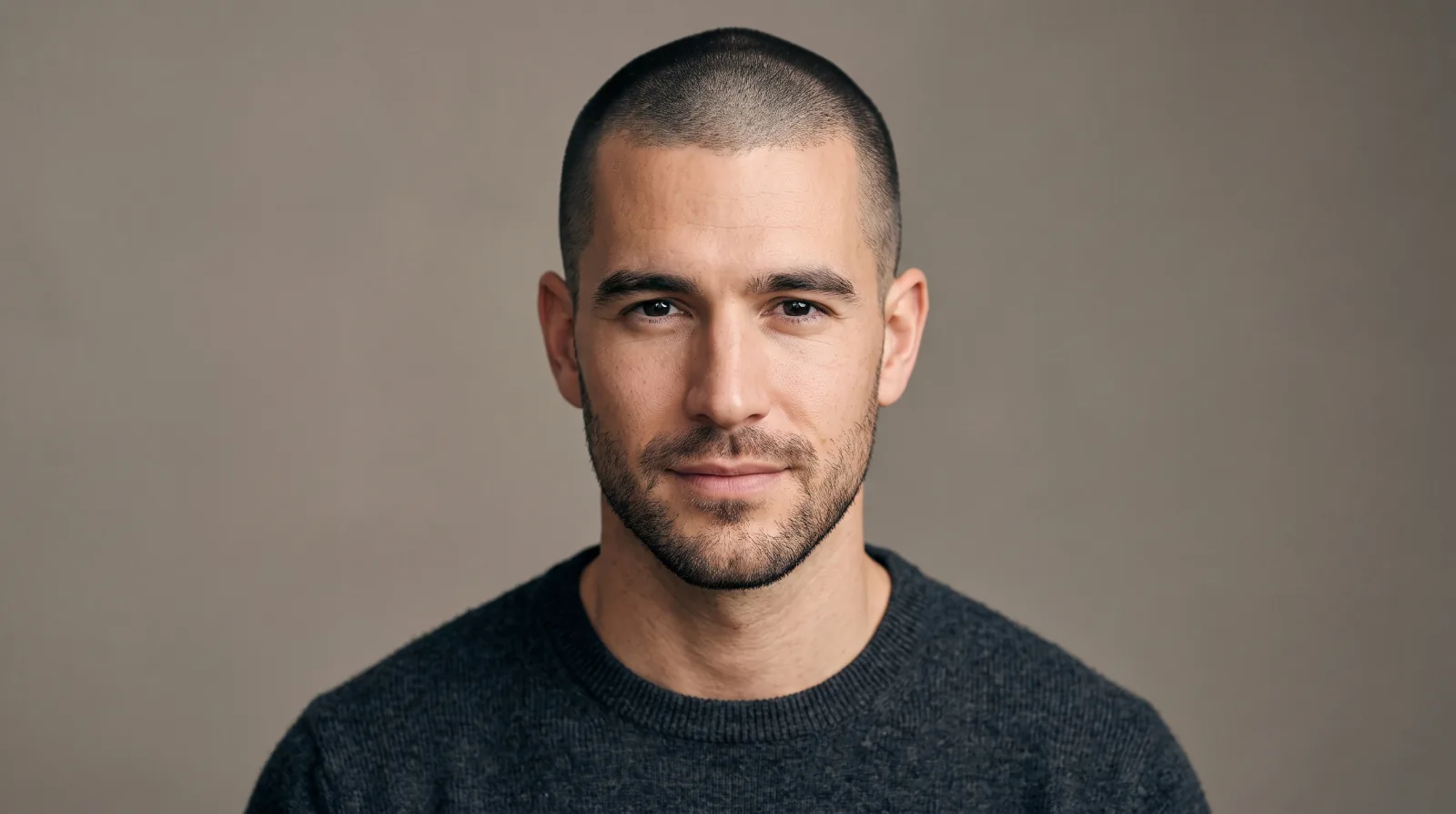
Florence Pugh shaved her head to a buzz cut, debuting it at the 2023 Met Gala, and has spent the years since growing it out in public. That makes her hair the most useful worked example available of what a buzz cut grow-out actually looks like, stage by stage, rather than as a before and after.
Key takeaways
- Florence Pugh debuted a shaved buzz cut at the 2023 Met Gala, then grew it out across public appearances.
- A buzz cut grow-out is not one awkward phase but a sequence of distinct, wearable cuts.
- Growing a buzz cut to a micro bob took roughly eight months of visible public stages.
- Colour is the standard tool for making a grow-out stage look deliberate rather than transitional.
- Each grow-out stage needs its own shaping appointment, which is what separates a plan from neglect.
- Shaving for a film role is a common route into very short hair, and the grow-out is identical either way.
Florence Pugh is a British actress. Wikipedia.
Why this grow-out is worth studying
Most celebrity hair coverage shows you a before and an after. Florence Pugh's buzz cut is unusual because the entire middle was documented, appearance by appearance, over roughly two years.
That matters because the middle is the part that stops people cutting their hair short. Almost everyone considering a buzz cut asks the same question, which is not does this suit me but what happens for the year afterwards. The honest answer is that a grow-out is a sequence of separate haircuts, each of which needs shaping to look intentional, and Pugh's public record is the clearest available illustration of that.
The sequence runs roughly: shaved, then a soft velvet stage where the shape of the head is still the silhouette, then a crop where there is finally enough length to push in a direction, then a heavier crop with weight at the sides, then a micro bob once the length clears the ears.
None of those stages happens on its own. Each is a decision at a salon, and skipping them is what produces the shapeless stage people dread. Wikipedia records that she shaved her head for her role in We Live in Time, and that she cut off her own hair rather than wear a wig for A Good Person, so the starting point in both cases was work rather than a styling whim. The grow-out that follows is identical either way.
How a buzz cut grow-out actually works
Scalp hair grows at roughly one centimetre a month, which makes the timeline more predictable than most people assume. From a shave, that is about four to six months to a short crop, eight to twelve to something bob-length at the front, and eighteen to twenty-four to reach the collarbone.
The difficulty is not the speed, it is that hair does not grow evenly in appearance. The crown gains visible length faster than the sides, the front hairline reveals its real shape early, and the neckline gets untidy long before the top looks like anything. This is why a grow-out left alone looks like neglect while a shaped one looks like a haircut.
The practical routine is a shaping appointment every four to six weeks, which is more frequent than most long-hair schedules and considerably cheaper per visit. What the stylist does at each one changes: early on it is tidying the neckline and sides, later it is creating a shape the top can grow into.
The other variable is texture. Hair regrowing after a shave often comes in feeling coarser, because a bluntly cut end is stubbier than a tapered one. That is a texture illusion rather than a change in the follicle, and it settles as length returns.
Using colour to make a stage look deliberate
The most transferable thing in Pugh's grow-out is the use of colour. Bustle reported her grown-out buzz cut worn platinum blonde, and across the same period her grow-out stages were widely photographed in changing shades.
The logic is simple and it works on anyone. A very short cut has almost no shape to look at, so the eye needs something else to read as a decision. Colour supplies that. A platinum crop reads as a deliberate choice in a way that a mousy two-inch crop does not, even though the cut underneath is identical.
The cost is real, though. Bleaching very short hair is faster and cheaper than bleaching length, and the damage grows out in weeks rather than years, which is genuinely the lowest-risk moment in your life to try platinum. But the American Academy of Dermatology notes that lightening hair more than a few shades needs higher volumes of peroxide and causes more damage, and hair regrowing from a shave is not in an especially robust state.
A softer version of the same trick is a semi-permanent colour or a gloss, which shifts the tone without the lift. That is the sensible default if your scalp is at all sensitive.
What to do at each stage, if you are growing one out
Weeks one to eight, the velvet stage. There is nothing to cut and nothing to style. Protect the scalp: it is skin that has been shaded by hair and is now exposed, and dermatological advice is to treat it like any other uncovered skin. Sunscreen or a hat.
Months two to four, the awkward crown. The top starts outgrowing the sides. This is the first shaping appointment that matters. Ask for the sides and neckline tidied and the top left, which begins to create a crop rather than an even fuzz.
Months four to eight, the crop. Finally enough length to push forward, up, or to one side. A textured crop or a soft pixie both live here, and this is where most people stop dreading the process.
Months eight to twelve, the micro bob. The length clears the ears and the shape becomes a genuine haircut rather than a stage. Pugh's Governors Awards appearance in January 2024 was reported as a shaggy micro bob, roughly eight months on from the Met Gala.
Beyond twelve months it is simply short hair, and normal cut schedules resume.
1. The shaved buzz cut
A full shave, worn on a red carpet rather than hidden.
Debuted a shaved buzz cut at the 2023 Met Gala. E! News, 2023-05-01.
Clipped to a uniform very short length all over, with no guard length left to style. At this length the silhouette is the shape of the skull, and the face is entirely uncovered, which throws all the attention onto the brows, cheekbones and jaw.
How to adapt it
Ask for a number one or a number two rather than a full shave if you want the same effect with slightly less exposure. The difference is a few millimetres and a noticeably softer edge at the hairline.
Who should try it
Anyone with a defined jaw or strong brows, since the cut leaves those doing all the work. Head shape matters far more here than face shape, which is why previewing it first is worth the minute.
Salon brief
“Take it down to a number two all over, uniform, and leave the hairline soft rather than squared.”
Re-cut every two to three weeks to stay looking deliberate.
See this shape on your own face2. Shaved for a film role
The same cut, arrived at through work rather than choice.
Shaved her head for her role in We Live in Time. Wikipedia, 2024.
A full shave undertaken for a part. The cut itself is indistinguishable from an elective buzz cut, which is the useful point: the grow-out timeline and the shaping schedule are exactly the same whether the decision was yours or a director's.
How to adapt it
If you are shaving for a reason outside your control, such as treatment or a role, plan the grow-out shaping appointments in advance. Having them booked is what turns the following year from drift into a sequence.
Who should try it
Anyone facing a shave they did not choose, who wants the regrowth to look intentional rather than accidental at every stage.
Salon brief
“Take it to a full shave, and book me a shaping appointment in six weeks.”
Shaping every four to six weeks through the whole grow-out.
See this shape on your own face3. The platinum grown-out buzz
A short crop worn platinum, so the colour carries the look while the cut is still short.
Wore the grown-out buzz cut platinum blonde in her grow-out period. Bustle, 2023.
Two to four inches of regrowth, lifted to platinum. At this length there is not yet enough hair to make a shape, so the colour does the work: a bright crop reads as a decision where a mousy one of identical length reads as an in-between stage.
How to adapt it
Short hair is the cheapest and least damaging place to try platinum, because the bleached length grows out in months rather than years. Use a gloss or semi-permanent colour instead if your scalp is sensitive.
Who should try it
Anyone stuck in the flat middle of a grow-out who wants the stage to look intentional. Also the best entry point for anyone curious about platinum generally.
Salon brief
“Keep the length, take me to a cool platinum, and tone it so there is no yellow.”
Root touch-ups roughly every three weeks at this length.
See this shape on your own face4. The sculptural swoop
A grow-out stage styled with direction rather than left flat.
Wore a grow-out stage styled into a sculptural swoop on the red carpet. Marie Claire, 2024.
Four to six inches on top, styled with a strong directional sweep so the length reads as shape. This is the first stage where styling rather than cutting becomes the main tool, and where product starts to matter.
How to adapt it
Dry the hair in the direction you want it to sit while it is still damp, then hold it with a matte paste. Hair sets in the shape it dries in, so the drying does most of the work.
Who should try it
Anyone at the four to six month mark who has enough length to push in a direction but not enough for a bob. Works best with some natural texture or wave.
Salon brief
“Leave the length on top, take the sides shorter so it has somewhere to sweep to.”
Shaping every five to six weeks to keep the sides shorter than the top.
See this shape on your own face5. The shaggy micro bob
The end of the grow-out, and a real haircut in its own right.
Wore a shaggy micro bob at the Governors Awards on 9 January 2024. Bustle, 2024-01-09.
A very short bob sitting around the ear and jaw, cut with enough internal texture to move rather than sitting as a solid block. Roughly eight months of growth from a shave, and the point where a grow-out stops being a stage and becomes a chosen length.
How to adapt it
Ask for texture through the ends rather than a blunt line. A blunt micro bob at this length is a much harder shape to wear and far less forgiving as it grows.
Who should try it
Anyone finishing a grow-out, and anyone who wants a bob shorter than the usual chin length. Suits a defined jaw particularly well.
Salon brief
“A micro bob ending at the jaw, textured through the ends so it moves.”
Trim every six to eight weeks to hold the shape.
See this shape on your own faceWhich stage are you actually at?
A grow-out is easier when you know which stage you are in and what to ask for at it. Find your length below.
| If you have | Try | Because |
|---|---|---|
| Just shaved, nothing to cut | The shaved buzz cut | There is nothing to shape yet, so the job is protecting your scalp and deciding your guard length. |
| Shaved for a role or treatment | Shaved for a film role | The grow-out is identical to an elective one, and booking the shaping appointments early is what makes it look planned. |
| Two to four inches and it looks flat | The platinum grown-out buzz | There is not enough length for shape yet, so colour is the tool that makes the stage read as deliberate. |
| Four to six inches, enough to style | The sculptural swoop | You finally have enough length to push in a direction, and drying it that way is what sets it. |
| Past the ears, around eight months | The shaggy micro bob | The length now supports a real cut rather than a stage, and a textured micro bob is the natural landing point. |
Common questions
How long does it take to grow out a buzz cut?
Roughly four to six months to a short crop, eight to twelve to something bob-length at the front, and eighteen to twenty-four to reach the collarbone. Scalp hair grows about a centimetre a month, so the timeline is fairly predictable.
When did Florence Pugh shave her head?
She debuted a shaved buzz cut at the 2023 Met Gala, as reported by E! News. Wikipedia also records that she shaved her head for her role in We Live in Time, and cut off her own hair rather than wear a wig for A Good Person.
What is the hardest stage of growing out a buzz cut?
Usually the two to four inch mark, where there is not yet enough length to create a shape but enough that it no longer reads as a deliberate buzz. Colour and regular shaping are the two standard fixes.
Do I still need haircuts while growing out a buzz cut?
Yes, and more often than you might expect. A shaping appointment every four to six weeks is what separates a planned grow-out from one that looks neglected, because the crown gains length faster than the sides.
Why do people dye their hair during a buzz cut grow-out?
Because a very short cut has little shape for the eye to read, so colour supplies the sense of a decision instead. It is also the cheapest and least damaging point to try a dramatic colour, since the treated length grows out within months.
Does hair grow back thicker after shaving?
No. Cutting hair does not change the follicle. Regrowth feels coarser because a bluntly cut end is stubbier than a tapered one, and that impression settles as length returns.
Do I need to protect my scalp after shaving my head?
Yes. Your scalp is skin that has been shaded by hair and is suddenly exposed, and dermatological guidance is to treat it like any other uncovered skin with sunscreen or a hat from the first day.
What comes after the crop stage?
A micro bob, once the length clears the ears at around eight months. Asking for texture through the ends rather than a blunt line makes it far easier to wear and to keep growing.
Where each look is documented
Every look above is a dated public appearance, linked to the published report it comes from.
Hair science references
Hair and scalp facts on this page are supported by these sources. Styling advice is guidance.
- Tips for healthy hair, American Academy of Dermatology
- Coloring and perming tips for healthier-looking hair, American Academy of Dermatology
- Hair removal: How to shave, American Academy of Dermatology
- Physiology, Hair, StatPearls, NCBI Bookshelf
Images and affiliation
The image on this page is a Kurli illustration of the haircut, not a likeness. Kurli is not affiliated with, endorsed by, or sponsored by Florence Pugh.
See it on your own face
Kurli reads your face from a selfie, recommends styles that suit you, and renders each one onto your photo.