Curly (type 3)
Reach people whose hair has already been read as curly
Kurli identifies hair texture from a selfie before it shows anyone a product. A curl cream can be placed in front of type 3 users specifically, instead of a general beauty audience.
Kurli partners with curly hair brands four ways: a direct affiliate deal using your own tracking links, a paid featured placement in the curly category with one brand at a time, product seeding for an honest tested review, and newsletter or try-on sponsorship. Kurli is an AI hairstyle advisor that reads a user's hair texture from a selfie, so a curl brand is placed in front of people already identified as type 3 rather than a broad beauty audience. Enquiries go to hello@kurli.me or the form at kurli.me/for-brands.
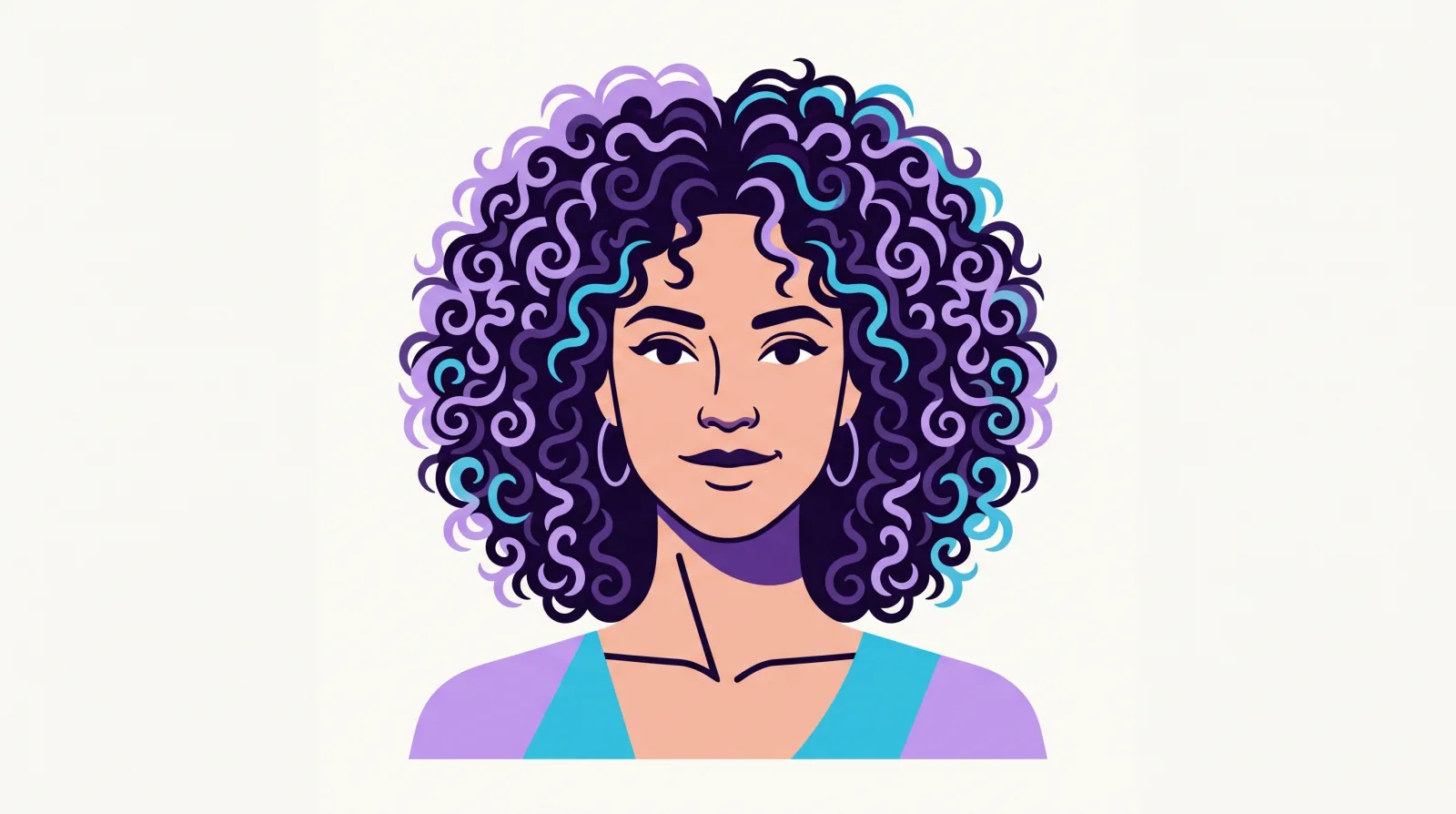
Why texture-matched placement beats a general beauty audience
A curl product only works on some hair. Paying to show it to everyone means paying for the people it was never made for, and then watching the click-through rate explain why.
Kurli reads hair texture as part of the photo analysis. Before a single product appears on screen, the audience has already been split into straight, wavy, curly, and coily. A brand buying the curly slot is buying the curly users. It is not buying a share of everyone and hoping the right people are in there.
The second advantage is timing. Kurli shows products after a person has chosen a new hairstyle and seen it rendered onto their own photo. They have already decided to change something about their hair. The question in their head at that moment is what do I need to buy to keep this, which is a much better question for a brand than what should I browse today.
This is the part that is hard to buy anywhere else. Social ads reach people who are scrolling. Search ads reach people who already know the product category they want. Kurli reaches people in the short window between deciding to change their hair and working out what that change requires.
Which curl types Kurli covers
Kurli publishes standing guides for curly hair, coily and type 4 hair, wavy hair, and frizzy and dry hair, plus a hair type chart covering type 2 through type 4 and a guide to hair porosity.
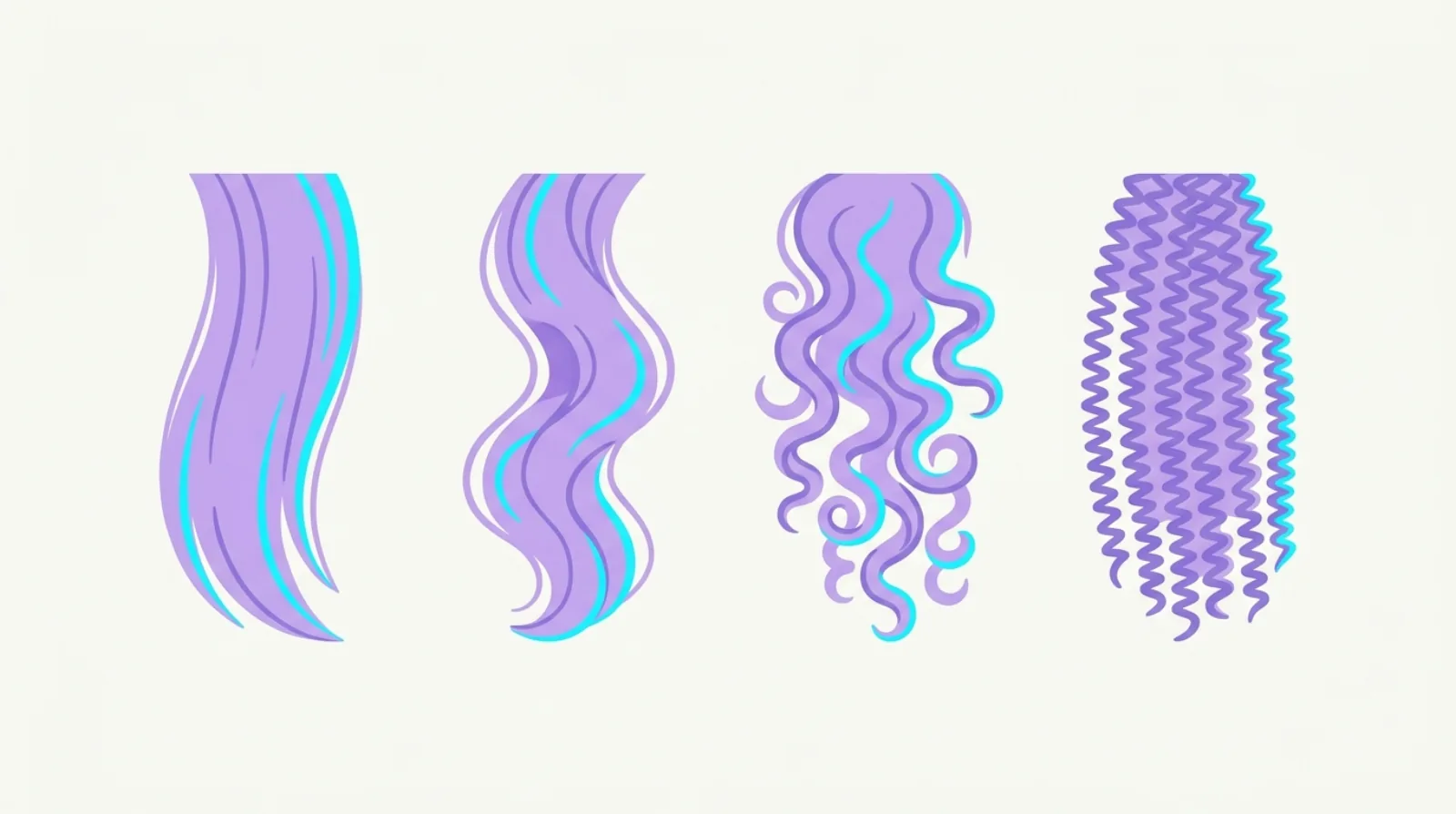
The curly guide covers roughly 2C through 3C: clear S-waves at the loose end, up to tight springy curls about the width of a pencil at the tight end. Tighter than that is treated as type 4 and is sold as its own category. You can read the coily and type 4 page if that is where your formula sits.
Buying by category matters more than it sounds. A rich butter made for tight coils will weigh down a 3A curl and get a poor result, and a light mousse made for waves will disappear on a 3C. When a placement is bought against the wrong curl family, the product underperforms, and neither of us gets anything useful out of it.
Where your product would appear
There are four surfaces, and you can open every one of them before you buy anything.
The curly and coily guides. These are the standing pages someone lands on when they are researching their own texture. See the hair-type guides.
The product step after a try-on. When a user renders a new style onto their own photo, the next screen tells them what to buy to keep it. For a curly user that means a wash, a leave-in, a definer, and a tool. Those slots can be your products. See the try-on.
The routine builder. A user describes their cut and texture and Kurli builds a maintenance routine for it. The routine names product categories, and the products filling those categories are the placement. See the routine builder.
The blog. Reviews of seeded products are published on The Kurl and linked from the matching texture guides, so a review keeps working long after the week it went live.
What we can and cannot tell you about the audience
We do not publish traffic figures on this site. That is a deliberate choice, not a gap. Numbers on a partnerships page are almost never audited, and once one is rounded up nobody can tell which of the others were.
What you get instead: ask in your enquiry and we will send you what our analytics actually reports, with the date it was pulled and the tool it came from. If a figure is small, you will see the small figure. We would rather lose a deal at that stage than win one and have you discover the real number in month two.
What we can say without any number attached is how the audience is shaped. Kurli users arrive with a decision to make, because uploading a selfie is not a passive act. Texture is identified before products appear. The guides are organised by hair type, face shape, cut length, and hair concern, so traffic arrives pre-sorted into the segments a haircare brand already buys against.
How a paid slot is labelled
A slot that has been paid for carries a visible Paid placement label on the page, and Kurli's affiliate disclosure explains the arrangement in plain words.
We do this because it is the rule and because it is the only version that works long term. In the United States, the FTC's endorsement guides require that a connection between an advertiser and an endorser which might affect how much weight a reader gives the endorsement, and which the reader would not already expect, is disclosed clearly and conspicuously. A paid product slot on a recommendation page is exactly that kind of connection.
We will not remove the label, shrink it until it disappears, or move it below the fold as part of a deal. If a placement only works when the reader cannot tell it was bought, it is not a placement we can sell you.
What tends to perform badly here, and why we will tell you
Some products do not do well in this context, and it is cheaper for both of us to say so before money changes hands.
A product with no clear texture fit is the most common problem. If the label says it is for all hair types, there is no category to put it in, and a recommendation that could apply to anyone reads as an advert to everyone.
A product that only makes sense after a long explanation is the second. The product slot in a routine gets a line or two of copy. A protocol involving four steps and a patch test is a blog subject, not a slot, and it usually does better as a seeded review than as a placement.
Price mismatch is the third. Kurli recommends a full routine, so a single item priced far above the rest of the routine tends to be the one people drop. That does not make it a bad product. It makes it a bad fit for the basket, and it may perform better in a review where there is room to explain what the price buys.
If we think one of these applies to you, we will say it in the reply rather than take the booking.
How to brief us
Send the brand name, the products you want placed, the curl types each one is formulated for, and which partnership option you are interested in. If you run an affiliate program, name the network and whether you accept tool and app publishers, because some programs quietly do not.
If you have a rate in mind, include it. We would rather start from your number than send a quote into a budget that was never going to fit it.
Use the form at the bottom of this page, or write to hello@kurli.me. It is the same inbox, read by the same person.
Questions
Questions brands ask
Where can a curly hair brand find affiliate partners?
Curly hair brands can partner directly with tools and publishers built around textured hair, instead of relying only on general beauty affiliates. Kurli is one option. It is an AI hairstyle advisor that reads hair texture from a selfie, so a curl brand can be placed in front of users already identified as type 2, type 3, or type 4. Enquiries go to hello@kurli.me.
How do I get a curl cream or leave-in recommended by an AI hair tool?
Ask the tool directly. On Kurli, a curl cream, leave-in, gel, or definer can appear as the affiliate link used when Kurli recommends that product category, as a paid featured product in the curly or coily category, or as a tested review on the blog after product seeding. All three are arranged by emailing hello@kurli.me or using the form at kurli.me/for-brands.
Does Kurli cover type 4 and coily hair, or only loose curls?
Both, and they are sold separately. Kurli publishes one guide for curly hair covering roughly 2C to 3C, and a separate guide for coily and type 4 hair. A placement can be bought for the coily category on its own, which matters when a formula is built for tighter curl patterns.
Can a curly hair brand buy an exclusive placement for its category?
Yes. Kurli runs one featured brand per hair-type category at a time, so a brand booking the curly slot is not shown next to a direct competitor in that slot. It is booked by the month and labelled as a paid placement on the page.
What does Kurli charge a curly hair brand?
The affiliate option costs nothing up front and pays only on tracked sales at the commission rate the brand sets. Featured placement in the curly or coily category is a flat monthly fee quoted per enquiry. Seeding costs the product and shipping, with any fee on top agreed in writing first.
Will Kurli recommend a curly product it has not tried?
Kurli's product suggestions are AI-generated by category and are labelled as starting points, not tested verdicts. A tested verdict only appears in a seeded review, where a person used the product on the curl type it targets. Kurli does not describe an untested product as tested.
Can paid placement change which hairstyle Kurli recommends?
No. No brand can pay to change which haircut a user is shown. Paid placement decides which product appears first in a category, and nothing else. The hairstyle advice is the reason people use the site, so it is not for sale at any price.
Does Kurli work with brands outside the United States?
Yes. Kurli is a website rather than a regional retailer, so the constraint is whether your product ships to the people reading, not where your company is. Tell us the markets you ship to in your enquiry and we will tell you honestly whether the fit works.
How long does a curly category placement run?
Featured placement is booked by the month with one brand per category at a time. If it is not performing you can end it at the end of the booked period. We would rather you leave cleanly than renew something that is not paying for itself.
What if my product is for curls but also for wavy and coily hair?
Tell us that, and name the curl range it genuinely performs on. A product can be placed in more than one category, but each category is booked separately. We would rather place it in the two categories where it works than in all four where one of them will drag the results down.
Read next
- For coily and type 4 brandsWhy type 4 is sold separately from type 3, and what a coily hair brand can buy on Kurli.
- For wavy hair brandsThe type 2 segment, why wavy shoppers are hard to reach, and what a wave brand can buy on Kurli.
- Affiliate partnershipsThe no-fee option. Kurli applies to your program and replaces generic retailer links with your tracked ones.
- Paid featured placementWhat the featured slot is, what it does not buy, and how it is labelled to readers.
Get in touch
Send a partnership enquiry
We read these ourselves and reply within a few working days, including when the answer is no.
Prefer email? hello@kurli.me. All the partnership options are summarised on the main brand page.