The honest guide
Thinning and hair loss
Thinning hair is one of the most searched, most worried-over, and worst-explained subjects in all of hair care. This hub is the plain-language version: how to tell normal shedding from real thinning, what to do about the specific place yours is happening, the styling that genuinely adds volume today, the concealment options and their honest limits, and the point where a doctor belongs in the picture. Styling advice is ours; medical claims come from dermatology sources, and diagnosis always belongs to a professional.
This page covers styling and general information, not medical advice. It is not a substitute for a diagnosis from a doctor or dermatologist, who can look at your specific scalp and history.
Thinning is two different problems wearing one name
Almost everything confusing about this subject dissolves once you separate two processes that people lump together.
Hair falling out happens to everyone, every day. The American Academy of Dermatology puts normal shedding at 50 to 100 hairs a day, and shedding can temporarily surge after triggers like childbirth, illness, or major stress, then recover on its own. Dramatic drain days usually belong to this category, and this category is mostly noise.
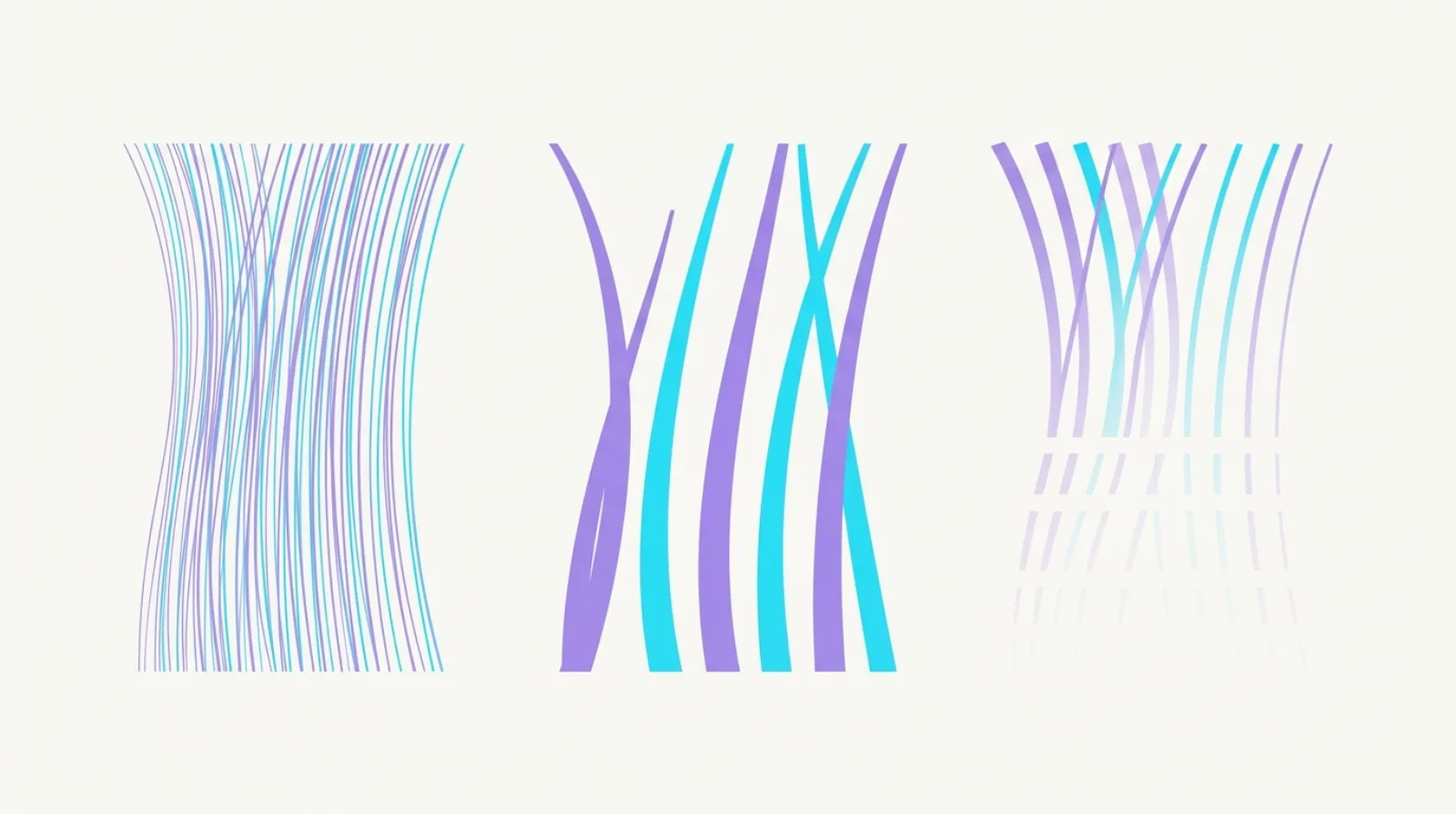
Hair growing back weaker is the quieter process behind most real thinning. In pattern hair loss, the most common form in both men and women, affected follicles shrink gradually and each generation of hair comes back finer and shorter, so density falls even while the daily fall count stays normal. The drain looks fine; the mirror slowly changes.
The first is covered in shedding vs thinning, which is the page to read if your worry started with hair in the shower. The second is what the rest of this hub manages: where it shows, how to style through it, and when to escalate. Knowing which problem you have is the single highest-value step on this page, and it costs a few photos and a measuring tape.
Work out what you are actually dealing with
Before changing a single product, collect three pieces of evidence.
The photo series. Part from above, hairline from the front, same light, once a month. Density change over months is the most reliable home signal there is, and a dated photo answers the is-it-worse spiral with a fact instead of a feeling.
The ponytail number. If your hair ties back, wrap a soft tape around the gathered base and write down the centimetres. Re-measure twice a year. A shrinking base is volume genuinely leaving; a stable base with wispy tail ends points to thin ends and breakage instead, which is a completely different, much cheaper problem.
The fallen-hair check. Full-length hairs with a tiny pale bulb are normal shed. Short snapped pieces are breakage. Shed hairs that keep getting finer and shorter over time fit pattern thinning.
Three words also do a lot of sorting work here: fine (skinny strands), thin (fewer strands), and thinning (the count is falling). They are three different situations with three different playbooks, and fine vs thin vs thinning untangles them in one read. A surprising share of people worried about thinning turn out to have stable fine or low-density hair plus damaged ends, all of which styling fixes.
The map: where it thins decides what helps
Generic thinning advice fails because the fix depends on the location. This hub has a page for each of the four places hair actually thins.
Thinning at the front covers the hairline zone: maturing vs receding, why tight pull-backs are the enemy, and the fringe and texture-forward styles that flatter a softening front line.
The thinning crown covers the spot you cannot see without a second mirror: how to check it honestly, why the comb-over instinct backfires, and the shorter layered shapes that cover naturally.
Receding hairline styles is the stage-by-stage ladder for the classic M-shaped recession, from first lifted corners to the honest case for the buzzer, with face-shape adjustments.
Thin, see-through ends covers the impostor: a sparse hemline on long hair that looks like loss but is almost always breakage and age of the fibre, fixed with a blunt cut and better habits.
Start with the page that matches your mirror. Each one stands alone, links sideways to its neighbours, and ends with what the others share: a way to preview the recommended cuts on your own photo before committing to any of them.
The styling toolbox, compressed
Every location page draws on the same physics, collected in full in volume cuts and tricks and compressed here to five rules.
Shorter reads thicker. Length is weight, weight pulls flat, and flat shows scalp. The fullest-looking cuts for thin hair live between chin and collarbone, or shorter.
Blunt edges beat wispy ones. A solid hemline stacks all your density at one line; tapered see-through ends dissolve it. The blunt cut is the thin-hair workhorse for a reason.
Roots decide volume. Thirty seconds of blow-drying the roots against their natural fall, an upside-down finish, or two velcro rollers at the crown outperform any product bought for the purpose.
Matte beats shine. Shine clumps sparse hair into strands with visible scalp between them; matte texture products, mousse, and dry shampoo keep it looking full.
Move the part. Hair trained to one part collapses flat along it, exactly where scalp shows most. Flipping or zigzagging the line is free volume.
None of this treats anything, and that is fine: looking the way you want to look while you sort out the rest is a legitimate goal, and for stable fine or low-density hair it is the entire game.
For women, for men: same biology, different maps
Pattern hair loss runs in both sexes, but it shows up differently enough that this hub gives each its own page.
Thinning hair in women covers the female map: the widening part and shrinking ponytail with a front hairline that usually holds, the post-partum shed that terrifies new mothers and almost always resolves on its own, the midlife and menopause volume shift, styling that adds density without tension, and the emotional weight of the whole subject, which deserves practical respect rather than dismissal.
Thinning hair in men covers the male map: why the temples and crown lead while the horseshoe never quits, the honest style ladder from first lifted corners to the buzzer, the beard as the most underused rebalancing tool a thinning man owns, and a practical calendar that replaces years of mirror anxiety with a few minutes of tracking a month.
Both pages carry the same two spines: styling moves you can use this week, and a clear line on when the trend belongs in front of a doctor or dermatologist, because treatments exist for pattern loss in both sexes and every medical reference agrees on one thing: earlier conversations preserve more options than later ones.
The concealment tier, honestly labelled
When cuts and styling stop covering what you want covered, added hair takes over, and it deserves honest labelling rather than marketing.
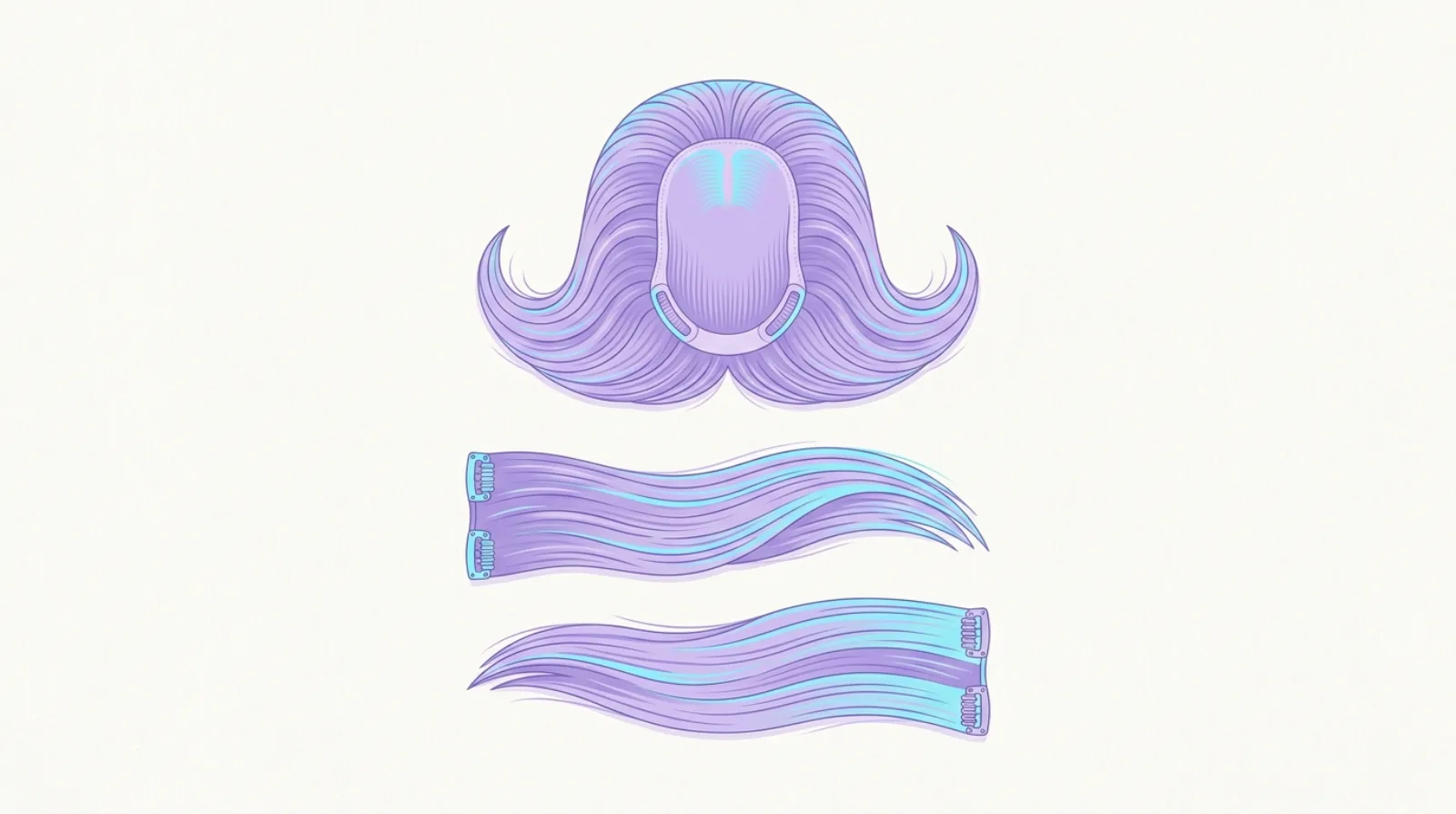
Fibres shake onto a thin part or crown and fatten what is there in thirty seconds; they need existing hair to cling to, wash out, and fear rain. Toppers clip over the crown and part zone, targeting exactly where women's thinning concentrates, with a learning curve and a clip-rotation rule that protects the anchor hair. Extensions add length and fullness to the lengths but nothing to the top, and on already-thinning hair their weight and tension make them the option to approach most carefully, since dermatology guidance names sustained pulling as a genuine cause of loss. Wigs replace the whole question, and modern pieces do it convincingly.
All four live in toppers, extensions, and fibres, chosen by goal rather than by product category, with the maintenance realities spelled out.
One principle covers the whole tier: concealment changes what shows, not what is happening. It is a fully legitimate choice, it removes real daily distress, and it works best run in parallel with understanding the cause rather than instead of it.
When a doctor belongs in the picture
This hub styles; it does not diagnose. Here is the escalation logic it uses throughout, in one place.
See a doctor or dermatologist promptly for patchy loss (distinct bare areas rather than diffuse thinning), loss with scalp symptoms like itching, burning, scaling, or soreness, sudden heavy shedding that has not settled after a few months, or loss alongside other body changes such as fatigue or unexplained weight change. These patterns can mean conditions that behave nothing like ordinary pattern loss, some of which are very treatable and a few of which scar follicles permanently if ignored, which is why speed matters.
Book a normal appointment when your tracking shows a real trend: the part is wider than in year-old photos, the ponytail base keeps shrinking, the hairline keeps moving. Bring the photos, a timeline, recent life events, and your medication list; they turn a vague worry into a workable consultation.
On treatment: options exist for pattern loss, non-prescription and prescription, and they consistently work better started earlier. Which one fits you, whether any does, and what results are realistic are questions for that appointment, not for a styling site, and definitely not for a supplement ad.
The encouraging part, said plainly: most people who finally book the appointment describe it as far easier than the months of wondering that preceded it.
What not to spend money on
The thinning-hair aisle monetizes worry, so here is the short honest list of what to skip.
Regrowth-branded shampoos and supplements from ordinary store shelves range from cosmetic to unproven. A shampoo touches your scalp for a minute; no rinse-off product has solid evidence for regrowing hair, and supplement marketing runs far ahead of supplement science. If you want to spend on regrowth, spend it in a doctor's office where the options have actual evidence.
Gadgets such as laser combs, scalp rollers, and massage devices sold on testimonials: the same rule applies.
Miracle oils and dense conditioning routines aimed at thickness: heavy product on thin hair costs volume immediately and regrows nothing.
What does earn its money: a good cut on a regular schedule, which is the single highest-return purchase in all of thin-hair care; one root-lift product and one matte finisher; dimensional colour done gently, which visually doubles density for many people; a quality topper or fibres if you are at the concealment stage; and the doctor's visit if your trend line is real.
The pattern is simple: money spent on how the hair you have looks pays reliably, and money spent on promises to change what grows does not, unless a professional with a prescription pad is involved.
See the cut before you commit to it
Nearly every page in this hub ends at the same practical step, because it solves the problem every thinning person shares: the recommended cuts are almost always shorter, and shorter is scary to commit to on faith.
Kurli removes the faith requirement. Upload a selfie and it renders real styles onto your own photo: the crew cut and buzz from the men's ladder, the blunt bob from the women's toolbox, the crop with a fringe that hides a softening front line. Your actual face, your actual hairline, compared side by side in two minutes. The app also reads your face shape on your device and explains why each style suits you, which matters here because thinning narrows the style menu and face shape decides which of the remaining options to order first.
Use it the way the location pages recommend: render the two or three candidates your page points to, pick the winner, and take the render to your barber or stylist as the brief. A picture of the cut on your own head is the clearest instruction a chair conversation can start from, and for the biggest step on the ladder, the buzz decision, it converts an irreversible-feeling leap into a preview you can sit with overnight.
The face-shape read and your top style pick are free, the render onto your own photo runs on credits, and it turns this whole hub from reading into a short-list you can actually see.
How to use this hub
Ten guides is a lot, so here is the routing table.
Worried by hair in the drain or brush: start at shedding vs thinning. Most drain panic resolves there.
Sure something is changing, and you know where: go straight to your location page: the front, the crown, the hairline, or the ends.
Not sure your hair is even thinning vs just fine or thin: fine vs thin vs thinning sorts it in one read.
Wanting the full picture for your situation: the women's and men's pages are complete on their own.
Ready to act today: volume cuts and tricks for styling, toppers, extensions, and fibres for coverage.
And since thinning is only one input into a good haircut, pair this hub with hairstyles by hair type, where the styling-focused thinning hair and fine and thin hair guides live, and with hairstyles by face shape for the overall shape decision.
For the population numbers behind all of this, prevalence by age and sex, treatment trial results and more, see our sourced hair loss statistics and treatment statistics.
Where it thins
Thinning at the front
How to tell a maturing hairline from real recession, and the cuts that flatter a thinner front.
Read the guide →
Thinning at the crown
Check your own crown properly, then use shorter layers and smart styling instead of a comb-over.
Read the guide →
Receding hairline styles
The styles that work with a receding hairline at every stage, not against it.
Read the guide →
Thin, see-through ends
Why the last few centimetres of long hair go stringy, and the cuts that fix it.
Read the guide →Understanding it
For women and for men


Making the most of it
Common questions
How do I know if my hair is thinning or just shedding?
Shedding is daily fall, normally 50 to 100 hairs a day per the AAD, and it shows in the drain. Thinning is hair growing back finer and sparser, and it shows in the mirror over months: a widening part, a shrinking ponytail base, a moving hairline. Track with monthly photos and a twice-yearly ponytail measurement rather than judging by drain days.
How much daily hair loss is normal?
About 50 to 100 hairs a day is normal shedding. People who wash every few days see several days of accumulated shed at once, which looks dramatic and is not. A sudden diffuse surge beyond that, especially two to four months after childbirth, illness, or major stress, is usually a temporary shedding phase that settles on its own.
What is the best haircut for thinning hair?
Shorter and blunter than instinct says. For women, a chin-to-collarbone bob or lob with a solid hemline and minimal layering. For men, a crew cut, short textured crop, or buzz depending on the stage. Length is weight, weight pulls hair flat, and flat shows scalp, so shorter reliably reads thicker.
Why is my part getting wider?
A gradually widening part is the classic early sign of female pattern hair loss, where density across the top drops as regrowing hairs come in finer while the front hairline usually holds. Compare photos taken months apart in the same light, and bring a real trend to a doctor or dermatologist.
Why do men thin at the temples and crown first?
In male pattern hair loss, follicles at the temples and crown are genetically sensitive to normal hormone signals and shrink cycle by cycle, while follicles at the sides and back lack that sensitivity. That is why the M shape and crown circle are so universal, and why the horseshoe keeps growing for life.
Does thinning hair grow back?
It depends on the cause. Temporary shedding phases, including post-partum shedding, typically recover on their own. Pattern thinning does not reverse by itself, though treatments exist that preserve and sometimes partially recover density, and they work best started early. That is why naming the cause with a doctor matters more than any product choice.
What styling tricks make thin hair look fuller immediately?
Blow-dry the roots against their natural fall or upside down, switch or zigzag your part, use mousse at the roots and a matte texture product instead of anything shiny, keep conditioner from the ears down, and consider dimensional colour to cut scalp contrast. Together they add more visible volume than any single product.
Do hair fibres and toppers actually look natural?
Good ones do. Colour-matched fibres disappear into a thin part or crown in person and photos, though they wash out and fear rain. A quality topper, matched and trimmed into your cut by a stylist, passes daily inspection. Extensions add length and volume to the lengths but do nothing for a thin top.
Can tight hairstyles cause hair loss?
Yes. Constant tension from tight ponytails, braids, buns, heavy extensions, and clips biting the same spot can cause traction loss along the lines of pull, and dermatology guidance lists tight hairstyles among real causes of hair loss. Looser styles, rotation, and lighter added pieces prevent it, and early traction loss can recover once tension stops.
When should I see a doctor about hair loss?
Promptly for patchy loss, scalp itching, burning, scaling or pain, sudden heavy shedding that persists beyond a few months, or loss alongside other body changes. On a normal timeline when your photos and ponytail measurements show a genuine trend. Bring the photos, a timeline, and your medication list; earlier conversations keep more options open.
Do shampoos or supplements regrow thinning hair?
Store-shelf regrowth shampoos and hair supplements have no solid evidence behind them; a rinse-off product cannot regrow hair, and supplement marketing outruns the science. Evidence-based treatments for pattern loss exist, non-prescription and prescription, and the right desk for that conversation is a doctor's or dermatologist's.
Can I preview a shorter cut before committing to it?
Yes, and for thinning hair it is the most useful step there is, since the best cuts are usually shorter and scary to commit to blind. Upload a selfie to Kurli and it renders a crew cut, buzz, blunt bob, or fringe-forward crop on your own photo, so you can compare candidates and take the winner to your barber or stylist.
Sources
Medical facts on this page are supported by these sources. Styling recommendations are guidance, and diagnosis belongs with a doctor or dermatologist.
- Do you have hair loss or hair shedding? (American Academy of Dermatology)
- Hair loss: Who gets and causes (American Academy of Dermatology)
- Thinning hair and hair loss: Could it be female pattern hair loss? (American Academy of Dermatology)
- Male pattern baldness (MedlinePlus, U.S. National Library of Medicine)
- Telogen Effluvium (StatPearls, NCBI Bookshelf)
- Hair loss (NHS)
- Hair Loss Resource Center (American Academy of Dermatology)