The complete guide
Bangs and fringe
Bangs change a face more than any other haircut decision, because they change your visible proportions: how tall your forehead reads, where the eye enters your face, and which lines cross it. They are also the cut people regret most often, since a fringe takes a minute to cut and months to grow back. This hub covers the whole decision in plain language: every fringe family, which one suits your face shape and hair type, what the upkeep honestly costs, and how to see bangs on your own photo before anyone picks up scissors.
Bangs or fringe: the same haircut, two words
Bangs and fringe mean the same thing. They are two names for the hair that falls over your forehead. "Bangs" is the American word and "fringe" is the British and Commonwealth one, which is why Wiktionary lists fringe as the UK synonym of bangs. Nothing about the cut changes with the word.
So a stylist in London who says "a full fringe" and one in New York who says "full bangs" are describing one haircut. Canada and Australia use both, often in the same salon. This page uses them interchangeably for that reason.
Where the words do carry a difference is in what follows them. Fringe tends to be used with the shape: a curtain fringe, a blunt fringe, a micro fringe. Bangs tends to be used the same way in American salons: curtain bangs, blunt bangs, micro bangs. Learn the shape names below and either word gets you the cut you pictured.
What a fringe actually changes
Strip away the trend talk and a fringe does three measurable things.
It shortens the visible face. Hair covering the forehead is length the eye no longer counts. A full fringe can take several centimetres off how tall a face reads, which is a gift to a long face and a cost to a round one. The same cut, opposite outcomes.
It draws a line. Every fringe lays a line across the upper face: horizontal for a straight-across fringe, diagonal for a side sweep, two soft outward curves for curtain bangs. Horizontal lines widen, diagonals lengthen and soften, and broken, wispy lines barely register. Most fringe advice on this site compresses to that single sentence.
It moves the frame. With no fringe, your face is framed from the sides only. A fringe closes the frame at the top, which concentrates attention on your eyes and the centre of your face.
None of these effects care what is fashionable this year. They are geometry, which is why a fringe chosen for your proportions keeps working after the trend cycle moves on, and one chosen from a trending photo often stops working the day it is cut.
The six bang families
Every fringe you have seen is one of six families, or a blend of two.
Straight-across (blunt) bangs: one solid line at or near the brows. Full coverage, strong horizontal, the boldest everyday fringe and the strictest about upkeep.
Curtain bangs: parted in the middle, swept outward, blended into the hair beside the face. The most universally flattering and the easiest to grow out, which is why they are this hub's default recommendation for first-timers.
Side-swept bangs: one diagonal across the forehead from a side part. The lowest-effort fringe and the easiest to hide on off days.
Wispy bangs: a thin, see-through veil with soft, broken ends. The fine-hair specialist.
Curly bangs: any of the above cut for natural curl, dry, with shrinkage built in. A method as much as a style.
Micro bangs: a short fringe ending well above the brows. Striking, specific, and the highest commitment on the list.
Each family has a full guide covering who it suits, the styling routine, and the honest upkeep bill.
Choosing by face shape
Face shape is the best starting filter, because it predicts what each fringe's geometry will do on you. For the complete face-shape overview comparing every fringe across all six shapes on one page, see our bangs by face shape guide. It is the head-to-head reference this hub builds on.
The short version, shape by shape:
Round faces want diagonals, not horizontals: long curtain bangs or a side sweep lengthen, while a wide blunt fringe widens. The full reasoning is in bangs for round faces.
Long and oblong faces hold the best hand in the game: a fringe is the single most effective shortening tool they have, and the heavier the coverage, the more it delivers. See bangs for long faces.
Square faces are about line quality: soft, broken, diagonal fringe lines flatter a strong jaw, and hard horizontal ones harden it. See bangs for square faces.
Heart faces need the fringe to quiet a wide forehead and set up softness near a narrow chin. See bangs for heart faces.
Oval faces can wear essentially everything, so they should choose by hair type and upkeep instead.
Not sure of your shape? How to find your face shape settles it in a few minutes, or upload a selfie and let Kurli estimate it on your device.
Choosing by hair type
Your hair's texture decides how much daily work each fringe demands, and some pairings are simply better deals than others.
Straight hair holds a blunt line with minimal effort and is the natural home of the straight-across fringe. Its curtain bangs need a daily round-brush or roller set to hold the sweep.
Wavy hair gets curtain bangs and side sweeps almost free, because the natural bend produces the sweep on its own. It fights a blunt line every morning.
Fine hair does best with either a wispy fringe, which spends very little hair, or a small blunt fringe, which concentrates it. The wider logic lives in our fine and thin hair guide.
Thick hair needs fringe sections kept shallow so the front does not turn into a heavy slab.
Curly hair can wear nearly any fringe shape, provided it is cut dry with shrinkage built in; the non-negotiables are in the curly bangs guide and the broader curly hair guide.
A useful rule when face shape and hair type disagree: the face shape picks the fringe's geometry, and the hair type picks the version of that geometry you can actually live with.
The commitment ladder
Fringe styles differ more in upkeep than in anything else, and mismatched upkeep is the quiet cause of most fringe regret. Ranked from lightest commitment to heaviest:
Side-swept sits at the bottom: two minutes of styling, trims stretching to five or six weeks, tucks behind an ear whenever you are done with it, and grows out along its own diagonal.
Curtain bangs ask a little more: a quick set for the sweep most mornings, trims every four to six weeks, and the easiest grow-out of any fringe.
Wispy bangs are similar, with one extra vigilance: keeping trims point-cut so the soft edge stays soft.
Curly bangs trade trim frequency for styling craft: six to eight weeks between cuts, but a wash-day routine and refresh technique to learn.
Straight-across bangs step up sharply: daily styling to hold the line, separate fringe washes, trims every three to four weeks.
Micro bangs top the ladder: trims every two to three weeks, no hiding option at all, and the longest grow-out on the menu.
Be honest about your real morning budget before choosing a rung. A fringe one step too demanding does not get maintained; it gets resented, then grown out.
The daily reality nobody mentions
Three facts of fringe life apply to every style on this page, and knowing them in advance is the difference between minor routine and daily annoyance.
The fringe goes greasy first. It rests directly on your forehead, wicking up skin oil, sunscreen, and everything your hands transfer when you touch it. The fixes are habits, not products: wash the fringe alone at the sink between full washes, use a little dry shampoo before it looks greasy rather than after, and keep your hands off it. If your forehead starts breaking out under a new fringe, the American Academy of Dermatology points to hair products as a common trigger, so lighten those before blaming the cut.
The fringe meets heat more than any other hair. It is the most-styled section on your head, and it is also fine, exposed hair at the hairline. Repeated high heat on the same small section is exactly the concentrated styling damage dermatologists warn about, so prefer heatless setting, rollers, damp styling, cool-air finishes, and save the iron for occasions.
Trims are part of the deal. Hair grows about a centimetre a month, and every fringe crosses from right to wrong within weeks of that growth. Budget for the trim cycle of the style you pick, learn the safe home maintenance in trimming bangs at home, and ask your salon about between-visit fringe trims, which many offer cheaply or free.
Know the exit before you enter
The least romantic and most useful question to ask before cutting a fringe: what happens when you want it gone?
The answer is fixed by arithmetic. Hair grows roughly a centimetre to a centimetre and a quarter a month, so a brow-length fringe takes eight to twelve months to merge fully back into your hair, passing through a famous eye-level awkward stage around months two and three. A micro fringe adds months to that; a side sweep or curtain fringe subtracts most of it, because their shapes lengthen gracefully instead of hanging in your eyes.
This is why exit difficulty should be part of the entry decision. If you are fringe-curious but uncertain, enter through a style whose exit is cheap: a long curtain fringe or a cheekbone-length sweep can be abandoned almost invisibly, while a blunt or micro fringe commits you to the full grow-out or a re-cut.
And when the time comes, the grow-out is a technique problem with known solutions: reshaping trims that dissolve the fringe's hard edge, the curtain-bang transition at nose length, and a toolkit of pins and twists for the awkward weeks. The complete stage-by-stage plan is in growing out bangs, and reading it before you cut is the closest thing to fringe insurance that exists.
Maintenance you can do yourself
Between salon visits, a fringe needs small interventions, and doing them safely at home is a genuinely learnable skill with four rules.
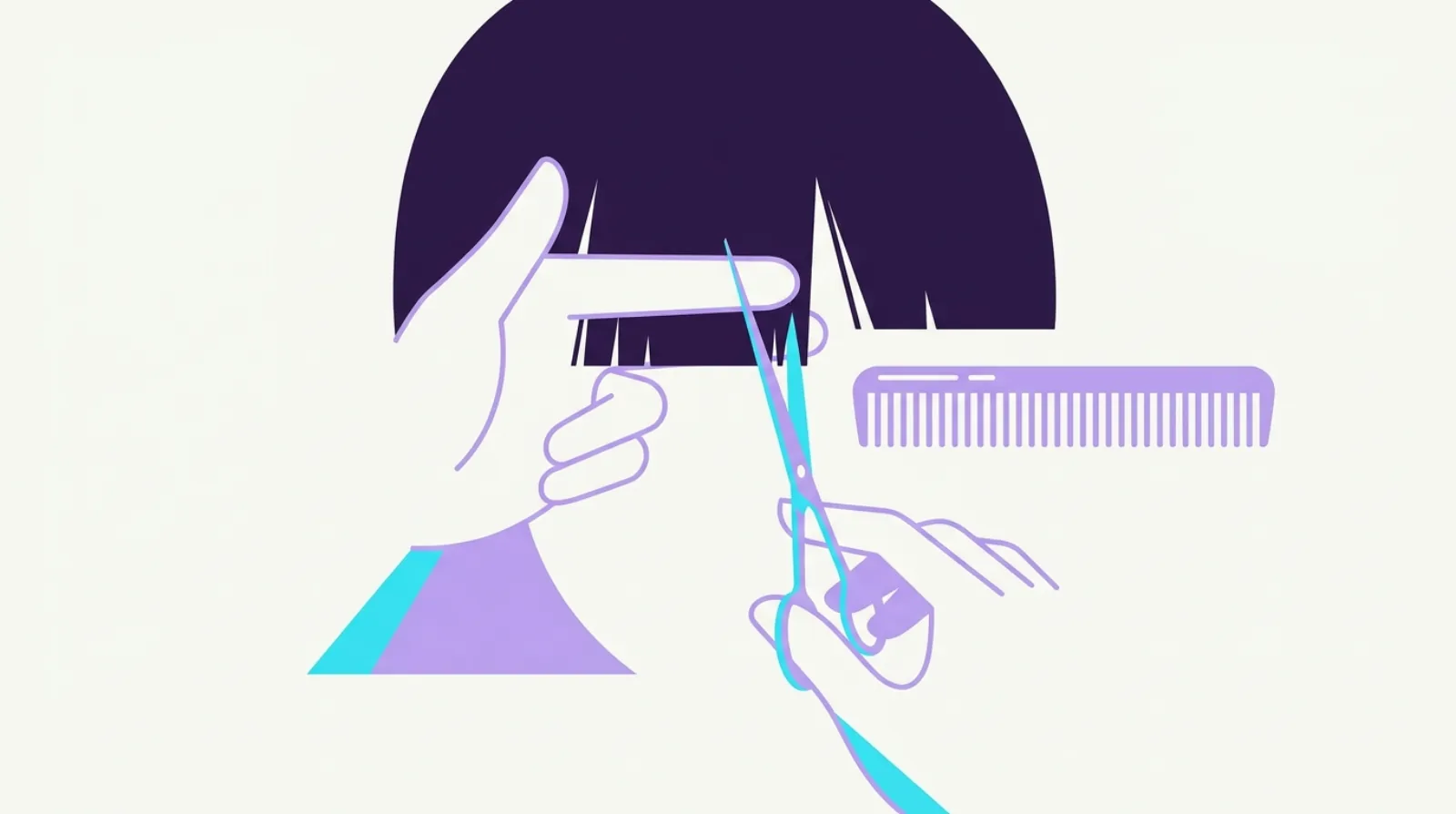
Cut dry, always, because wet hair stretches and springs shorter as it dries. Cut tiny amounts, three to six millimetres, less than feels worthwhile. Point cut, snipping vertically up into the ends rather than straight across, so small errors vanish into a soft edge instead of becoming a crooked line. And use real hair scissors, because kitchen scissors crush and fray hair ends into future split ends.
Just as important is knowing the boundary. Home scissors maintain a shape; they do not design one. Reshaping a fringe, cutting in a first fringe, evening up a curly fringe, and repairing a home trim gone wrong are all stylist work, and each is cheaper done at a salon than after a rescue attempt. The full method, the scissors to buy, per-style instructions, and the honest stop-list are in trimming bangs at home.
The sustainable rhythm most fringe wearers land on: professional cuts on the normal cycle, one or two tiny home trims in the gaps, and salon fringe-trim walk-ins whenever offered. Run both systems and a fringe stays permanently presentable; run only one and it alternates between fresh and overgrown.
Fringe myths, corrected
A few beliefs circulate widely enough to steer people wrong, so here are the corrections in one place.
"Bangs do not suit round faces." False as stated. The wide blunt fringe does not suit most round faces; long curtain bangs and side sweeps actively flatter them, because diagonals lengthen. The style was wrong, not the category.
"Curly hair cannot have a fringe." False. A curly fringe cut wet and worn straightened fails; one cut dry with shrinkage built in works and frames beautifully. Again, method, not category.
"Bangs make fine hair look thinner." Backwards, usually. A blunt fringe concentrates the front section into one full-looking block, which is why stylists often suggest it for fine hair. What thins fine hair is a deep, heavily thinned fringe.
"You can trim a fringe with any scissors." Kitchen scissors crush and fray hair ends, which becomes split ends later. Basic hair scissors cost little and are the one purchase home maintenance requires.
"Growing out bangs just means waiting." Waiting without trimming produces a solid overgrown block at eye level for months. Reshaping trims that remove no length are what make a grow-out painless, per the growing-out guide.
"A fringe hides a big forehead, end of story." Partly true, but different fringes hide different amounts, and a high forehead is not the same thing as a long face. Our post on hairstyles for a high forehead separates the two.
The vocabulary that gets you the right cut
Most fringe disappointment happens in the consultation, not the cutting, and a handful of terms close the gap between what you said and what you meant.
Length by landmark, not adjective. "Short bangs" means four different things to four stylists. Touch the exact spot: at the brow, just above it, lash-grazing, mid-forehead. The same applies to where curtain halves or a sweep should end: cheekbone, jaw, or chin.
Point cut means snipping vertically into the ends for a soft, broken edge; blunt means one clean line. Saying which finish you want prevents the most common mismatch, a soft style with a hard edge or the reverse.
Section depth is how far back from the hairline the fringe reaches. Deep sections make full, heavy fringes; shallow sections make light, wispy ones. Fine-haired clients especially should ask how deep the stylist plans to go before the first snip, because section depth is the irreversible decision.
Cowlicks and growth patterns are worth raising yourself: "do my cowlicks fight this fringe?" A good stylist checks anyway; asking makes sure.
And bring a photo as a direction, not a contract, ideally a render of the fringe on your own face rather than someone else's. Our post on how to ask your stylist for the right cut expands all of this.
Try the fringe on before you cut it
Here is the asymmetry that shapes every fringe decision: cutting takes one minute, and undoing takes four to twelve months. That makes bangs the highest-regret haircut there is, and it makes previewing worth more here than anywhere else in hairstyling.
Photos of other people cannot preview a fringe for you, because the variables that decide the outcome are all yours: your forehead height, your hairline and its cowlicks, your brows, your face shape, your hair's texture. A fringe that transforms one face does nothing for another, and the photo cannot tell you which face is yours.
Kurli solves the actual problem: upload a selfie and it renders fringe styles onto your own photo, your real hairline, your real face, so you compare a blunt fringe, curtain bangs, and a side sweep on yourself before booking anything. The app also reads your face shape on your device and explains why each style suits you, which turns this hub's advice from general rules into a specific short-list.
Use it the way the by-shape guides here recommend: render the two or three candidates your shape and hair type point to, look at where your eye goes in each render, and take the winner, and the render itself, to your stylist. A screenshot of the fringe you want, on your own face, is the clearest brief a stylist can receive.
How to use this hub
Twelve guides is a lot, so here are the reading orders that make sense.
Starting from zero: read what a fringe changes above, then your face shape's guide, round, long, square, or heart, then the style guide it recommends. Oval faces and in-between shapes can start at the bangs by face shape overview instead.
Already know the style you want: go straight to its family guide in the cards below, and read growing out bangs before you commit, because the exit should inform the entry.
Already have a fringe: trimming bangs at home for the upkeep, and the grow-out guide when the time comes.
A fringe is one part of a haircut, not the whole of it, so pair this hub with the hairstyles by face shape hub for the overall cut and hairstyles by hair type for what your texture will cooperate with. And at any point, a selfie in Kurli turns the reading into a short-list you can actually see.
Bang styles
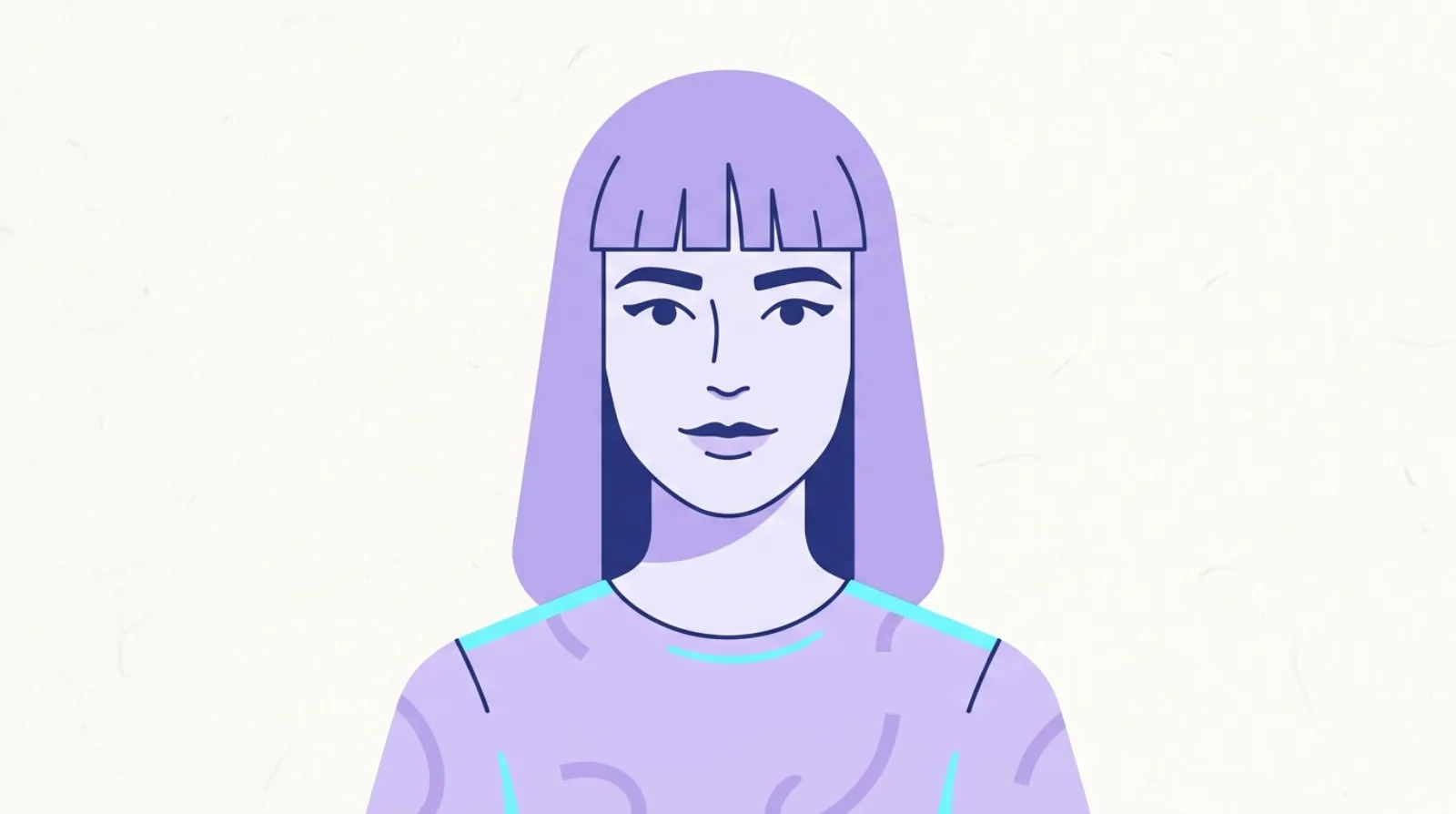
Straight-across bangs
One clean line across the forehead. Bold, tidy, and stricter about upkeep than it looks.
Read the guide →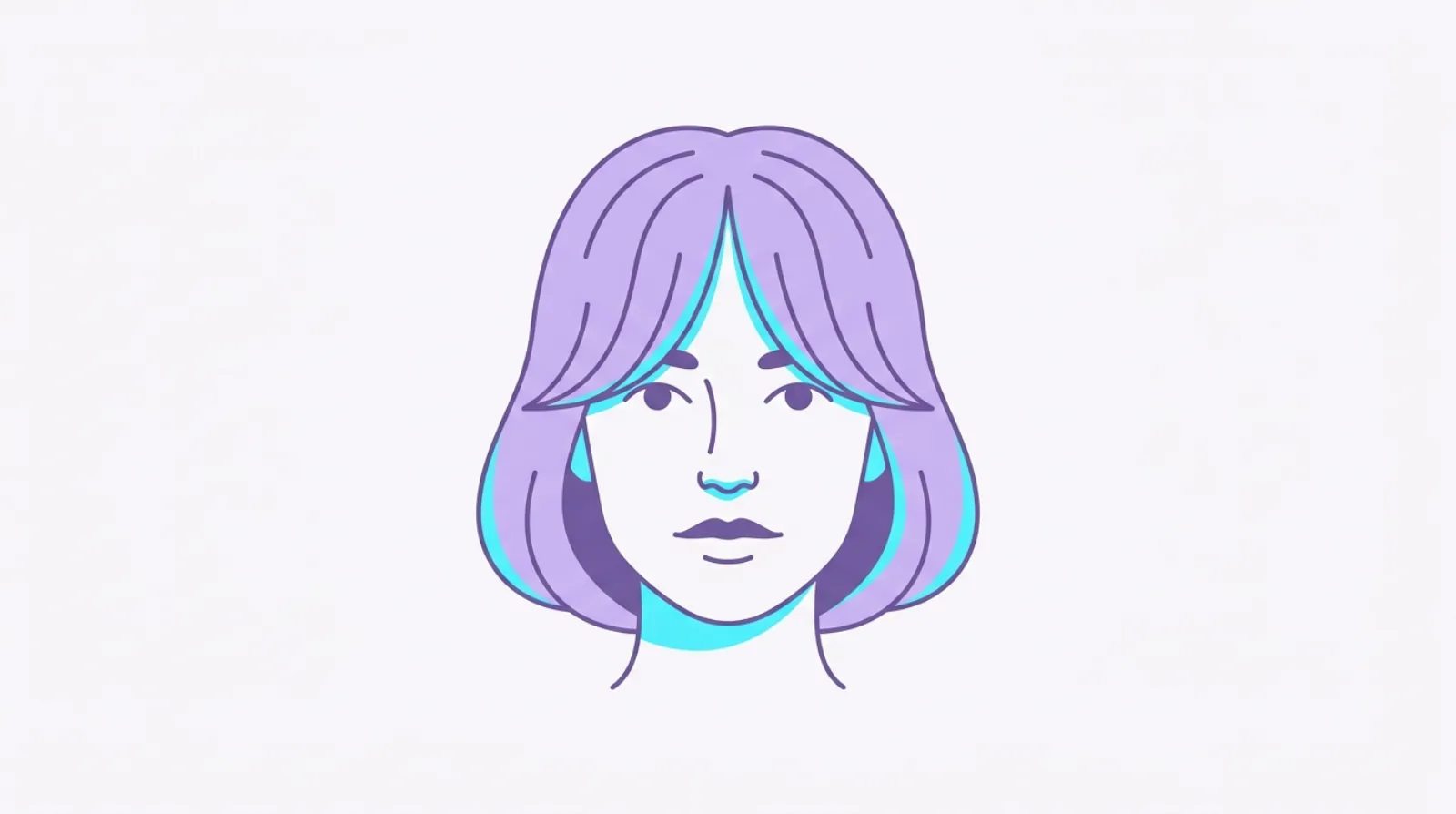
Curtain bangs
Parted in the middle, swept to the sides, and the lowest-risk fringe you can ask for.
Read the guide →
Side-swept bangs
One diagonal sweep across the forehead. Easy to wear, easy to hide, easy to grow out.
Read the guide →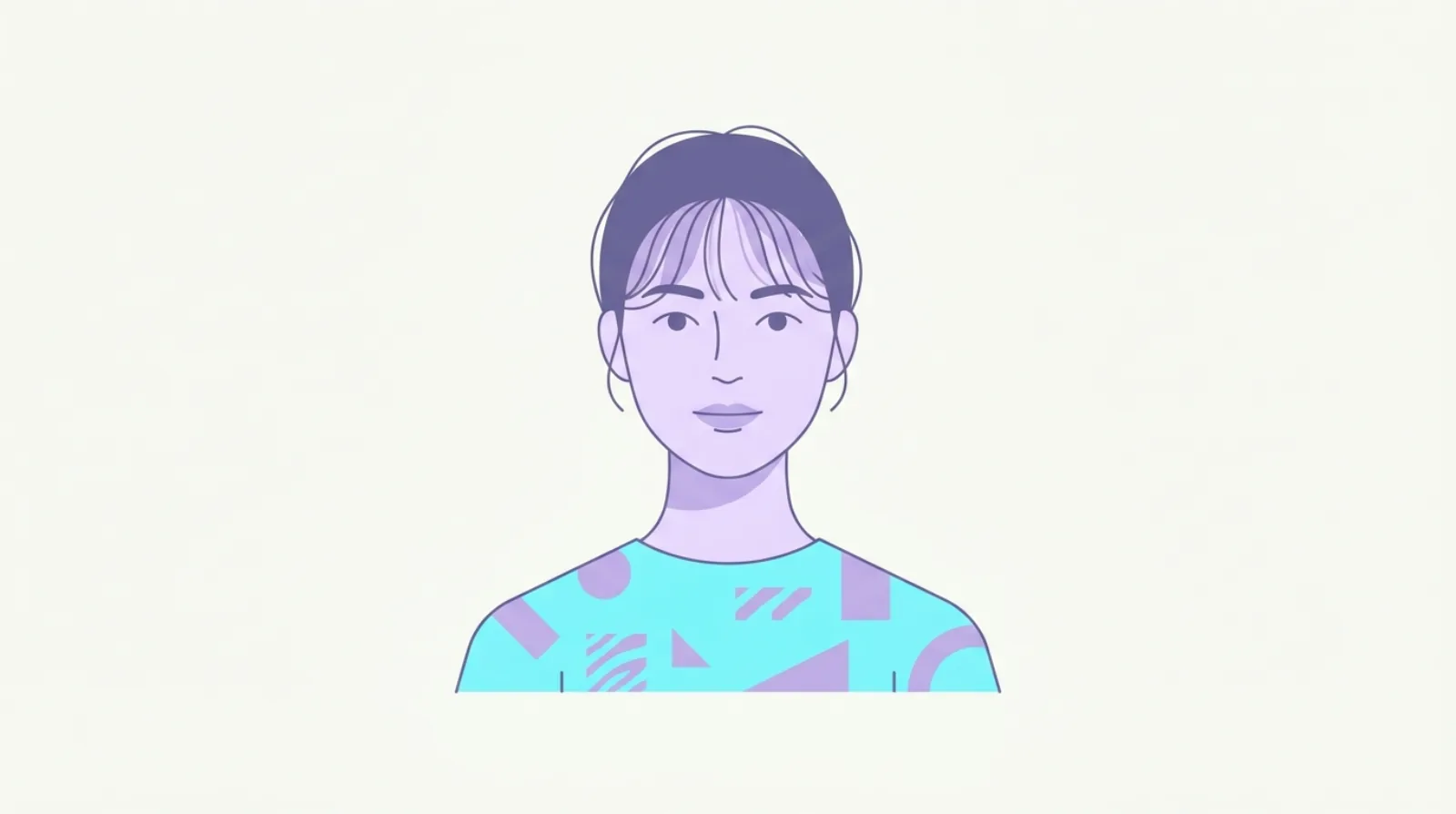
Wispy bangs
A soft, airy fringe that shows skin between the strands. Made for fine hair.
Read the guide →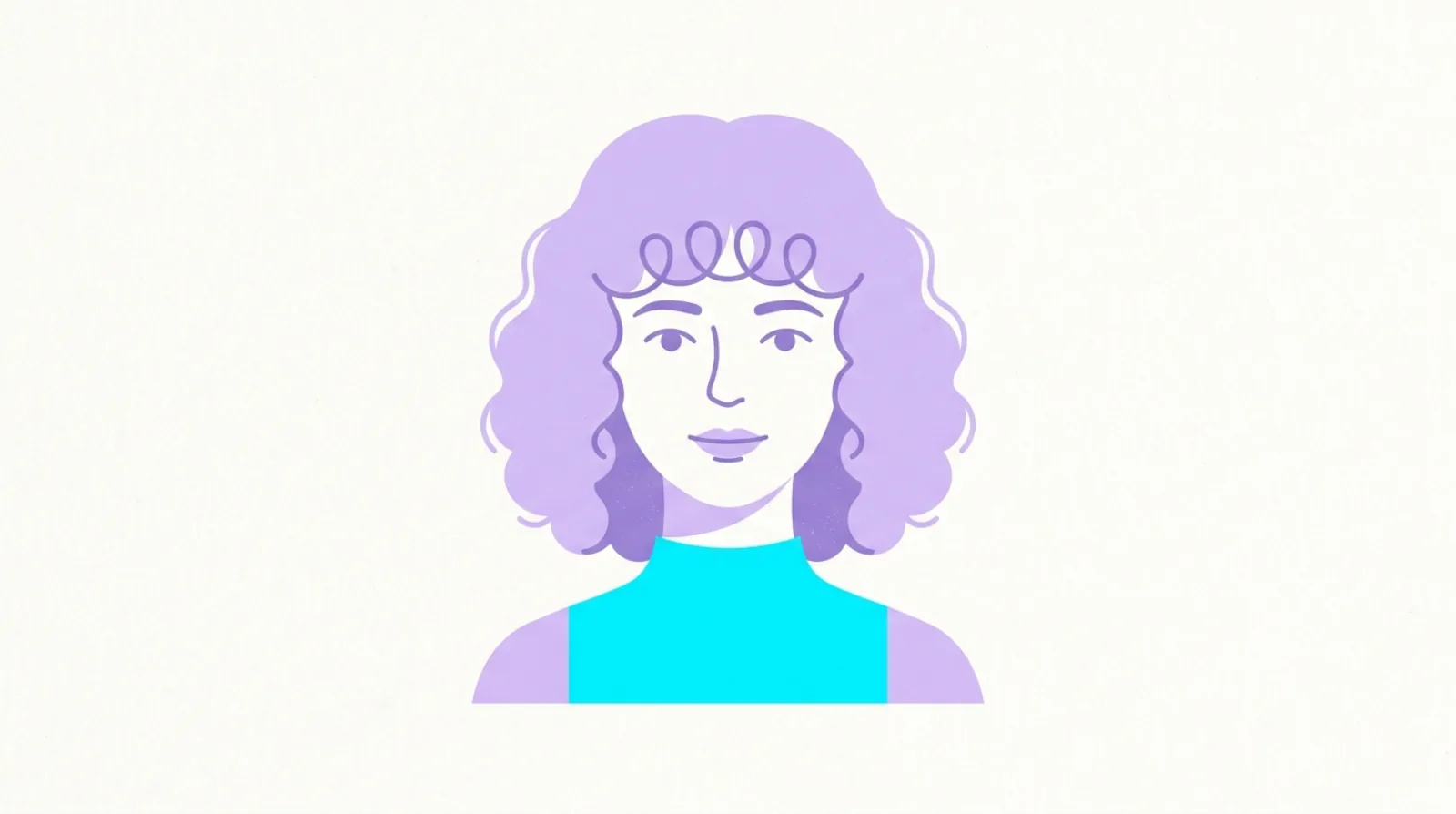
Curly bangs
Yes, curly hair can have a fringe. It just has to be cut for the curl, not against it.
Read the guide →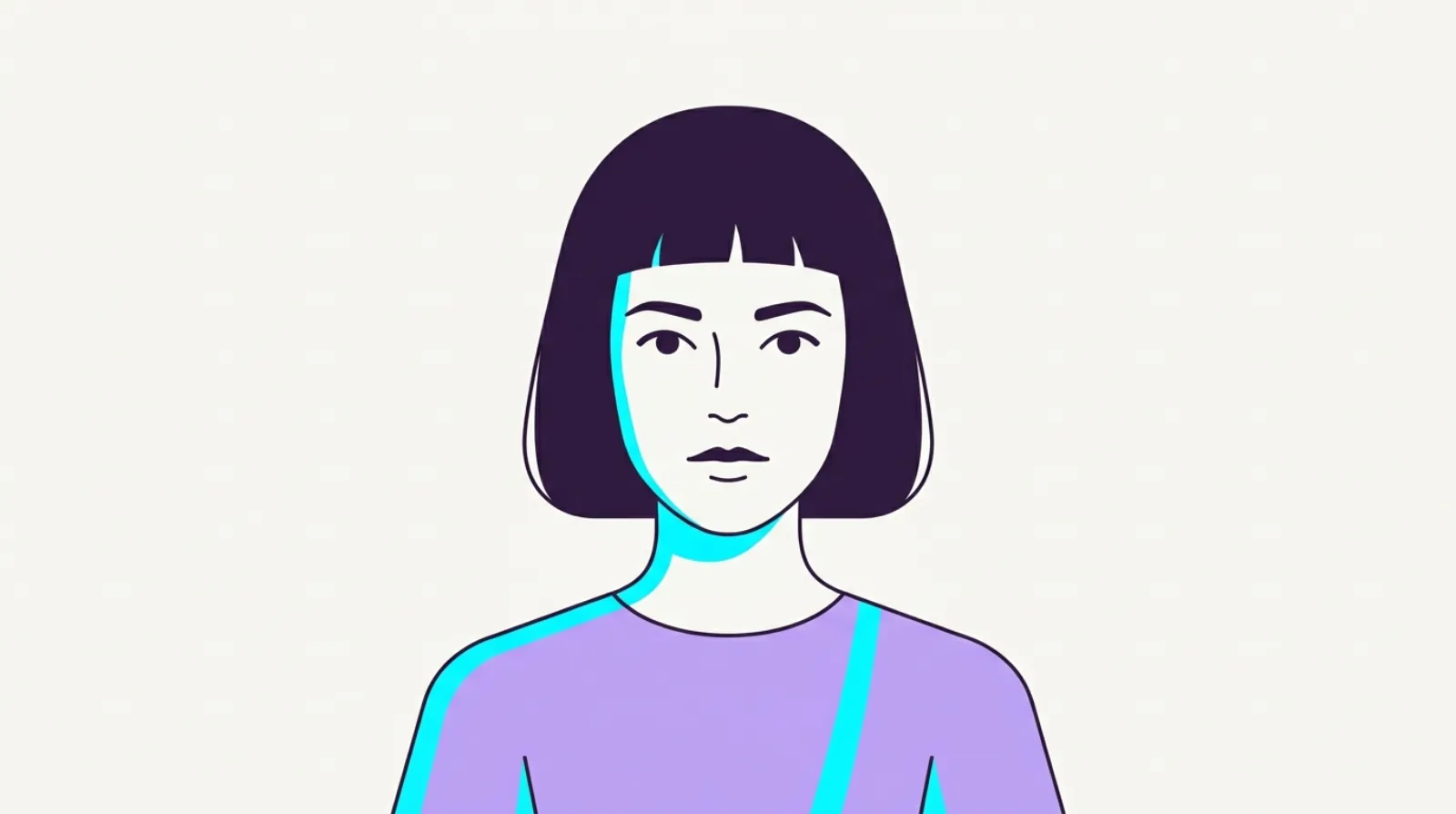
Micro bangs
A fringe that stops halfway down the forehead. Striking, specific, and a real commitment.
Read the guide →By face shape
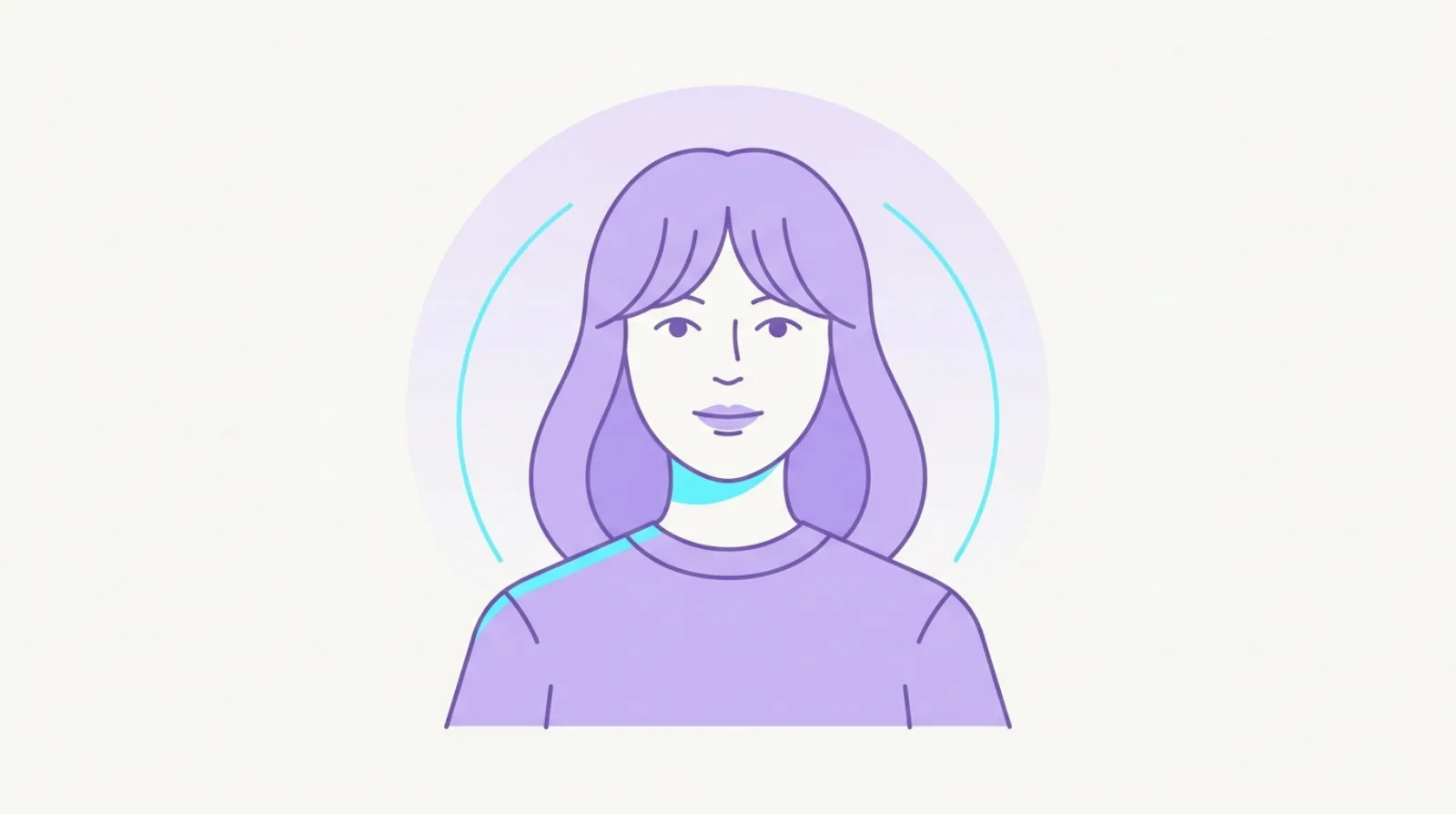
Bangs for round faces
A round face can absolutely wear a fringe. The trick is choosing diagonals over horizontals.
Read the guide →
Bangs for long faces
No tool shortens a long face like a fringe. Here is how much coverage to buy.
Read the guide →
Bangs for square faces
A strong jaw is an asset. The right fringe frames it instead of fighting it.
Read the guide →
Bangs for heart faces
A heart face is top-heavy by design. The right fringe quiets the forehead and feeds the chin.
Read the guide →Living with bangs
Common questions
What are the different types of bangs?
Six main families cover nearly everything: straight-across (blunt) bangs cut in one solid line, curtain bangs parted in the middle and swept outward, side-swept bangs falling on one diagonal, wispy see-through bangs, curly bangs cut for natural curl, and micro bangs ending well above the brows. Most other names are blends or variations of these six.
Which type of bangs suits my face shape?
Round faces suit long curtain or side-swept bangs, which add lengthening diagonals. Long and oblong faces suit full straight-across or heavy curtain bangs, which shorten the face. Square faces suit wispy and curtain styles, whose soft lines contrast a strong jaw. Heart faces suit side-swept and curtain bangs, which quiet a wide forehead. Oval faces can wear essentially any of them.
What are the lowest-maintenance bangs?
Side-swept bangs. They style in about two minutes, stretch to five or six weeks between trims because the diagonal hides growth, tuck behind an ear on days you want them gone, and grow out into face-framing layers without an awkward stage. Curtain bangs run a close second.
Do bangs make you look younger?
They can read that way, mainly because a fringe covers forehead lines and frames the eyes, but the effect depends entirely on choosing a style that suits your face and hair. A fringe that fights your proportions or your texture adds fuss, not youth. Choose by face shape and upkeep tolerance, not by the claim itself.
Are bangs a lot of work?
It varies more by style than people expect. Side-swept and wispy fringes need a couple of minutes a day; a blunt fringe needs daily styling, separate fringe washes, and trims every three to four weeks; micro bangs need trims every two to three weeks. Matching the style's demands to your honest morning budget matters more than the style itself.
Why do bangs get greasy faster than the rest of my hair?
Because the fringe rests directly on your forehead and absorbs skin oil, sunscreen, and whatever your hands transfer when you touch it. Washing the fringe alone at the sink, using dry shampoo before it looks greasy, and keeping hands off it control the problem for every fringe style.
How often do bangs need to be trimmed?
Micro bangs every two to three weeks, blunt bangs every three to four, curtain and wispy styles every four to six, side-swept styles every five to six, and curly bangs every six to eight because shrinkage hides growth. Small dry trims at home and salon fringe-trim walk-ins both stretch the cycle.
How long does it take to grow out bangs?
From brow length, eight to twelve months to merge fully with the rest of your hair, at the usual growth rate of about a centimetre a month. The awkward eye-level stage arrives around months two to three and is managed with pins, twists, and a reshaping trim that converts the fringe into curtain bangs.
Can I cut my own bangs?
Cutting in a first fringe yourself is a bad idea, but maintaining an existing fringe at home is learnable. The safe method: dry, styled hair, dedicated hair scissors, removing only a few millimetres, and point cutting vertically into the ends rather than cutting straight across. Reshaping and curly-fringe work belong with a stylist.
Can curly hair have bangs?
Yes, when the fringe is cut for the curl: dry, in its natural pattern, and left longer than the target to allow for shrinkage, which can swallow a third to half of the visible length. Cut wet and ironed daily, a curly fringe fails; cut correctly, it frames the face and shows off the curl.
Do bangs work with fine or thin hair?
Yes, with two good routes. A wispy fringe spends very little hair and matches fine hair's density, while a small blunt fringe concentrates the front section into one full-looking line. What fine hair should avoid is a deep, heavily thinned fringe, which drains hair from the crown and still looks sparse.
How can I see bangs on my face before cutting them?
Render them on your own photo. Kurli reads your face from a selfie, suggests styles with a reason for each, and renders a blunt fringe, curtain bangs, or a side sweep onto your actual photo, so you compare candidates on your real hairline and forehead. Bangs take months to undo, which makes the ten-minute preview the best insurance available.
Sources
Hair biology and hair-care facts on this page are supported by these sources. Styling recommendations are guidance.
- Tips for healthy hair (American Academy of Dermatology)
- How to style hair without damage (American Academy of Dermatology)
- 10 hair care habits that can damage your hair (American Academy of Dermatology)
- Are your hair care products causing breakouts? (American Academy of Dermatology)
- Physiology, Hair (StatPearls, NCBI Bookshelf)
- Aging changes in hair and nails (MedlinePlus, U.S. National Library of Medicine)
See the fringe on your own face
Kurli reads your face from a selfie, recommends styles that suit you, and renders each one onto your photo.
The face-shape read and your top pick are free. Your photo is never sold or used to train AI.