The Kurl
How long does a new hair routine take to work? A real timeline
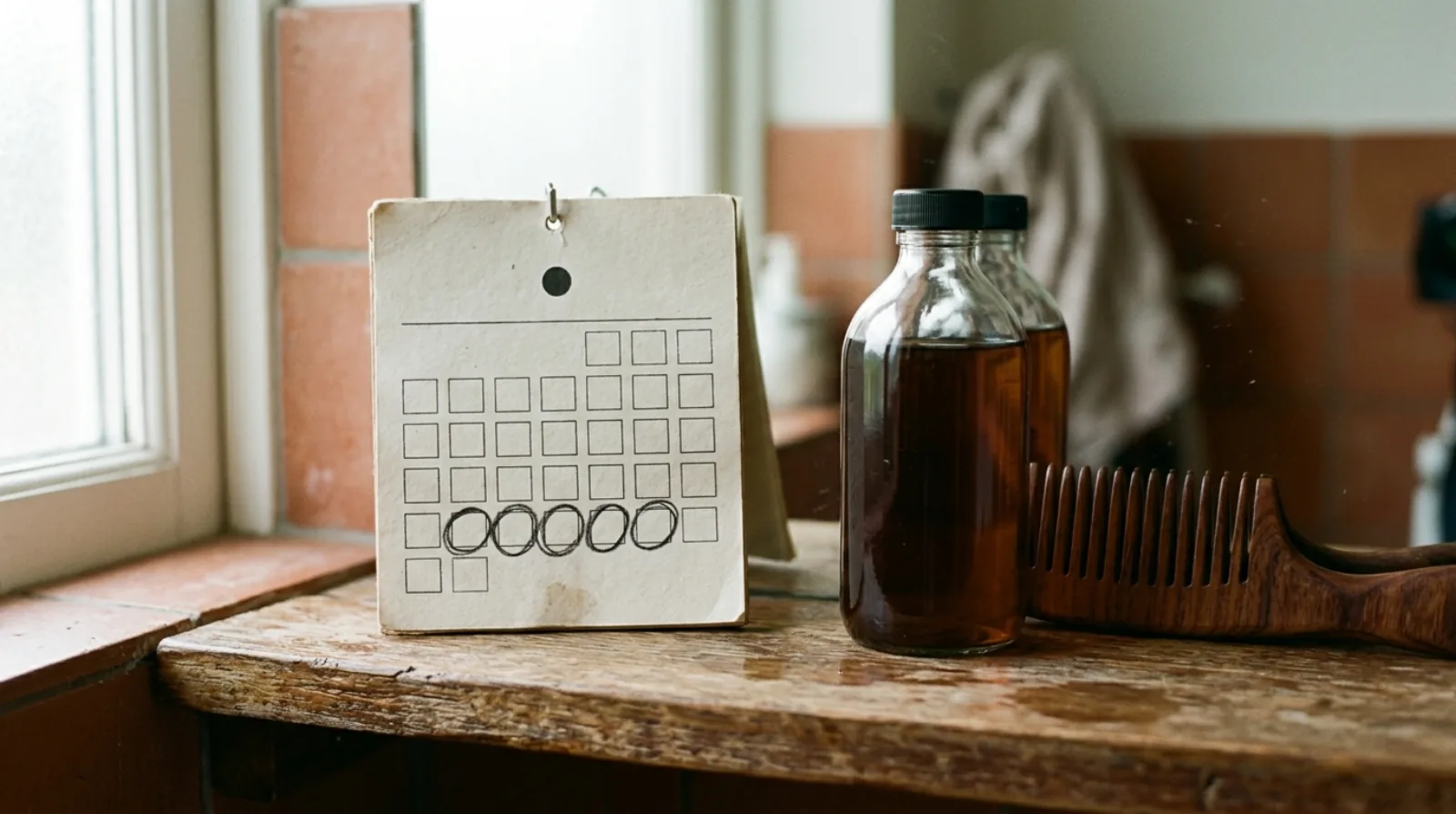
A new hair routine works on four separate timelines. Most of the frustration with "nothing is changing" comes from judging all four the same way. Scalp comfort and oil control can change within a few washes. Frizz and softness usually need two to four weeks. Damaged hair never repairs and only leaves as it grows out, at about 1 cm a month. Shedding changes over months, not weeks. Knowing which category your concern falls into is most of what it takes to give a routine a fair test.
Scalp and buildup: the fastest thing to change
If the problem was oily roots, flaking, or a scalp that felt coated, this is the part of a routine that moves quickest. A clarifying wash removes existing buildup in a single session, and most people notice a difference by the next wash once the cause, whether that is product residue, dry shampoo, or hard water, has stopped. A scalp that has built up product for months may take two or three washes to feel fully clear instead of one. The nape and the crown are the two spots most people under-rinse, so check those first if the scalp still feels coated after a clarifying wash.
Frizz and softness: two to four weeks, if the cause matches the fix
Frizz and dryness from the product or method you were using, the wrong shampoo, too much heat, rough towel drying, tend to improve within two to four weeks of a genuinely different approach. This window covers roughly four to eight washes for most people, enough time for a gentler routine to stop adding new damage and for the hair already on your head to benefit from consistent conditioning. Fine hair and coarse hair respond to the same change at different speeds, so treat the window as a starting point. Say you stopped rubbing your hair dry with a towel on the first of the month and started pressing the water out instead. By the fifteenth you have had about four washes, and the frizz the towel was causing should already be lower. Frizz that comes from dryness takes the rest of the month.
The catch is that this timeline only applies if the diagnosis was right in the first place. A routine built around the wrong cause, treating dryness with more oil when the real issue was product buildup, for example, will not show improvement in four weeks because it never addressed the real problem. Two to four weeks with no change at all is a signal to reconsider the cause. Waiting longer will not help.
Damaged ends: they do not heal, only grow out
This is the one category where more time never helps the existing hair, only the hair growing in behind it. Scalp hair grows at a rate of about 0.35 mm a day, roughly 1 cm a month, according to StatPearls, and that rate does not speed up or slow down based on how good your routine is. A routine can protect new growth from developing the same damage and can make already-damaged ends feel smoother in the meantime, but it cannot rebuild a strand that has already broken down, because hair above the scalp has no living cells left to repair.
This means the realistic timeline for visibly healthier ends is measured in months per centimetre of damage, not weeks. Someone with damage reaching several centimetres up the strand is looking at the better part of a year before that section has grown out and been trimmed away, regardless of which products they use in the meantime. We cover how this interacts with an actual haircut decision in how long it takes to change your hair.
Shedding: the slowest change, and the easiest to misjudge
Ordinary shedding of 50 to 100 hairs a day never fully stops, because it is part of a continuous cycle, not a problem to solve, but a shedding phase triggered by a specific event follows its own slow schedule. The American Academy of Dermatology notes that hair tends to regain its normal fullness within six to nine months once the trigger, whether that is illness, stress, or childbirth, has passed. StatPearls adds more detail on the mechanism: a triggering event typically shows its effect on shedding one to six months later, and hair growth may take up to six months to restart and even longer before the improvement is visible to the person experiencing it.
Judging a shedding concern on a four-week routine change is judging it on the wrong timeline. If shedding started recently and has an identifiable cause behind it, expect the timeline to be measured in months, and expect it to keep worsening for some weeks even after you have started doing everything right, since hairs already committed to shedding will still fall out on their own schedule.
What a fair four-week check looks like
A useful way to run this is to pick a single starting point, take a set of photographs in consistent light on that day, and repeat the same photographs on the same day of the wash cycle each week for a month. Front, side, and a close section of the ends are enough. Take them in the same room, at the same time of day, with the same light switched on, because a window on a cloudy day and a lamp at night make the same hair look like two different colours. Resist the urge to compare day to day, since normal humidity, sleep, and styling choices move the result more than a routine does over any single week.
At the two-week mark, check scalp comfort and any frizz or softness change, since those are the categories that should already be showing movement by then. At the four-week mark, look at the same two categories again and decide whether the trend is real. Damaged ends and shedding do not get a verdict at four weeks either way, because four weeks is not long enough to tell you anything true about either one. Mark your calendar for a second check at three months. That keeps you from drawing a conclusion the data cannot support yet.
Putting the four timelines together
A realistic case makes this clearer than a list of ranges on their own. Someone switches shampoo and conditioner because their scalp felt oily fast and their ends felt rough and looked pale. By day three, the scalp already feels less coated, because the new shampoo rinses out fully. By week two, the scalp has settled into its new normal, but the rough ends have not changed at all, because rough ends are damage, not a scalp issue, and no shampoo touches that. By week six, the length closest to the scalp, the newest growth, is softer and smoother than it was, while the oldest few centimetres at the tip are still rough, because that section was already too far gone before the new routine started.
The routine is not failing. Four parts of the same head of hair are on four different timelines, and all four are visible in the same photograph once you know where to look. The scalp success and the frizz improvement are real signals that the routine suits the hair. The unchanged rough ends say nothing about the routine. That section leaves with a trim or with months of growth, and no other way.
Why a routine can look like it is failing before it is working
Two things are often mistaken for a routine failing when they are part of the change. Reducing product buildup can expose dryness or texture that a heavier old routine was masking, so hair can look or feel worse for a week or two before it looks better. A scalp adjusting to a new wash frequency sometimes overproduces oil at first, which settles within a couple of weeks in most cases. Neither is a reason to abandon a new routine in week one. If either one is still there at week three, the routine is the problem, not the transition.
How to judge a routine the right way
Change one thing at a time. A routine where the shampoo, the conditioner, the wash frequency, and a new leave-in all changed in the same week gives you no way to know which change did what, good or bad. Changing one thing at a time takes longer. It is also the only way to learn what your hair responds to.
Photograph on the same schedule, not on wash day. Hair looks flattest right after washing and often looks its best a day or two later, once natural oil has redistributed through the length. Comparing a wash-day photo from week one to a day-three photo from week four measures two different things and says nothing about progress. Pick a consistent point in your wash cycle, ideally the same day relative to your last wash, and take the comparison photo there every time.
Give each category its own patience. Four weeks is a reasonable test for frizz and softness. It is not a reasonable test for shedding or for damaged ends, both of which run on a slower, biological schedule that no routine changes. Write down what you changed and when. Memory blurs the details after a month, and the written record is what lets you tell whether week four looks different from week one or only feels that way.
Decide your success measure before you start. "Less frizz by midweek" is something you can check against a photo. "My hair feels better" is not, because feeling changes with mood, weather, and how recently you washed, none of which the routine controls. Pick one or two concrete things to watch, write them down, and check the same things every time instead of forming a new impression each week.
Reading your own hair correctly before choosing a routine, instead of guessing and adjusting after the fact, is exactly what a proper hair reading before a routine is meant to shortcut, and it is the same reading the Kurli AI Specialist does from your photographs before it writes wash-day steps for you.
A routine that has not worked in four days has not failed. It has not had a fair test. Knowing which of the four timelines you are watching is what makes the test fair.
Common questions
What does scalp buildup look like?
A dull, waxy coating close to the roots, sometimes with flakes that are greasy rather than dry, and hair that looks flat or greasy again within a day of washing. Running a finger along the scalp between washes and feeling residue rather than clean skin is a simple way to check for it.
What causes scalp buildup?
Product that is not fully rinsed out, dry shampoo used often without a proper wash in between, natural oil and dead skin building up faster than your wash routine removes it, and hard water minerals coating the scalp. Most people have more than one of these acting together rather than a single cause.
How to fix scalp buildup?
A clarifying shampoo once every one to two weeks removes it directly, and most people notice a difference by the next wash. Rinsing shampoo out for longer than feels necessary and cutting back on dry shampoo between washes usually stops it from returning as fast.
How much scalp buildup is normal?
A small amount is normal for everyone, since scalp skin sheds and produces oil constantly. It becomes worth addressing when it changes how your hair looks or feels within a day of washing, or when flakes appear that feel greasy rather than dry. Neither extreme is typical: no buildup at all, or a visible coating.
Is scalp buildup normal?
Yes, in the sense that some amount happens to almost everyone between washes. It stops being ordinary when it changes your hair's appearance quickly after washing, causes ongoing itching, or does not clear with a normal shampoo. Persistent itching or flaking that a clarifying wash does not fix is worth mentioning to a dermatologist rather than treating with more products.
How do I know if I have scalp buildup?
Hair that looks greasy or flat again within a day of washing, a scalp that feels coated instead of clean right after a shower, and flakes that look waxy, not dry, are the three most reliable signs. A single clarifying wash that improves all three confirms buildup was the cause.
How long does it take for routine hair products to work?
It depends entirely on what the product is meant to change. A clarifying shampoo works within one wash. A conditioner meant to soften and reduce frizz needs two to four weeks of consistent use to show its full effect. Anything claiming to repair already-damaged hair cannot work at all, because that hair cannot rebuild itself.
How long does it take for a wavy hair routine to work?
Two to four weeks for most of the visible change, such as less frizz and more defined movement, assuming the routine matches what your hair needs. Curl and wave pattern themselves do not change with products; what changes is how much frizz and dryness are hiding the pattern that was already there.
How do you take care of hair with a daily routine?
Keep it simple and consistent: wash on a schedule that suits your scalp rather than a fixed number of days, condition every wash, protect hair before heat styling, and handle wet hair gently with a wide-tooth comb. A routine that changes constantly is the hardest one to judge, because you never give any single version of it enough time.
How long does hair shedding last?
Ordinary daily shedding of 50 to 100 hairs never stops, because it is part of the normal hair growth cycle, according to the [American Academy of Dermatology](https://www.aad.org/public/diseases/hair-loss/insider/shedding). A shedding phase triggered by illness, stress, or a major life event typically settles within six to nine months once the trigger has passed.
How many months does hair shedding last?
A shedding episode tied to a specific trigger, called telogen effluvium, is defined as lasting less than six months by itself, though [StatPearls notes hair growth can take up to six months to restart and longer for the improvement to become visible](https://www.ncbi.nlm.nih.gov/books/NBK430848/). Shedding that continues well past nine months is worth discussing with a doctor.
Will hair shedding stop?
If it was triggered by a specific event, an illness, a stressful period, childbirth, or a crash diet, yes, it settles once the cause has resolved and new hair has had time to grow back in. Shedding tied to an ongoing cause, such as a long-term stressor or a medical condition that has not been treated, continues until that cause is addressed.
How long should hair shedding last?
A recognisable trigger usually produces shedding that peaks within a few months and eases over the following six to nine months. Shedding with no obvious trigger, or shedding that has continued for longer than nine months without improving, is a reasonable point to see a dermatologist rather than continuing to wait it out.
How long does it take to notice hair growth?
Around two to three months, comparing the same fixed point, such as a photo taken from the same angle at the same length of hair pulled straight. Hair grows at a fixed rate of about 1 cm a month regardless of how good the routine is, so a good routine changes how much of that growth you keep by preventing breakage, not how fast the growth itself happens.
How long does it take for damaged ends to grow out?
There is no way to speed this up, because damaged hair cannot repair itself and the length only leaves your head as it is either cut or grows out ahead of the damage. Scalp hair grows at about 1 cm a month, so replacing several centimetres of damaged length with new growth is a matter of months, not weeks.
Why does my hair look worse before it looks better in a new routine?
Switching products or reducing buildup can temporarily expose texture or dryness that a heavier old routine was masking, and a scalp adjusting to a new wash frequency sometimes overproduces oil for a week or two first. This settling period is common and usually resolves within two to three weeks if the new routine suits your hair.
Should I judge a new routine on wash day?
No. Hair looks its best a day or two after washing, once natural oil has redistributed, and it looks flattest right after a wash, especially with a new product still finding its balance. Comparing photographs taken on the same day relative to your wash, ideally day two or three, gives a fair and consistent picture.
How often should I take progress photos of my hair?
Once a week, on the same day relative to your last wash and in the same lighting, is enough to catch real change without over-analysing normal day-to-day variation. Comparing week one to week four shows a clearer trend than comparing any two days that happen to look different.
See it on your own face
Upload a selfie and Kurli recommends the hairstyles that suit you, then renders each look onto your photo.