The Kurl
Why does my hair feel waxy after washing? Causes and fixes
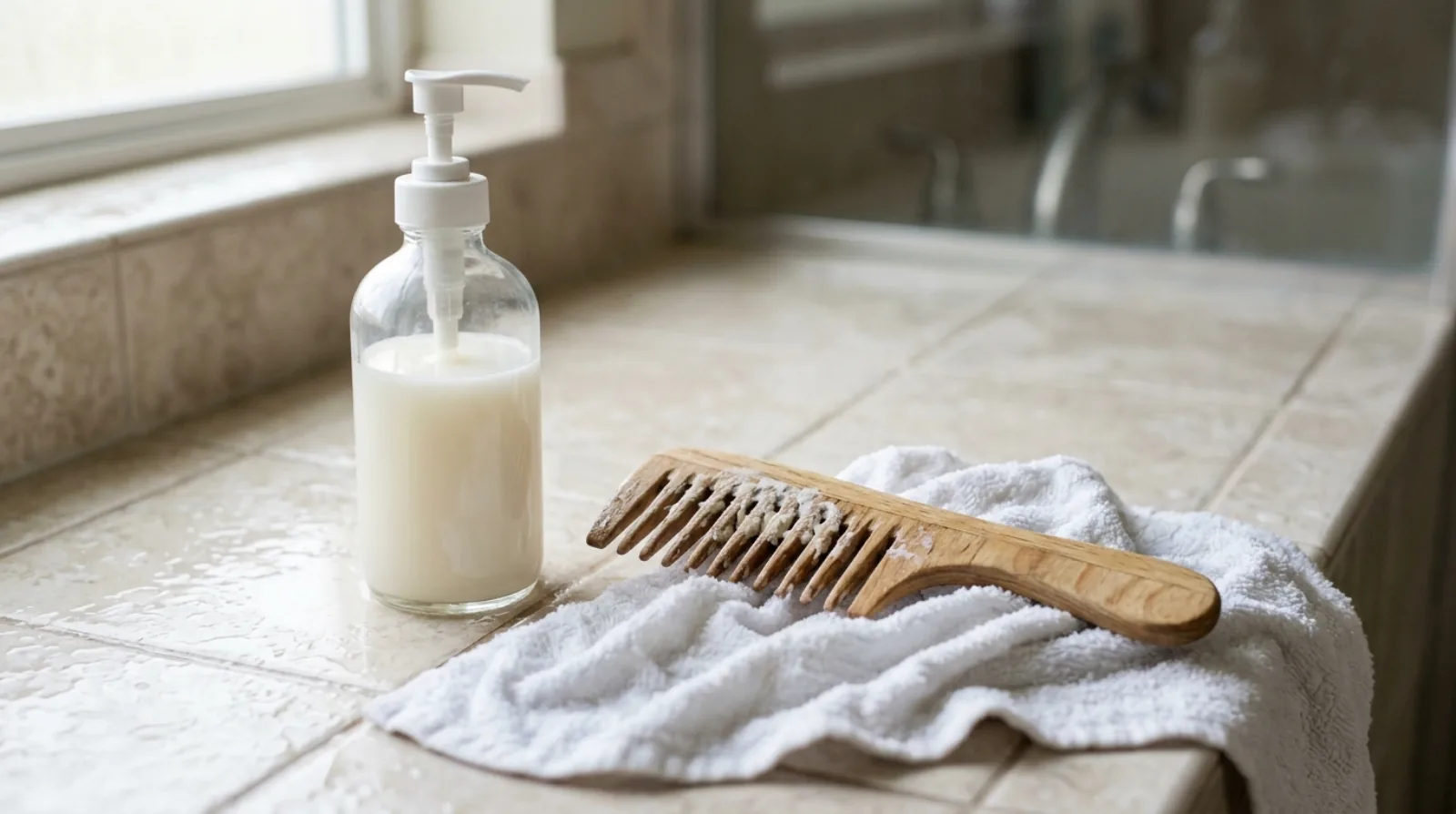
Waxy hair after a wash means something is still on the hair, not that the hair is dirty underneath. Six causes account for almost all of it: product residue, a rinse that stopped too early, conditioner placed on the scalp, minerals from hard water, a shampoo too gentle for what you are putting on your hair, and a scalp condition.
They feel similar on your fingers and they need different answers. So the useful order is a test first, then a fix, and the fix has a sequence that saves money if you follow it and wastes money if you do not.
The two-minute test that tells them apart
Do this on dry hair, before your next wash.
Take a strand from the middle of your head, hold it between finger and thumb, and slide down its length. Residue glides. It feels like a thin coat of candle wax: smooth, faintly tacky, and your skin passes over it without catching. Clean dry hair drags. It is a small difference and once you have felt both you never confuse them again.
Now look at your hairbrush, down at the base of the bristles. A pale grey paste packed in there is product. Dust is loose and grey on top of the bristles; residue is stuck around them.
Last, notice where the feeling is. Waxy at the roots and clean on the length points at the scalp, the rinse, or conditioner in the wrong place. Waxy along the length with normal roots points at product residue or water. That one detail rules out half the list before you buy anything.
Product residue, the most common cause
Conditioning agents are built to stay on hair after the water stops. That is what they are for. The problem is that some of them stay better than an ordinary wash can remove: a 2015 review of hair cosmetics notes that some polymers build up on the hair and bind to anionic surfactants, and the complex resists shampooing.
Silicones are the usual name people reach for, and they are part of it. A 2015 dermatology review of shampoos and conditioners describes silicones such as dimethicone, dimethiconol and amodimethicone as superior to natural oils for film formation, shine and lustre. A film that good at staying put is a film that takes a stronger detergent to move. That is a trade, not a fault.
Wax and butter based styling products, heavy leave-ins, hair oils and dry shampoo all add to the same total. So do two-in-one shampoos and creamy moisturising shampoos, which leave conditioning polymers behind on purpose.
Residue arrives slowly, which is why people say their shampoo stopped working rather than saying their hair is coated. Nothing stopped. The pile grew past what a normal wash takes off. We wrote the full version of that argument in does hair get used to shampoo.
The rinse, which is the step people cut
This is the least glamorous cause and it is responsible for more waxy hair than silicones are.
Most people rinse conditioner for twenty to thirty seconds, decide the hair feels slippery enough, and stop. Long, thick or curly hair holds conditioner in the middle of the section where the water never reaches, and that trapped conditioner dries into a film on the length.
Rinse for a full minute longer than feels necessary, with the water running from the roots downward rather than across the head. Lift the hair in sections at the back and let water run through each one. Cooler water at the end helps, because the same conditioner is less mobile when it is warm and softened.
If a longer rinse fixes the waxy feeling by itself, you have saved yourself an entire shelf of products. It happens more often than most people expect. The mechanics of the wash are covered in how to wash your hair.
Conditioner in the wrong place
Conditioner on the scalp does two things you do not want. It sits on skin that already makes its own oil, and it is difficult to rinse out of a dense area of hair.
The American Academy of Dermatology's guidance splits by hair type: apply conditioner to the ends if your hair is fine or straight, and along the whole length if it is dry or curly. The same page tells you to apply shampoo to the scalp rather than the entire length of the hair, which is the mirror image of the same idea. Cleanser at the top, conditioner at the bottom.
Leave-in conditioner follows the same rule and people break it more often, because a spray goes everywhere. The AAD's leave-in guidance is to apply it from the mid strands to the ends, not to your scalp, and to use the smallest amount that does the job.
If your waxy feeling is at the roots and disappears halfway down, this is most likely it, and it costs nothing to fix.
Hard water minerals
Water is the ingredient you use most and never choose.
In a 2018 study in the International Journal of Trichology, hair treated with hard water broke at a lower force than hair treated with deionised water, and the authors concluded that hard water decreases the strength of hair and thus increases breakage. Alongside the strength question, calcium and magnesium leave a film that makes lather harder to raise and harder to rinse away, so a shampoo that cleans well in one city can leave a coat in another.
The clue is timing. If the waxy feeling started when you moved house, changed a shower head, or came back from a holiday, look at the water before you look at your shelf. We have the detail in hard water and your haircut and in sun, chlorine and hard water.
A shampoo that is not cleaning enough
Gentle shampoos became the default advice and they are the right choice for a lot of people. They are the wrong choice if you use heavy styling products, dry shampoo, or oils, because a low-lather cleanser was formulated for hair that does not have much on it.
Two signs point here. You use enough product that your hands feel coated after styling, and your shampoo never raises a proper lather even on the second application. Two smaller washes usually clean better than one large one: the first lifts the surface layer so the second can reach the scalp.
The other half of this is quantity. A ten pence coin of shampoo does not clean waist length hair, and doubling the amount is cheaper than replacing the bottle. A palm-sized pool is closer to what mid-back length hair needs, and most people are still using the coin-sized amount they were taught as children, on hair several times longer than it was then.
When it is the scalp, not the products
If flaking comes with the waxy feeling, stop thinking about products and start thinking about skin.
The AAD describes dandruff as small pieces of dry skin flaking off the scalp, often itchy, and notes it is often associated with seborrheic dermatitis, a skin condition caused by the yeast that lives on skin, or by stress, cold, or overall health. Seborrheic dermatitis flakes are greasy and yellowish rather than dry and white, which is exactly the description people give when they say their scalp feels waxy.
The treatment is a medicated shampoo with an active ingredient. The AAD lists zinc pyrithione, salicylic acid, sulfur, selenium sulfide, ketoconazole and coal tar, and says some dandruff shampoos need to sit on the scalp for five to ten minutes before rinsing, which is the step most people skip. More on the flaking side sits in dandruff and flaky scalp.
Scalp psoriasis, ringworm and other conditions can also flake. If shop-bought products do not help, the AAD's advice is to see a board-certified dermatologist, and that is the right call rather than a fourth shampoo.
The fix, in order
Do one clarifying wash first, before you change anything you own. It is the cheapest step, it takes one shower, and it answers the question. Apply an anti-residue shampoo at the scalp, work it down the length, rinse, and follow it with a thick conditioner or mask. The 2015 review recommends that pairing for the same reason: the detergent that removes the film also removes oil, so you put something back.
If the waxy feeling goes and stays gone for a month, you found it. If it returns within two or three washes, change the weight of what you use rather than the brand. Lighter conditioner, less of it, further from the roots, and drop one styling product at a time until you know which one is responsible.
If a clarifying wash changes nothing at all, then look at your water, and only then. A shower filter is a real fix for a real problem and it is the most expensive of the three steps, which is why it belongs last rather than first.
What not to do
Do not wash more often. Washing more removes more scalp oil, which is not what is coating the hair, and on dry or curly hair it makes the length worse while the roots feel the same.
Do not use baking soda. It is alkaline enough to lift the cuticle and it is a common piece of internet advice with no dermatology body behind it. Dish soap belongs in the same bin.
Do not add a heavier mask because the hair feels dry under the film. Coated hair blocks water and conditioner from reaching the strand, so the mask joins the film instead of fixing it. Clarify first, then condition.
And do not change six things at once. If you swap shampoo, conditioner, leave-in and wash frequency in the same week, the waxy feeling might go and you will have no idea which change did it, which means you cannot repeat it next year.
If you want the causes ranked for your own hair rather than in general, the Kurli AI Specialist reads photographs of your hair and scalp and gives one routine built around what it can see, including which of these six fits. The wider picture of what a reading like that covers is in our hair consultation guide.
Common questions
Why does my hair feel waxy after washing?
Something is still on the hair when you get out of the shower. The usual causes are product residue that ordinary shampoo cannot remove, conditioner that was not rinsed out, conditioner applied to the scalp, or minerals from hard water. Start with one clarifying wash. If the waxy feeling goes and comes back over the next month, it is buildup.
Why does my hair feel waxy when wet?
Wet hair is slippery even when clean, so waxy while wet usually means conditioner or a styling product has not rinsed away yet. Rinse for a full minute longer than feels necessary, with water running from the roots down. If the hair squeaks faintly near the scalp and stays smooth on the length, the rinse was the problem.
What causes waxy hair?
Six things account for almost all of it: silicone and polymer residue from conditioners and styling products, an incomplete rinse, conditioner placed on the scalp, calcium and magnesium from hard water, a low-lather shampoo that is not cleaning enough for your hair, and a scalp condition such as seborrheic dermatitis. They feel similar and they have different fixes.
Why does my hair feel waxy after washing and drying?
If it survives drying, it is residue on the hair rather than water on it. Coated hair dries slower, sits flat at the roots and separates into thick pieces instead of fine strands. Run a dry strand between your finger and thumb. Residue glides like thin candle wax, while clean dry hair drags faintly against the skin.
What makes hair feel sticky after washing?
Sticky and waxy are usually the same problem at different amounts. Conditioning polymers are designed to stay on hair, and a 2015 review notes that some of them bind to shampoo detergents and resist washing out. Hard water minerals add to the same film. One anti-residue wash followed by a rich conditioner is the test that separates residue from anything else.
Why does hair feel greasy after washing?
Greasy right after a wash points at what you left on rather than what your scalp made, since a wash removes sebum. Check the three usual culprits: conditioner rubbed into the roots, a creamy shampoo used on long hair without reaching the scalp, or a dry shampoo layer from earlier in the week that has never been properly removed.
What does product buildup feel like?
It feels like a thin film you cannot rub off. Dry hair glides between the fingers instead of catching, the strands clump into thicker pieces, styling products stop giving the hold they used to, and the hair takes longer to dry. Your hairbrush is the other clue: a pale grey paste packed around the base of the bristles is product.
How do you get product buildup out of your hair?
Use an anti-residue or clarifying shampoo once, applied to the scalp and worked down the length, then follow it with a thick conditioner or mask. The 2015 hair cosmetics review recommends exactly that order, because the detergent that removes the film also removes oil the hair needs. Once a month is enough for most people.
Does product buildup look like dandruff?
It can, and telling them apart matters because the treatments are different. Buildup flakes are larger, softer and often pale or yellowish, and they come off in sheets when you scratch. Dandruff flakes are small dry pieces of skin and the scalp usually itches. If flaking comes with itching, redness or a tight feeling, treat it as a scalp condition.
Can you get product buildup from shampoo?
Yes, from the conditioning agents in it rather than the detergent. Two-in-one shampoos, creamy moisturising shampoos and co-washes leave conditioning polymers behind on purpose. On fine or straight hair that shows up within a few washes as a heavy, coated feeling at the roots. The detergent itself rinses away and leaves nothing.
How to know if your hair has product buildup?
Do the strand test on dry hair, before you wash. Slide a middle-length strand between finger and thumb. Smooth and gliding means residue, while clean hair catches faintly. Then do one clarifying wash and feel the same strand again. A clear difference means buildup was the cause, and no difference means you should look at your water or your scalp instead.
Does product buildup cause dry hair?
It makes hair behave as if it is dry without being dry. A film of silicone or polymer blocks water and conditioner from reaching the hair, so masks stop working and the ends feel rough under a coated surface. People respond by adding more conditioner, which thickens the film. Clarifying first, then conditioning, breaks that cycle.
Why is my hair waxy?
Because something is sitting on the strand rather than the hair being dirty underneath. The usual causes are product residue that ordinary shampoo does not fully remove, a rinse that stopped too early, conditioner applied to the scalp instead of the length, minerals from hard water, or a scalp condition. A single clarifying wash followed by a rich conditioner tells you within a day whether residue was the cause.
How to fix waxy hair after washing?
Start with one clarifying wash: shampoo made to remove buildup, worked into the scalp and down the length, followed by a rich conditioner so the hair is not left stripped. If the waxy feeling clears and stays gone for a month, buildup was the cause. If it comes back within a wash or two, lighten the products you use and move conditioner further from the roots. If nothing changes at all, check your water before you buy anything else.
What is hair coating?
A layer of something sitting on the outside of the strand rather than inside it. Silicones, styling waxes, oils, dry shampoo, and conditioning agents in shampoo can all build a coating over time, and one application does nothing while months of them add up to a film you can feel. A coating is not automatically bad, since some products are designed to coat on purpose for shine or hold. It becomes a problem when it builds up faster than washing removes it.
Why does my hair feel coated?
Because a film of product, or minerals from hard water, is sitting on the strand and your fingers are feeling that layer rather than the hair itself. It shows up most on dry hair: a coated strand glides smoothly between finger and thumb instead of catching faintly the way clean hair does. The pale grey paste that collects around the base of hairbrush bristles is the same coating, just visible instead of felt.
Why does my hair feel chalky?
Usually hard water rather than product. Calcium and magnesium dissolved in the water settle onto the strand with every wash and dry into a rough, powdery film that feels different from the smooth, waxy glide of silicone residue. Soap or shampoo that will not lather properly, and a white crust inside your kettle, are the two free checks. A clarifying shampoo every two to three weeks removes the film; a shower filter is the fix if it keeps coming back.
Can using too much conditioner cause waxy hair?
Yes, more product than a wash can remove ends up sitting on the strand as a film. This is more likely with rich or leave-in conditioners used on fine or short hair, where a small amount already covers every strand. Using less, keeping it off the scalp, and rinsing longer usually solves it within a wash or two. If the amount was never the issue, look at how well you are rinsing before you switch products.
See it on your own face
Upload a selfie and Kurli recommends the hairstyles that suit you, then renders each look onto your photo.