Virtual try-on
AI long straight hair simulator
Mostly a texture change. See it before you commit to heat or a treatment.
A long straight hair simulator shows sleek straight length on your own face, which matters most if your hair is naturally curly or wavy. Upload a front-facing selfie to Kurli and the AI renders the texture change onto your photo, before you commit to daily heat or a chemical treatment.
Tap to pick a selfieDrop a selfie here, or click to browse
Front-facing, well-lit photos work best.
Your photo is used only to render the style and isn't stored.
Key takeaways
- Long straight hair is mostly a texture decision rather than a cut, especially if your hair is wavy or curly.
- Getting permanently straight hair means chemical treatment, and getting it temporarily means regular heat.
- Straight hair falling either side of the face narrows it visually, which lengthens a long face further.
- Heat styling is the main cause of damage in this look, and dermatologists advise limiting temperature and frequency.
- A blunt perimeter makes long straight hair look thicker, while heavy layering makes the ends look sparse.
- Long hair takes years to grow, so previewing a texture change costs far less than regretting one.
Variations to try
Tap any one to load it into the box above, then press see it on me.
Ways to get straight hair, and what they cost
| Method | Lasts | Damage risk | Cost | Reversible |
|---|---|---|---|---|
| Blow-dry only | Until washed | Low to moderate | Time | Yes |
| Flat iron | Until washed | Moderate to high | Time | Yes |
| Keratin treatment | 3 to 5 months | Moderate | High | Grows out |
| Chemical relaxer | Permanent on treated hair | High | High | No |
| Cut and air-dry | Not straight | None | None | Yes |
Who long straight hair suits
This is less a cut than a texture, and the useful question is what straight length does to the shape of your face.
Long straight hair falls in two vertical lines either side of the face, which narrows it visually and adds apparent length. That is genuinely flattering on a round or square face, where the vertical line offsets width.
On a long or oblong face the same effect works against you. Adding two more vertical lines to a face that is already long tends to stretch it further, and the standard fix is not to abandon the length but to break up the verticality: face-framing pieces, curtain bangs, or waves through the mid-lengths all add horizontal interest where it helps.
Density matters for how the look reads. Fine hair worn long and straight can look thin toward the ends, because there is nothing to disguise the taper. A blunt perimeter is the usual answer, since ending every hair at the same point makes the bottom read as much fuller.
And if your hair is naturally curly, understand what you are choosing. Wearing curly hair straight long-term means either regular heat or a chemical treatment, and both have real costs. That is a genuine decision rather than a styling preference.
The full breakdown by face shape is in the guide linked above.
The honest cost of straightening curly hair
If your hair is naturally straight, skip this section. If it is wavy or curly and you like the render, this is the part that matters most.
Heat. Blow-drying and flat-ironing straighten hair temporarily, until the next wash or the next humid day. Done occasionally this is fine. Done daily at high temperature it is the single most common cause of damaged hair, and the American Academy of Dermatology lists heat styling directly among the habits that damage hair. Their guidance is to use the lowest effective temperature, limit frequency, and always use a heat protectant.
Keratin treatments. These smooth the hair for three to five months and reduce the daily heat needed. They are a genuine middle ground, though they are expensive, they grow out rather than wash out, and formulations vary considerably.
Chemical relaxers. These permanently alter the hair's structure. The effect on treated hair is not reversible, only grown out, and the damage risk is the highest of the three.
None of this means do not do it. It means the render answers whether you like the look, and this section answers what it costs. Both matter, and the second one is the part people skip.
How to describe long straight hair to the AI
Say sleek or natural. Sleek gives a glassy, salon-finished look; natural gives a straight but softer one. The difference is large and the natural version is far more realistic day to day.
Say the parting. Middle part or deep side part. This changes how much of your face the hair covers and it is the cheapest thing to experiment with.
Add front pieces if you want them. With face-framing layers or with curtain bangs. Long straight hair with nothing at the front can read as a flat curtain, and these fix that.
Say blunt if your hair is fine. A blunt perimeter reads considerably thicker than a layered one, which matters most at long lengths.
Render a version with face framing and one without. On most faces the difference is larger than people expect.
What the render gets right, and where it is approximate
Reliable. How straight length frames your face, whether it narrows or lengthens your proportions in a way you like, how a parting changes the balance, and how face-framing pieces alter the front.
Approximate. The exact shine and smoothness, which in reality depend on your hair's condition and on how it was finished. Renders show best-case sleekness.
Not modelled at all. How much your hair would actually straighten, which depends entirely on your natural curl pattern and how it responds. Tightly curled hair straightened by heat behaves quite differently from wavy hair that is simply smoothed.
Also not modelled: humidity, which is the practical enemy of this look, and the condition of your ends after months of heat. Those two together are why many people who love the render eventually go back to their natural texture.
Before you commit
The useful order here is render, then test, then commit, and the testing step is genuinely free if your hair is long already.
Blow-dry it straight once, properly, with a heat protectant, and live with it for a day. That tells you more about whether you want this as your everyday look than any preview can, because it includes the parts a render leaves out: how long it takes, how it feels, how it survives the weather.
If you like it and want it permanently, book a consultation before booking a treatment. Ask specifically what the treatment is, how long it lasts, whether it grows out or washes out, and what condition your hair needs to be in first. A stylist who wants to assess your hair before treating it is the one to trust.
If your hair is naturally curly and you are straightening it to see whether you prefer it, that is a completely reasonable thing to do, and the render is a cheaper first step than the treatment.
And if the render made you like your own texture better by comparison, that is a legitimate outcome too, and by far the cheapest one.
What to ask for at the salon
Bring the render and point at your own hair as you describe what you want. A landmark on your own head beats an adjective every time.
Ask to be shown what will be removed before anything is cut, and ask what the result looks like without styling. Salons finish everything at its best, so the version you leave with is not the version you will see on an ordinary morning.
Ask whether your hair type will hold the finish. A stylist who tells you honestly that your texture will fight it is being useful, not discouraging.
Ask what they used and how they applied it, because most of these looks depend on a small amount of the right product and the right technique.
And ask what the upkeep genuinely costs, in both time and appointments, before you commit to a routine you have not tried.
Common questions
Can I see what I would look like with long straight hair?
Yes. Upload a selfie with your hair as it actually is, and the AI renders long sleek straight hair onto your own photo. That is most useful if your hair is naturally wavy or curly, since it shows the texture change.
Does long straight hair suit a long face?
Less well than other options. Straight length falls in two vertical lines either side of the face, which lengthens it further. Face-framing pieces, curtain bangs, or waves break that up.
Is straightening curly hair damaging?
It can be, particularly with daily high-heat styling. Dermatologists list heat styling among the main causes of hair damage and advise the lowest effective temperature, less frequent use, and always a heat protectant.
What is the difference between a keratin treatment and a relaxer?
A keratin treatment smooths the hair for three to five months and grows out. A chemical relaxer permanently changes the structure of the treated hair and cannot be reversed, only grown out.
Does long straight hair look thin on fine hair?
It can, because there is nothing to disguise the taper toward the ends. A blunt perimeter is the usual fix, since ending every hair at the same point makes the bottom read considerably fuller.
Should I get layers in long straight hair?
It depends on density. Thick hair benefits from layers that remove weight. Fine hair usually looks fuller left blunt, with only face-framing pieces at the front.
How can I test the look without committing?
If your hair is already long, blow-dry it straight once with a heat protectant and live with it for a day. That covers the practical parts a render cannot, like how long it takes and how it handles humidity.
Is the long straight hair simulator free?
Browsing styles and reading the guides is free. Rendering a look onto your own photo uses a credit, because that step runs an image model that costs money on each render.
Sources
Hair facts on this page are supported by these sources. What the render will look like on you is a preview, not a promise.
- 10 hair care habits that can damage your hair, American Academy of Dermatology
- How to style hair without damage, American Academy of Dermatology
- How to stop damaging your hair, American Academy of Dermatology
- Physiology, Hair, StatPearls, NCBI Bookshelf
Try another style
Keep reading
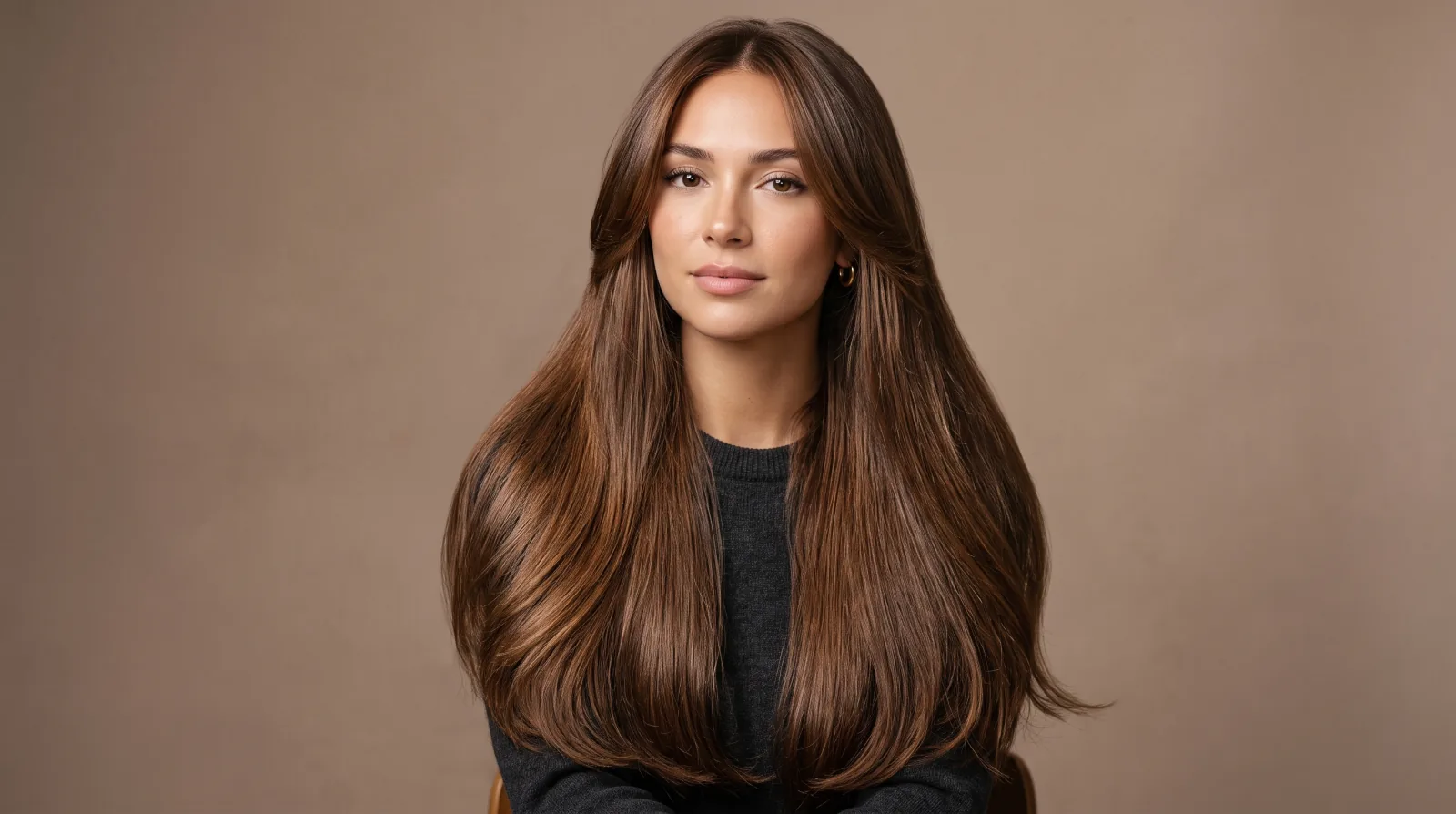
Illustration: Kurli