Thinning and hair loss
Toppers, extensions, and fibres
What each one can and cannot do, honestly, plus the tension warning nobody includes.
This page covers styling and general information, not medical advice. It is not a substitute for a diagnosis from a doctor or dermatologist, who can look at your specific scalp and history.
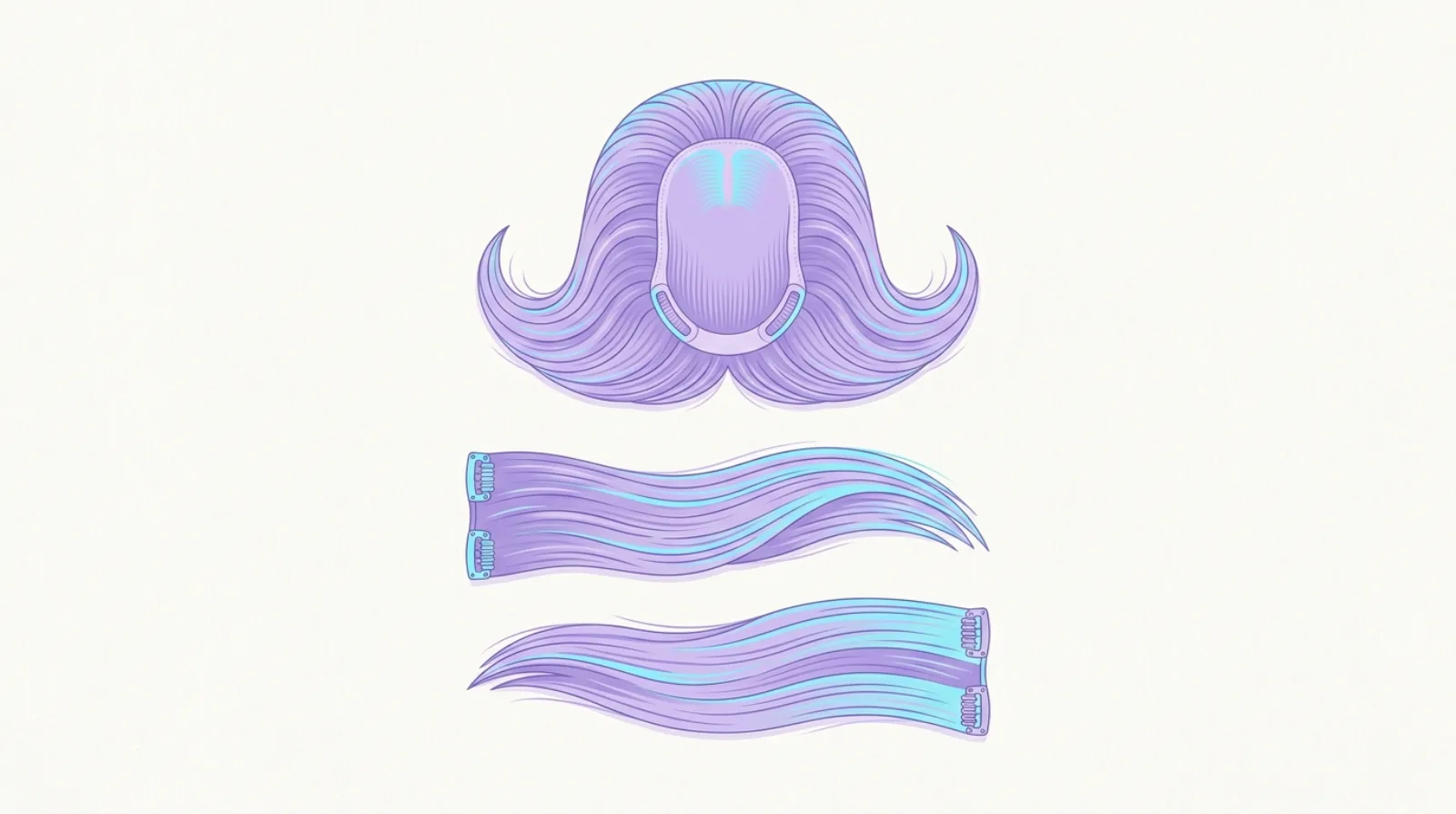
When cuts and styling stop covering what you want covered, a whole tier of added-hair options opens up: fibres you shake on, toppers you clip in, extensions you wear for weeks, and wigs that replace the question entirely. All of them work, in the sense that they add visible hair today. None of them treat anything, and the heavier ones can quietly worsen the hair underneath. This page is the honest catalogue: what each option does, what it cannot do, what it risks, and how to pick by goal instead of by marketing.
Find out whether this suits your face. One selfie, and the face-shape read and your top pick are free.
Kurli is an AI hairstyle advisor: upload one selfie and it reads your face shape, recommends the cuts that suit it, and renders any of them onto your own photo before you commit.
Fibres: the thirty-second cosmetic
Hair fibres are tiny keratin or cotton particles, colour-matched to your hair, that you shake or spray over a thin area. They cling to your existing strands by static, fattening each one and blurring the scalp show-through around it. Applied over a widening part, a thin crown, or a see-through hairline zone, good fibres genuinely disappear into the hair and survive wind and a normal day.
What they can do: make a thin zone read as dense in under a minute, photograph invisibly when colour-matched well, and cost little. For part lines and crowns with some existing hair for the particles to grab, they are the highest impact-per-dollar concealer there is.
What they cannot do: work on fully bare skin (they need existing strands to cling to), survive rain, sweat, or a pillow (they are strictly a between-washes cosmetic and transfer onto fabric), or change anything underneath. They also demand a small honesty tax: hands off the hair once applied, and a gentle touch with anyone else's hands too.
Hygiene note: wash them out fully rather than layering day over day, since buildup sits on the scalp itself, and a healthy scalp is the one asset every option on this page depends on.
Toppers: targeted coverage for the top
A topper (also called a top piece or half wig) is a partial hairpiece with a base a few centimetres to palm-sized, worn over the crown and part area where women's thinning concentrates, and clipped to the existing hair around its edges. Quality ranges from budget synthetic to human-hair pieces with realistic-looking part lines.
What toppers can do: cover the exact zone female pattern thinning hits while your own hairline and lengths frame your face, blend convincingly when the colour and length are matched (a stylist can trim an unstyled piece to integrate with your cut), and go on and off daily, so your scalp rests at night.
What they cannot do: attach to nothing. The clips need existing perimeter hair with some strength, so very fragile or very sparse attachment zones may not support one. They are also a relationship: washing, detangling, occasional replacement, and a learning curve of a few weeks before it feels automatic.
The caution that matters most: rotate the clip positions. Clips biting the same strands in the same spots daily create constant localized pulling, and constant pulling is exactly the mechanism behind traction hair loss, which the AAD lists among the causes of hair loss from hairstyling. Move the attachment points regularly, choose the lightest base that covers, and give the hair clip-free days. A topper that thins its own anchor hair is sawing off the branch it sits on.
Extensions: length and volume, at a price in tension
Extensions add hair to your hair: clip-in wefts worn for the day, tape-in panels re-fitted every couple of months, keratin-bonded or micro-ring strands lasting longer, and sewn-in wefts. On thin lengths, they can turn a sparse hemline into a full one and add the volume that styling alone cannot.
What they can do: transform length and thickness for events (clip-ins) or continuously (semi-permanent methods), and fill out the bottom third where thin hair goes transparent.
What they cannot do: help the top of the head, which is where most thinning actually shows; extensions hang from the mid-scalp down and add nothing to a widening part or thin crown. That mismatch, plus weight, is why they are the option to approach most carefully on thinning hair.
And the weight is the warning. Every gram of added hair hangs from your own strands, all day, every day, for weeks at a time with semi-permanent methods. On strong, dense hair, professionally fitted and maintained extensions are a reasonable trade. On hair that is already thinning, sustained pulling at hundreds of attachment points is a textbook setup for traction loss along every line of tension, and dermatology guidance on damaging hairstyles names heavy extensions specifically. If your goal is disguising thinning, a topper or fibres almost always serves it better and safer than extensions; if you still want extensions, go to an experienced fitter, choose the lightest method, keep the wear periods short, and stop at the first sign of tenderness or broken hairs at attachment points.
Wigs, and choosing by goal
A full wig replaces the whole question: no blending, no reliance on your own density, complete coverage in any style and colour, and modern lace-front pieces can look entirely convincing. The trade is comfort (warmth, a learning curve), cost for good pieces, and, for some, the psychological line of moving from adding hair to wearing hair. For extensive loss, medical shedding, or simply wanting the fastest total answer, a wig is a legitimate and often liberating choice, and a scalp under a wig should stay clean, dry, and given breaks.
Now the whole catalogue, chosen by goal:
Thin part line or crown, most days: fibres first, topper when fibres stop being enough.
Special-occasion fullness and length: clip-in extensions for the day, removed at night.
Continuously fuller lengths on otherwise stable hair: professionally fitted lightweight extensions, with the tension caveats above.
Extensive thinning, or wanting one total answer: a quality topper graduating to a wig, on your timeline.
Whatever the choice: keep the hair underneath in the best shape it can be, because every option except a full wig depends on it. Gentle washing, minimal chemical stress, and the volume habits in volume cuts and tricks keep the foundation workable.
The parallel track: concealment is not treatment
Everything on this page shares one honest limitation: it changes what shows, not what is happening. Fibres wash out, toppers come off, extensions get removed, and underneath, whatever drove the thinning continues on its own schedule. That is not a flaw; concealment is a completely legitimate choice, and for many people it removes the daily distress that made the whole subject heavy. But it works best run in parallel with, not instead of, understanding the cause.
So, the standing advice of this whole hub, one more time in the concealment aisle: if your density is actively dropping (the part keeps widening, the ponytail keeps shrinking, the checks in shedding vs thinning keep trending down), bring it to a doctor or dermatologist while you conceal, not after concealment stops coping. Some causes are fixable outright, treatments for pattern loss exist and favour early starts, and a diagnosis also tells you which additions your hair can safely anchor: a scalp with active shedding or fragile follicles changes the topper and extension math, and a dermatologist can tell you that before clips and bonds find it out the hard way.
Added hair should be a choice you make with full information, on top of a scalp whose story you actually know. Get both, and this tier of options becomes what it should be: a flexible, low-stakes toolkit instead of an escalating dependency.
Upkeep expectations, honestly
Every option on this page has a maintenance reality that the sales page understates, so here it is plainly, without invented price tags, since costs vary widely by market and quality tier.
Fibres are the lightest commitment: application becomes a thirty-second habit, a container lasts a long time at part-line doses, and the only recurring costs are the product itself and slightly more frequent pillowcase washing. Expect to re-match the colour if you dye your hair.
Toppers are a small wardrobe. A synthetic piece needs replacing noticeably sooner than a human-hair one, which can last years with care; both need gentle washing on a schedule, storage on a stand, and an initial trim by a stylist to blend with your cut, which is worth budgeting for at purchase time. Assume a learning fortnight of fiddly mornings before it becomes automatic.
Semi-permanent extensions are the heaviest commitment on the list: professional installation, re-fitting appointments every several weeks as your hair grows, careful nightly tying or braiding, specialist brushes, and a removal appointment at the end. Skipping the maintenance appointments is not a saving; grown-out attachment points are where matting and breakage happen. Clip-ins avoid nearly all of this at the cost of daily on-and-off.
Wigs split the difference: quality pieces want proper washing, conditioning, and storage, and human-hair wigs reward care with years of service, while the scalp underneath wants its own simple hygiene routine and regular breaks.
The pattern across all four: the more coverage an option gives, the more relationship it demands. Pick the option whose maintenance you will actually do on a tired Tuesday, not the one whose best-case photos you liked, and it will keep looking like those photos far longer.
Common questions
What are hair fibres and do they work?
Fibres are tiny colour-matched keratin or cotton particles that cling to existing strands by static, fattening them and blurring scalp show-through. Over a thin part or crown they work convincingly in under a minute. They need existing hair to grab, wash out, and do not survive rain or pillows.
What is a hair topper?
A partial hairpiece covering the crown and part area, clipped to your existing perimeter hair, so your own hairline and lengths still frame your face. It targets exactly the zone where women's thinning concentrates, goes on and off daily, and blends well once colour-matched and trimmed by a stylist.
Can a topper damage the hair underneath?
It can if worn carelessly: clips biting the same strands daily create constant localized pulling, the mechanism behind traction hair loss. Rotate attachment points, pick the lightest base that covers, take clip-free days, and stop if anchor points feel tender or show broken hairs.
Are extensions safe for thinning hair?
They are the riskiest option on thinning hair, because every gram hangs from your own strands all day, and sustained tension at attachment points is a textbook traction-loss setup that dermatology guidance warns about. If you must, choose the lightest method, an experienced fitter, and short wear periods.
Do extensions help a widening part or thinning crown?
No. Extensions hang from the mid-scalp down and add length and volume to the lengths, not the top, so they do nothing for the part and crown where thinning usually shows. Fibres and toppers cover the top; that mismatch is why goal comes before method.
Which should I choose: fibres, topper, extensions, or wig?
Choose by goal: fibres for a thin part or crown on most days, a topper when fibres stop being enough, clip-in extensions for occasional length and fullness, and a quality wig for extensive loss or when you want one total answer. Escalate on your own timeline.
Can people tell when someone wears fibres or a topper?
Well-matched fibres are effectively invisible in person and photos, though they transfer onto hands and fabric. A quality topper, colour-matched and trimmed into your cut by a stylist, passes daily inspection. Budget pieces with shiny synthetic fibre or bulky bases are what get noticed.
How do I look after the hair under added pieces?
Keep the scalp clean and given breaks, wash fibres out fully rather than layering them, rotate clip positions, and keep the base hair strong with gentle handling and minimal chemical stress. Every option except a full wig depends on the health of the hair anchoring it.
Is it okay to just conceal thinning instead of treating it?
Concealment is a fully legitimate choice, and for many people it removes most of the daily distress. The honest caveat: it changes what shows, not what is happening, so if density keeps dropping, run a doctor's assessment in parallel rather than waiting until concealment stops coping.
Should I see a doctor before getting a topper or extensions?
If your thinning is active or unexplained, yes, and not only for treatment options: a diagnosis tells you which additions your hair can safely anchor. Fragile or actively shedding hair changes the clip and bond math, and finding that out from a dermatologist beats finding out from damage.
Sources
Hair biology and hair-care facts on this page are supported by these sources. Styling recommendations are guidance.
- Hairstyles that pull can lead to hair loss, American Academy of Dermatology
- Hair loss: Who gets and causes, American Academy of Dermatology
- How to style hair without damage, American Academy of Dermatology
- Tips for healthy hair, American Academy of Dermatology
- Hair loss, NHS
See it on your own face
Kurli reads your face from a selfie, recommends styles that suit you, and renders each one onto your photo.
The face-shape read and your top pick are free. Your photo is never sold or used to train AI.