Thinning and hair loss
Fine vs thin vs thinning
Three words everyone mixes up, three different problems, three different playbooks.
This page covers styling and general information, not medical advice. It is not a substitute for a diagnosis from a doctor or dermatologist, who can look at your specific scalp and history.
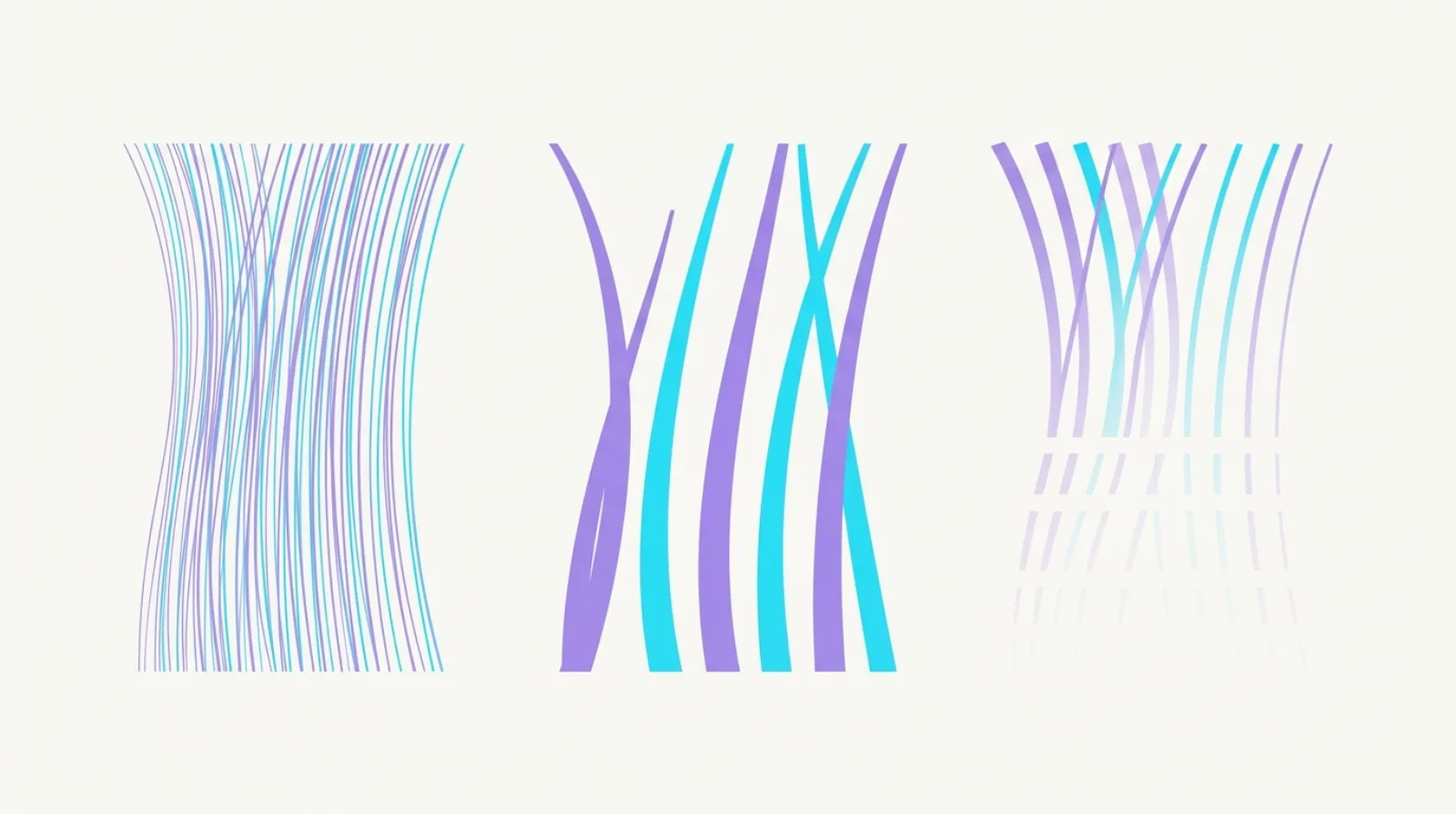
Fine, thin, and thinning get used as if they meant the same thing, and the mix-up sends people down the wrong aisle. They describe three separate facts about your hair: how wide each strand is, how many strands you have, and whether the number is currently going down. You can be any combination of the three. Someone can have fine hair that is perfectly dense and stable; someone else can have coarse hair that is actively thinning. Sort out which words apply to you and every product, cut, and doctor decision downstream gets easier.
Find out whether this suits your face. One selfie, and the face-shape read and your top pick are free.
Kurli is an AI hairstyle advisor: upload one selfie and it reads your face shape, recommends the cuts that suit it, and renders any of them onto your own photo before you commit.
Three different measurements
Fine describes the width of each individual strand. Fine hair has a small strand diameter, feels silky or almost slippery between the fingers, and struggles to hold styles because each fibre is light and flexible. Its opposite is coarse, meaning wide strands that feel wiry and strong. This is set by your follicles and stays fairly stable through adult life.
Thin describes density, meaning how many strands occupy each square centimetre of scalp. Thin hair has fewer strands, whatever their width. Its opposite is thick, meaning densely packed. Density varies enormously between perfectly healthy heads.
Thinning describes a trend, not a state: the density is going down, or the new strands are growing back weaker than the ones they replace. Fine and thin are descriptions; thinning is an event.
The combinations explain the confusion. Fine plus dense reads as soft, full hair. Coarse plus sparse reads as rough hair you can see scalp through. Fine plus sparse is the combination that most often gets called thin hair in daily speech. And any of them can start thinning. Our hair type hub covers the styling side of every combination, and the density guide goes deep on the middle measurement.
The test for fine: one strand
Pull one shed hair from your brush and lay it next to a piece of ordinary sewing thread. A fine strand looks noticeably skinnier than the thread and can be hard to see against a plain background; a coarse strand approaches the thread's width and is easy to see and feel. Rolling one strand between thumb and finger gives the same answer by touch: barely feel it, fine; distinctly feel a fibre, medium; feels like a small wire, coarse.
Why it matters: strand width decides how your hair behaves with weight and product. Fine strands collapse under heavy conditioners, oils, and butters, get greasy-looking fast, and hold neither curl nor volume for long without support, but they also style quickly and take colour easily. Coarse strands shrug off product weight and hold shapes well, but resist smoothing and can feel dry because their width makes them stiffer.
Nothing changes strand width permanently; the playbook is cooperation. Fine hair wants lightweight products, volume-building cuts, and root lift. Coarse hair wants moisture and weight. If your frustration is limpness within hours of styling, you are almost certainly fighting fineness, not loss, and the fix lives in the fine and thin hair guide, not on this hub.
The test for thin: scalp visibility and the ponytail
Density has two quick home measures. First, scalp visibility: with dry hair falling naturally under normal indoor light, how much scalp shows? Only at the part line is dense to medium; visible in scattered patches through the top is lower density. Second, the ponytail circumference for hair long enough to tie: wrap a soft measuring tape around the gathered base. As a common stylist benchmark rather than a clinical fact, under about five centimetres reads as low density, five to ten as medium, over ten as high.
The crucial part: one measurement tells you where you are, not where you are going. Plenty of people have had low density their whole lives, inherited it from a parent, and will keep it stably for decades. Low density that is stable is a styling situation, not a problem, and cuts do most of the work: shorter and blunter beats longer and wispier, because length drags hair down and spreads it out. The blunt cut and volume tricks pages carry that playbook.
What turns a density observation into a thinning question is change. That is why the measurement is worth writing down with a date: a number can be compared in six months, while a feeling cannot.
The test for thinning: change over time
Thinning cannot be diagnosed from a single glance in the mirror, because it is a slope, not a point. The home evidence is comparison.
Photos beat memory. A monthly photo of your part from above and your hairline from the front, same light, same angle, is the most reliable home tracker. Widening part, retreating temples, or a crown that shows more scalp across months is real signal.
The ponytail re-measure. The same tape, twice a year. A shrinking base circumference is density leaving.
The character of shed hairs. Hairs that grow back finer and shorter each generation, so your shed hairs look progressively wispier, fit pattern thinning, where follicles miniaturize cycle by cycle.
What does not prove thinning: a bad drain day (see shedding vs thinning), wispy tail ends with a stable base (see thin ends), or hair that has always been fine or sparse. Thinning is specifically the trend line pointing down.
If your comparisons do show change, the right next step is a doctor or dermatologist, because the causes range from the common inherited pattern to fixable medical drivers, and treatments exist whose effectiveness depends heavily on starting early. Tracking is a home job; naming the cause is not.
The right playbook per result
Fine, dense, stable: you have a texture, not a problem. Lightweight products, volumizing cuts, root lift. Live in the fine hair guide.
Any width, low density, stable: styling strategy. Blunter perimeters, strategic length (usually shorter), matte volume products, and colour that adds visual depth. The volume cuts page is yours.
Any width, any density, thinning: two tracks at once. Track one is style, today: everything on this hub about cuts and volume applies immediately, and looking good during the process is a legitimate goal, not vanity. Track two is medical, soon: a doctor or dermatologist to name the cause, because pattern loss, shedding conditions, and deficiency-driven loss all get handled differently, and all of them are handled best early. Concealment and diagnosis are not rivals; do both.
Not sure which you are: run the three tests in order this week. One strand against thread, one scalp-and-ponytail check with the number written down, one photo session dated and saved. Fifteen minutes total, and every future decision about your hair gets made with information instead of dread. For the styling side, your face shape decides as much as your density does, and the face shape quiz plus a Kurli try-on shows you options on your own photo before any commitment.
Shopping by combination, not by label
Product marketing uses fine, thin, and thinning almost interchangeably, which is exactly why the three-way distinction pays for itself in the shampoo aisle.
If your issue is fineness (skinny strands, flat by noon, dense roots): you want volumizing and strengthening lines, lightweight conditioners, mousse, and nothing marketed as nourishing, repairing, or rich, since those words mean heavy. Fine hair drowns in products designed for damage.
If your issue is density (fewer strands, stable): the same lightweight logic applies, plus the visual tools: matte texture products, dry shampoo as a root thickener, and colour strategies that cut scalp contrast. Thickening shampoos that coat strands can genuinely help here, with the honest understanding that the effect washes out.
If your issue is thinning (the trend line): be careful precisely where the marketing gets loudest. Products labelled for hair loss or regrowth on ordinary store shelves range from cosmetic to unproven; the products with real evidence are a medical category, and the right desk for them is a doctor's, not a checkout. Meanwhile the fine-hair and density toolkits above still apply fully, because thinning hair benefits from every lightweight, volume-building habit there is.
One caution for all three: rotate rather than stack. Layering four volumizing products deposits more coating than one heavy conditioner would have, and buildup is the quiet enemy of every light-haired head. One shampoo, one light conditioner, one root product, one finisher, and a clarifying wash every couple of weeks is a complete system.
When in doubt, bring the actual words to your stylist: my strands are fine, my density is medium, and nothing is changing, is a sentence that gets a better product recommendation than pointing at a bottle ever will.
The same three words upgrade every other hair conversation you have. A barber told your strands are fine cuts differently than one guessing from wet hair; a colourist told your density is low chooses gentler processing; a doctor told the density is falling, with dated photos as evidence, starts from diagnosis instead of reassurance. Learning your own three-word description takes fifteen minutes once, and it quietly improves every appointment after it, in every chair you sit in from now on.
Common questions
What is the difference between fine and thin hair?
Fine describes each strand's width; thin describes how many strands you have. Fine hair has skinny strands and can still be very dense, while thin hair has fewer strands that can each be coarse. The strand-vs-thread test measures fineness; scalp visibility and ponytail circumference measure density.
Can hair be thick and fine at the same time?
Yes. Thick in the density sense means many strands, and fine means each strand is narrow, so a head can carry a huge number of skinny strands. That combination looks full but goes flat easily and dislikes heavy product, which fits the fine-hair playbook.
How do I know if my hair is fine?
Compare one shed strand with sewing thread: noticeably skinnier than the thread means fine. Rolled between two fingers, a fine strand is barely there. Fine hair also goes flat within hours of styling and gets weighed down by rich conditioners and oils.
How do I know if my hair is thin?
Check scalp visibility in normal light with hair falling naturally, and measure the ponytail base with a soft tape if your hair ties back. As a stylist benchmark, under about five centimetres of circumference reads as low density. Stable low density is a styling situation, not a disease.
How do I know if my hair is thinning rather than just thin?
Thinning is change over time, so compare rather than glance: monthly photos of the part and hairline, and a ponytail re-measure twice a year. A widening part, shrinking ponytail, or shed hairs growing back progressively finer point to thinning rather than stable low density.
Is fine hair more likely to thin?
Fine hair is not doomed to thin, but when thinning does happen it shows sooner, because each lost or miniaturized strand takes a bigger share of an already-light covering. That makes tracking easier and also makes early styling adjustments more rewarding.
What haircut helps hair look denser?
Blunt, even perimeters at shorter lengths. One-length bobs, lobs, and shoulder cuts stack all your strands at one hemline, which reads as thickness, while long wispy layers spread hair out and reveal scalp. The blunt cut guide and volume tricks page cover the details.
Do thickening products actually change the hair?
They coat strands to add temporary diameter and grip, which can genuinely improve how fine or low-density hair looks and holds for the day, and they wash out. No cosmetic product changes strand width permanently or increases the number of follicles.
Which combination should see a doctor?
Any combination where the trend is downward: widening part, shrinking ponytail base, retreating hairline, or shed hairs growing back weaker over months. Stable fine or thin hair is normal variation. Change is the signal that deserves a dermatologist, and earlier is better than later.
Can I have all three at once?
Yes: strands can be fine, density can be low, and the density can also be actively dropping. In that case run both playbooks in parallel: volume-focused cuts and lightweight styling for today, and a doctor's assessment to name and address the cause of the decline.
Sources
Hair biology and hair-care facts on this page are supported by these sources. Styling recommendations are guidance.
- Do you have hair loss or hair shedding?, American Academy of Dermatology
- Androgenetic Alopecia, StatPearls, NCBI Bookshelf
- Hair loss, NHS
- Physiology, Hair, StatPearls, NCBI Bookshelf
- Hair Problems, MedlinePlus, U.S. National Library of Medicine
See it on your own face
Kurli reads your face from a selfie, recommends styles that suit you, and renders each one onto your photo.
The face-shape read and your top pick are free. Your photo is never sold or used to train AI.