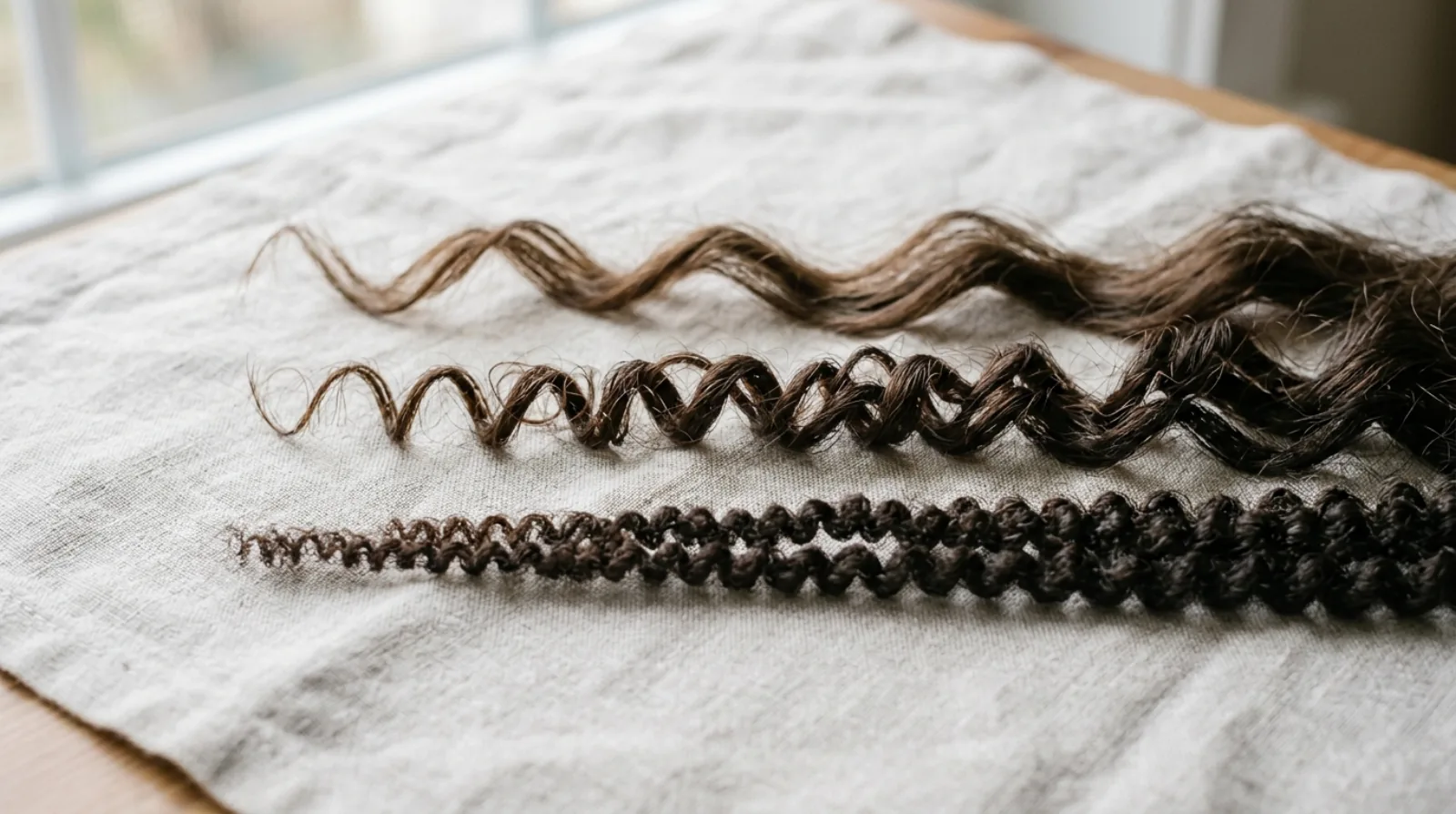
The Kurl
Does heat protectant actually work? What it does and where it stops
One selfie. Your face shape and your best cut are free.
Kurli is an AI hairstyle advisor: upload one selfie and it reads your face shape, recommends the cuts that suit it, and renders any of them onto your own photo before you commit.
Skip the reading: one selfie, and Kurli shows the cuts that suit your face. The face-shape read and your top pick are free.
Heat protectant works. It reduces the damage a flat iron, curling iron or blow dryer does to hair, and there is lab evidence behind that. What it cannot do is make a high temperature safe. The protectant lowers the damage from each pass of a hot tool, and the temperature you choose still decides most of what happens to the hair.
This post covers how heat protectant works, what the research shows, where its limits are, and how to apply it so it does its job. For the full picture of heat and hair, our guide on heat damage and heat protection goes further.
What heat does to hair first
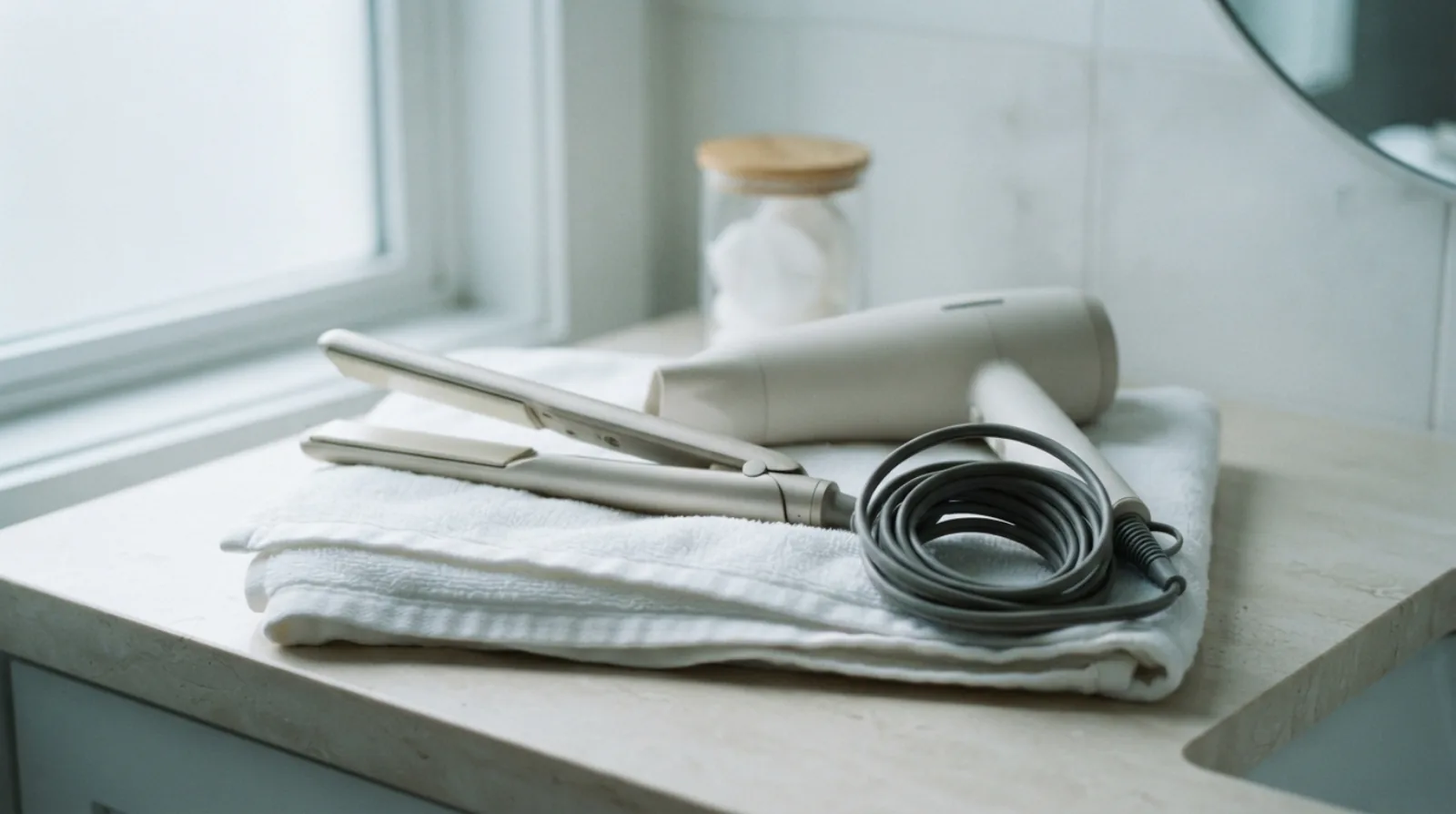
To see what a protectant can do, start with what heat does. Hot styling tools often work at temperatures between 150 and 250 degrees Celsius, according to a 2019 review of thermal damage to hair. At those temperatures, the same review describes the bonds inside the hair protein breaking and the protein changing its shape.
Water is the second problem. Every hair holds water inside it. When a hot iron meets hair that still holds too much water, that water boils inside the strand and forms bubbles. A review of hair cosmetics in the International Journal of Trichology names this directly: styling with a dryer or flat iron needs a heat protector that spreads the heat along the hair surface and avoids water boiling and the formation of bubbles in the hair. Those bubbles push through the outer layer of the hair, the cuticle, and crack it. A cracked cuticle lets moisture out, tangles more easily and breaks sooner.
Our post on heat tools and what your cut can take goes through the temperature bands for each hair type in detail. The short version: fine hair needs far less heat than thick hair to reach the same result, and colour-treated hair needs less again.
How heat protectant works
A heat protectant leaves a thin film over the outside of each hair. The same 2019 review describes current products as forming film-like structures over the hair fibres, smoothing the surface and helping protect the hair from extreme internal water loss.
The film does two things. It spreads heat along the surface of the strand, so a single spot does not take the full heat of the plate. And it slows the rate at which water leaves the hair, which reduces the steam damage described above.
The ingredients doing this are mostly silicones and film-forming polymers. The most common silicone in hair care is dimethicone, and the International Journal of Trichology review notes that it protects the hair shaft from rubbing and other physical wear. That is why many protectants also make hair feel smoother and look shinier after styling. The smoothness is a coating on the surface, and it washes out at the next shampoo.
 Related readDo hair vitamins actually work? What the evidence says
What the evidence shows
One lab study on this question tested hair samples that were flat ironed with and without a pretreatment. Published in the Journal of Cosmetic Science in 2011, it found that ironing at temperatures over 200 degrees Celsius damaged the hair protein, and that hair pretreated with selected polymers broke less when combed. The pretreated hair also kept its protein structure better and held on to more water after ironing, and its cuticle stayed smoother.
A second study, the 2019 review cited above, tested an experimental protein treatment and found that treated hair kept more of its water content after heat exposure than untreated hair.
Two cautions about this evidence. First, both studies were done on cut hair samples in a lab, which is how heat protection is normally tested. There are no large studies that follow people using a retail protectant at home for months. Second, the 2011 study tested specific polymers, and a product on a shop shelf may use different ones at different amounts. So the fair reading is this: the type of ingredient used in heat protectants has been shown to reduce heat damage in controlled tests. How well a particular bottle performs on your hair has less evidence behind it.
Where heat protectant stops
The protectant reduces damage from each pass. It does not change the temperature at which hair protein starts to break down, and it does not undo damage that has already happened. A flat iron set to 230 degrees on fine hair will still damage that hair with a protectant on it, only less than without.
This is why the American Academy of Dermatology gives advice about the tool before the product. It recommends low or medium heat settings together with a product to protect the hair, and says a flat iron should be used on dry hair, on a low or medium setting, no more often than every other day. For curling irons, the same page advises leaving the iron in place for only a second or two.
Put simply, three things decide how much damage heat does: the temperature, how long the hair touches the heat, and how often you repeat it. A protectant reduces the damage done by all three. Changing any one of them does more for the hair.
Once heat damage has happened, no product repairs it. The damaged length has to grow out or be cut off. Our guide on split ends and breakage covers what to do with hair that is already damaged.
Blow drying counts too
People often use a protectant before a flat iron and skip it before a blow dryer. The dryer can heat the hair more than most people expect. A 2011 study in the Annals of Dermatology measured the temperature of hair during drying. With the dryer 5 cm from the hair, the hair reached 95 degrees Celsius. At 10 cm it reached 61 degrees, and at 15 cm it reached 47 degrees.
The same study found something useful about air drying. Hair left to dry at room temperature took over two hours and showed damage inside the strand from staying wet so long. The researchers concluded that using a dryer at 15 cm with continuous motion caused less damage than drying hair naturally.
So for blow drying, the most useful habit is distance and movement. Keep the dryer at least 15 cm from the hair and keep it moving. Put a protectant on damp hair before you start. The two together give the hair the best chance.
 Related readDoes stress change your hair? What actually happens, and when
How to apply it so it works
How you apply a protectant matters as much as which one you buy.
Before a blow dryer: apply it to towel-dried, damp hair. Spray or spread it over the mid-lengths and ends, then comb it through with a wide-tooth comb so every section gets some. Wet hair takes the product evenly. The American Academy of Dermatology also advises adding a heat protecting product to wet hair before styling to reduce heat damage.
Before a flat iron or curling iron: the hair must be fully dry, and so must the product. If you blow dried with a protectant already in, you can add a light mist to each section before the iron. Wait until it has dried. A hiss or sizzle when the iron touches the hair means water is boiling off the strand, from the hair or from product that was still wet. Stop and let that section dry.
How much: enough to lightly cover each section. For shoulder-length hair that is usually a few sprays per section, or a small amount of cream spread thinly between the palms. Heavy layers do not add protection. They make hair limp, can leave it damp, and build up over several days until the hair looks dull and coated. If that happens, a clarifying wash removes it.
Where: focus on the mid-lengths and ends, which are the oldest and most worn part of each hair. The ends have been through every wash, brush and heat session since they grew, while the hair near the scalp is only weeks old. Keep heavy products away from the roots, where they add grease.
Which type suits which hair
Heat protectants come as sprays, creams, serums and oils. The ingredient that protects is often similar, and the difference is mostly in how heavy the product feels.
Fine or thin hair usually does best with a light spray, because creams and oils flatten it and make it look greasy by the end of the day. Fine hair also heats through faster than thick hair, so pair the spray with a low setting.
Thick, coarse or curly hair can take a cream or a serum. These spread further on each strand and give more cover to hair that needs a higher setting to reshape. Curly hair is drier along its length, which is one more reason to choose a richer formula when heat is used. The American Academy of Dermatology notes that heat can dry out curly hair, so the best protection for curls is to use heat rarely.
Colour-treated and bleached hair is more porous, so heat reaches the inside of the strand faster. Use a protectant every time and drop the setting lower than you would for the same hair before colouring.
Whatever the type, check two things on the label. First, the highest temperature the product claims to protect up to. If your iron runs hotter than that number, turn it down. Second, whether the product is an aerosol, since aerosols carry a flammable propellant and need to be sprayed away from any flame.
A heat protectant works best in a routine that already uses heat carefully. It is one step in a set of habits. The setting on the tool, the number of passes and the number of heat days each week do the rest of the work.
Common questions
Does heat protectant actually work?
Yes, within limits. Lab studies show that the film-forming ingredients in heat protectants reduce breakage and protect the protein inside the hair during flat ironing. It lowers the damage from each pass of a hot tool, but it does not make high temperatures safe, so the heat setting still matters more than the product.
How does heat protectant spray work?
It leaves a thin film on the outside of each hair. Silicones and polymers in that film spread the heat along the surface of the strand and slow the loss of water from inside it. That reduces the steam that forms inside the hair and cracks its outer layer.
Is heat protectant necessary for blow drying?
It is useful, though less critical than for a flat iron. A blow dryer held close to the head can heat the hair to 95 degrees Celsius, while the same dryer held 15 cm away and kept moving heats it to 47 degrees. Keeping the dryer at a distance does as much as the product, and doing both is best.
Can heat protectant be used on wet hair?
Yes. Towel-dried, damp hair is the best time to apply it before blow drying, because the product spreads evenly through wet hair. Comb it through from the mid-lengths to the ends so every section gets some, since the ends are usually the oldest and driest part of the hair.
Does heat protectant work on dry hair?
Yes. Before a flat iron or curling iron on hair that is already dry, use a light mist and let it dry fully before the tool touches the hair. A heavy spray on dry hair leaves it damp again, and an iron on damp hair creates steam inside the strand.
Should heat protectant dry first?
Yes, before any flat iron or curling iron. The iron should only touch dry hair, so wait until the product has dried or blow dry it in first. Before a blow dryer the product can go on damp hair, since the dryer is what removes the water.
Should heat protectant sizzle?
No. A sizzle or hiss when an iron touches the hair means water is boiling off the strand, either from hair that was not fully dry or from product that had not dried. Stop, let the section dry, and go again at a lower setting.
How much heat protectant to apply?
Enough to lightly cover each section, which usually means a few sprays per section or a small amount of cream spread thinly for shoulder-length hair. More is not more protective. Too much leaves hair heavy or greasy and can stay damp, which is the opposite of what an iron needs.
Does heat protectant expire?
Many labels show a small open-jar symbol with a number of months, which is how long the maker says the product stays good after opening. If a protectant has changed smell, colour or texture, or has separated, replace it, since an expired formula may no longer form the protective film it is meant to.
Does heat protectant make hair greasy?
It can, if you use too much or pick a heavy formula for fine hair. Creams and oil-based protectants suit thick or curly hair. Fine hair usually does better with a light spray applied from the mid-lengths down and kept away from the roots, where extra weight flattens the hair fastest.
Does heat protectant work against sun?
Heat protectants are tested against hot tools. Do not count on one for sun protection unless the label says so. The American Academy of Dermatology suggests a leave-in conditioner that contains zinc oxide or a wide-brimmed hat for protecting hair in the sun, since sun exposure and iron heat damage hair in different ways.
Is heat protectant flammable?
Some are. Aerosol sprays carry a flammable propellant and many sprays contain alcohol, and the label will carry a warning if so. Spray it away from any open flame, and let it dry before using a hot tool, since wet alcohol near a heated iron is what creates the risk.
Does heat protectant prevent heat damage?
It reduces heat damage and cannot stop all of it. Hot tools often run between 150 and 250 degrees Celsius, and at those temperatures the protein inside the hair changes shape. The protectant lowers the damage per pass, and a lower setting and fewer passes lower it further.
When to apply heat protectant?
Apply it after washing and towel drying, before the blow dryer. If you use a flat iron or curling iron later on dry hair, a light second layer before the iron helps, as long as it dries before the tool goes on, since a damp layer under a hot iron creates steam instead of protection.
Can heat protectant damage hair?
Not directly, but it can cause problems if used badly. Heavy layers build up over time and leave hair dull and coated, which a clarifying wash removes. Product that is still wet under a hot iron boils and adds to the damage it was meant to reduce.
Is heat protectant good for curly hair?
Yes, and curly hair needs it when heat is used, because curls are drier along the length and break more easily. A cream protectant suits most curly hair better than a light spray. The larger protection is to use heat on curls rarely, since heat dries curly hair out.
What heat protectant is good for fine hair?
A light spray or mist, applied from the mid-lengths to the ends. Fine hair heats through faster than thick hair, so pair the product with a low setting on the tool. Heavy creams and oils tend to flatten fine hair and make it look greasy.
How often can I use heat on my hair without damaging it?
The American Academy of Dermatology advises using a flat iron no more often than every other day, and for hot combs and curling irons aims for once a week or less. Fewer sessions at a lower setting cause less damage than daily use at high heat, with or without a protectant.
See it on your own face
Upload a selfie and Kurli recommends the hairstyles that suit you, then renders each look onto your photo.
The face-shape read and your top pick are free. Your photo is never sold or used to train AI.