Virtual try-on
AI mullet simulator
Short on top, long at the back. The grow-out is the part nobody previews.
A mullet simulator shows short on top and long at the back on your own face before you commit. Upload a front-facing selfie to Kurli and the AI renders a modern mullet onto your photo, which matters because a front-facing view is exactly where people misjudge this cut.
Tap to pick a selfieDrop a selfie here, or click to browse
Front-facing, well-lit photos work best.
Your photo is used only to render the style and isn't stored.
Key takeaways
- A mullet keeps short layered hair on top and at the sides while leaving deliberate length at the back.
- The modern mullet is softer and more blended than the eighties version, which is why it returned.
- A mullet is the hardest cut here to grow out, because the back and the top are at very different lengths.
- From the front a mullet can look like a short cut, which is why previewing the profile matters.
- The cut suits thick and wavy hair best, since the back needs body to look deliberate.
- A mullet needs re-cutting every six to eight weeks to keep the contrast reading as intentional.
Variations to try
Tap any one to load it into the box above, then press see it on me.
Mullet against its neighbours
| Cut | Length at back | Top | Grow-out | Re-cut every |
|---|---|---|---|---|
| Classic mullet | Long, hard contrast | Short | Hard | 6 weeks |
| Modern mullet | Moderate, blended | Short layered | Moderate | 6 to 8 weeks |
| Short mullet | Collar-length | Short layered | Easy | 8 weeks |
| Wolf cut | Moderate | Heavy layers | Easy | 8 to 10 weeks |
| Shag | Even throughout | Layered | Easy | 8 to 12 weeks |
Who a mullet suits
A mullet is one of the few cuts where texture and attitude matter more than facial geometry, but there are still real patterns.
The cut keeps volume high at the crown and length low at the back, which stretches the silhouette vertically. That suits a rounder or squarer face, where the added height balances the width. On a longer face the effect can overdo it, and the usual adjustment is to keep more width at the sides and less height on top.
Texture is the practical decider. Thick and wavy hair carries a mullet easily, because the length at the back has enough body to look deliberate rather than straggly. Curly hair is excellent for the same reason. Fine straight hair is the hardest case, since thin length at the back can read as neglected rather than intentional, and a shorter, more blended version is the honest recommendation there.
The modern mullet is worth distinguishing from the eighties one. Today's version blends the top into the back rather than cutting a hard step, which is precisely why it came back into fashion and why it looks considered rather than dated.
The full breakdown by face shape is in the guide linked above.
The front view understates it
This is the specific reason a mullet is worth rendering carefully, and it is a genuine limitation to be aware of.
A mullet is defined by what happens at the back, and a front-facing photograph shows almost none of it. From the front, a modern mullet can look like a fairly ordinary short layered cut. Turn ninety degrees and it is a completely different haircut.
That gap catches people out in both directions. Some render a mullet, see something unremarkable from the front, book it, and are surprised by the profile. Others reject it on a front view without appreciating what it actually looks like in the round.
So read the render for what it can tell you: how the short top and sides frame your face, whether the height at the crown suits you, and how the front hairline sits. Then ask a barber directly what the profile will look like, or find a side-on reference photo of a real mullet on hair like yours.
This is the one cut on the site where a front-facing preview genuinely covers less than half the decision, and it would be dishonest not to say so.
How to describe a mullet to the AI
Say modern or classic. Modern means blended and soft; classic means a hard step between top and back. These render as clearly different cuts.
Say how much length at the back. Collar-length, or past the shoulders. The back is the definition of the cut, so leaving it unsaid gets you a default.
Say what the sides do. With a fade, or with the sides left longer. A faded mullet reads sharp and intentional; longer sides read shaggier.
Add your texture. Curly mullet and wavy mullet render considerably better than the straight default, because the model shapes the length around the texture.
If the result looks too extreme, try short mullet or bixie mullet. Both keep the idea while dialling down the contrast, and both are much easier to live with.
What the render gets right, and where it is approximate
Reliable. How the short top and sides frame your face, whether the crown height suits your proportions, and how the front hairline and fringe sit. Everything the front of the cut does.
Approximate. How much the back reads from a three-quarter angle, and how the blend between top and back looks.
Not modelled at all. The profile, which is most of the haircut. Also how the length at the back behaves with your density: thin hair at the back can look sparse in a way no render conveys, and that is the single most common reason a mullet disappoints.
Given those limits, treat the render as a check on the front half and get a second opinion on the back half. That is an unusual recommendation on this site, and it is the honest one for this particular cut.
Before you book: the grow-out is the real cost
A mullet is the hardest cut here to grow out, and it is worth being clear about why.
Every other cut on this site grows out by getting uniformly longer. A mullet does not, because the top and the back start at very different lengths and grow at the same rate. The contrast persists for months, and the intermediate stage is neither a mullet nor anything else.
The practical route out is to cut the back down to meet the top, which means accepting a much shorter cut than you had before the mullet, or to grow the top out to meet the back, which takes the best part of a year.
Ask your barber about this at the first appointment. A good one will tell you honestly and may suggest starting with a short mullet, where the contrast is small enough that growing out is straightforward.
Maintenance while you keep it is every six to eight weeks. Left too long, the contrast blurs and the cut stops reading as deliberate, which is the difference between a mullet and simply needing a haircut.
If you want the idea without the commitment, a wolf cut or a shag gets you most of the texture and layering with a far easier exit.
What to ask for at the barbershop
Bring the render and point at your own head as you describe it. A landmark beats an adjective, and it removes the ambiguity behind most disappointing appointments.
Ask to be shown where the shortest point will sit before anything is cut. Ten seconds of checking prevents the commonest surprise, which is a result shorter than the one you pictured.
Ask what it looks like unstyled. Barbers finish everything at its best, so what you walk out with is not what you will see on an ordinary morning.
Ask whether your hair will hold the shape. A barber who says your hair is too fine or too straight for a finish is being useful, and it is far better to hear it before than after.
Finally, ask which product they used and how much. These styles depend on a small amount of the right product, and not knowing what it was is the usual reason a barbershop result does not survive the first wash at home.
Common questions
What is a modern mullet?
A cut with short layered hair on top and at the sides and deliberate length at the back, blended rather than stepped. The blending is what separates the modern version from the eighties one.
Does a mullet suit fine hair?
It is the hardest case. Thin length at the back can read as neglected rather than deliberate, so a shorter, more blended version is usually the better recommendation.
Is a mullet hard to grow out?
Yes, the hardest cut on this site. The top and back start at very different lengths and grow at the same rate, so the contrast persists for months with no useful intermediate stage.
How often does a mullet need cutting?
Every six to eight weeks. If the contrast blurs, the cut stops looking deliberate, which is the difference between a mullet and simply needing a haircut.
Can I see a mullet on my own photo?
Yes, though with one honest caveat. A front-facing render shows how the top and sides frame your face but very little of the back, and the back is most of the haircut. Ask a barber about the profile too.
What is the difference between a mullet and a wolf cut?
A mullet keeps deliberate length at the back with shorter top and sides. A wolf cut spreads heavy shaggy layers throughout and keeps less contrast, which makes it much easier to grow out.
Does a mullet work on curly hair?
Very well. Curls give the length at the back enough body to look intentional, which is exactly what fine straight hair struggles to do.
Is the mullet simulator free?
Browsing styles and reading the guides is free. Rendering a look onto your own photo uses a credit, because that step runs an image model that costs money on each render.
Sources
Hair facts on this page are supported by these sources. What the render will look like on you is a preview, not a promise.
- Tips for healthy hair, American Academy of Dermatology
- How to style hair without damage, American Academy of Dermatology
- Physiology, Hair, StatPearls, NCBI Bookshelf
- Hair Follicle, Cleveland Clinic
Try another style
Keep reading
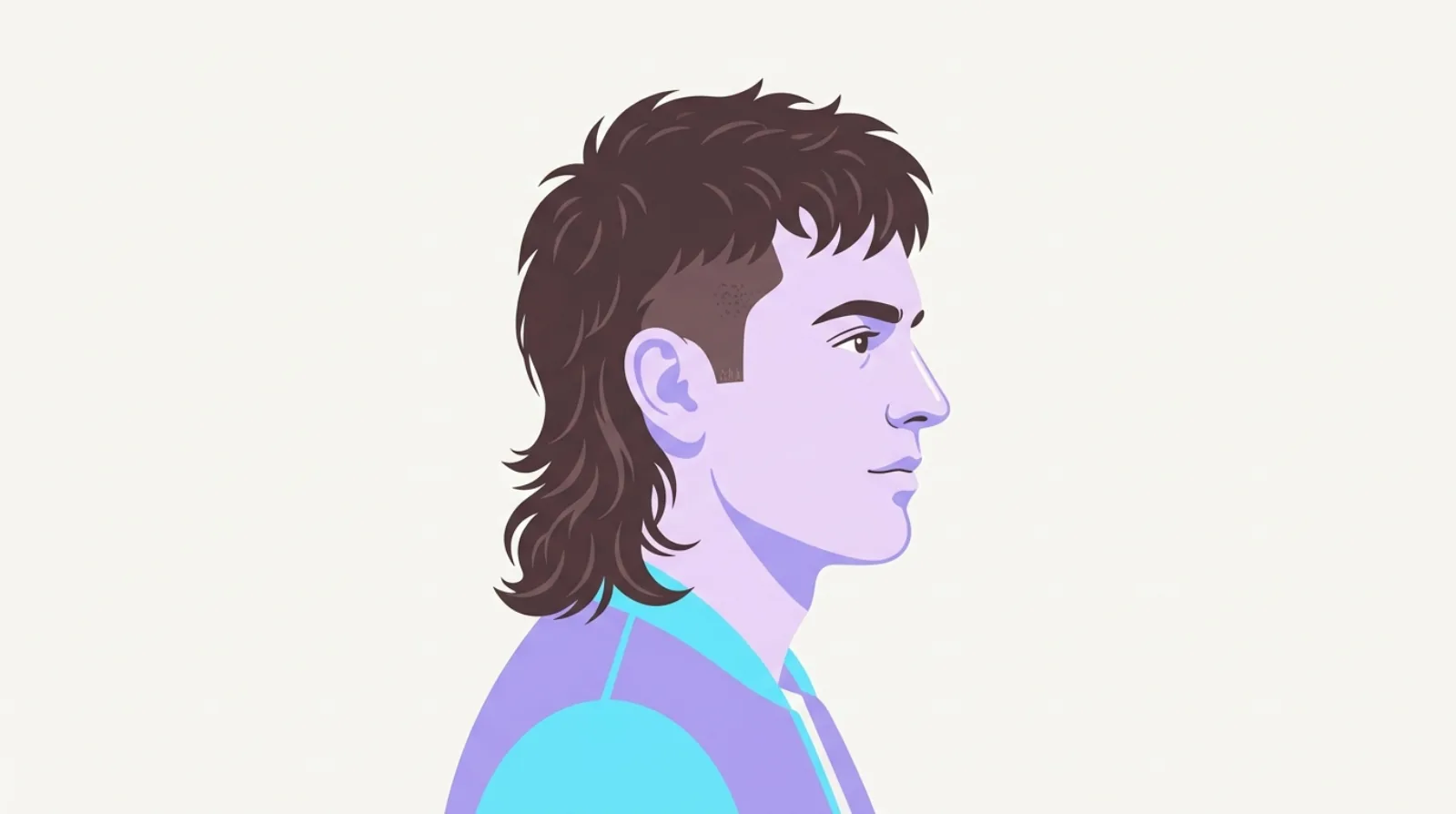
Illustration: Kurli