Men's hairstyles
Mullet
Short at the front, long at the back. The modern mullet is sharper than its reputation.
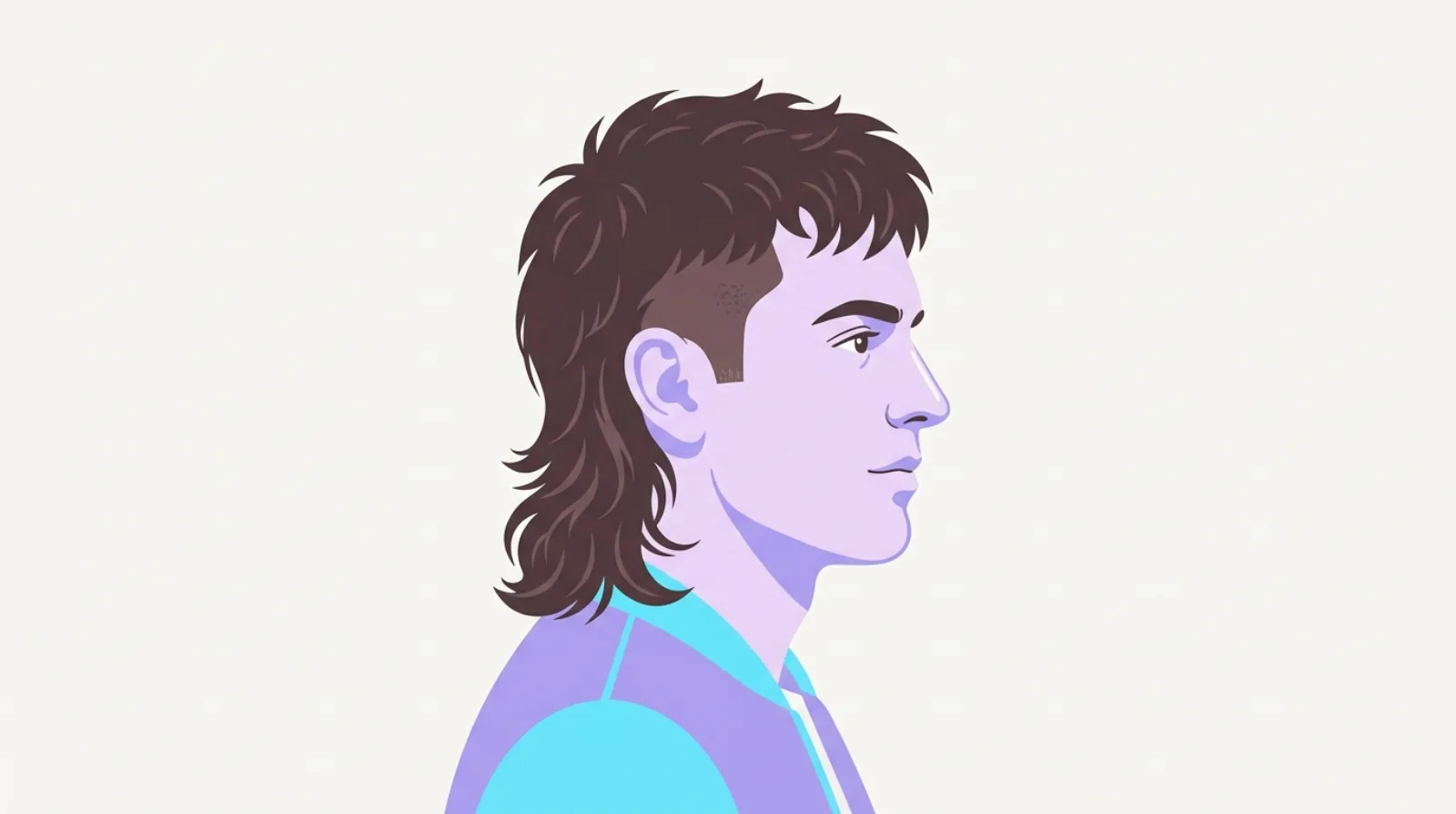
The mullet is back, but it is not the same haircut your uncle wore in 1987. The modern mullet keeps the core idea, shorter at the front and sides with real length at the back, and cleans it up with faded sides, a textured top, and a softer line between the lengths. Done well, it reads as confident and current. Done badly, it reads as a costume. This guide covers what the modern version actually is, who it suits, how it compares to the wolf cut, and exactly what to say in the barber chair.
Find out whether this suits your face. One selfie, and the face-shape read and your top pick are free.
Kurli is an AI hairstyle advisor: upload one selfie and it reads your face shape, recommends the cuts that suit it, and renders any of them onto your own photo before you commit.
What a modern mullet is
A mullet is any haircut that is noticeably shorter at the front and sides than at the back. The back is the point of the cut. It sits over the collar, sometimes well past it, while the front stays short enough to style up or forward.
The modern mullet updates the shape in three ways. First, the sides are usually faded or tapered with clippers instead of left bushy, which makes the whole cut look intentional. Second, the top is cut with texture, choppy and piecey rather than blow-dried smooth. Third, the step between the top and the back is blended, so the length change flows instead of jumping. The 80s version had hard lines between short and long. The 2020s version is one connected shape that happens to end in a longer back.
There is a spectrum here. A subtle mullet just lets the back grow a little past the neckline while keeping a normal crop on top. A committed mullet has a clear tail and makes no apology for it. You can pick your point on that spectrum, and a good barber can move you along it gradually over several visits.
Mullet vs wolf cut: the actual difference
The two cuts are cousins, and people mix them up constantly. The difference is where the volume lives.
A mullet concentrates its length at the back. The sides are short or faded, the front is short, and the drama is the tail behind the neck.
A wolf cut spreads shaggy, layered volume over the whole head. It keeps length at the sides as well as the back, stacks choppy layers through the crown, and looks windblown all over. It grew out of the shag family, and it needs more overall length than a mullet to work. Our wolf cut guide covers it in full.
A quick test: look at the sides. Clipped or faded sides mean you are looking at a mullet. Long, layered, messy sides mean wolf cut. The spiky mullet sits between the two, a mullet base with the top cut into short, textured spikes, and it is one of the most asked-for versions right now. If you like volume everywhere, start from the wolf cut or the shag. If you like tight sides and a statement back, start from the mullet.
Who the mullet suits
Face shape first. The mullet adds visual length from the crown down the back of the neck, and it keeps the sides tight. That combination flatters round and square faces best, because short sides and a bit of height at the front stretch the face and sharpen it. If you have a round face, ask for more height in the front and a mid or high fade on the sides.
Long and oblong faces need more care. A tall front plus a long tail can overdo the vertical line. The fix is to keep the front lower and let the sides carry slightly more weight, a taper rather than a skin fade. Our long face guide explains the logic.
Hair type matters too. Wavy and curly hair make the best mullets, because the back curls and moves instead of hanging flat. Straight hair can absolutely wear one, but ask for layers through the back so the tail has shape. Thick hair needs weight removed through the crown or the cut turns helmet-like. Fine hair should keep the back above shoulder length, since a thin, wispy tail is the fastest way to make the cut look tired. If you are not sure what your face shape is, the face shape quiz settles it from one photo.
How to ask your barber for one
Walking in and saying only the word mullet is a gamble, because every barber has a different default picture of it. Be specific about the three zones.
Sides: give a clipper number or a fade height. A common modern request is a low or mid taper fade, a number 1 or 2 at the shortest point, blended up. A skin fade makes the cut louder; a scissor taper keeps it quieter.
Top and front: say how much length you want to keep and ask for texture, meaning point cutting or choppy layers rather than one even length. Most modern mullets keep 5 to 8 cm on top so the front can be pushed up or forward.
Back: this is the part to describe carefully. Say where you want the tail to sit now (over the collar, past it, or between the shoulder blades if it is grown), and ask for layers through the back so it tapers to a point of movement rather than a flat shelf. Ask the barber to blend the transition from the crown into the back so there is no hard step.
Bring a photo. For this cut more than most, a photo removes all doubt about how extreme you want the result to be.
Styling a mullet day to day
The mullet is a low-effort cut once the shape is right. The top wants a product with texture and low shine. Work a small amount of matte clay or paste through dry hair, push the front up or forward, and pinch a few pieces so they separate. The back mostly styles itself, which is the point.
If your back is wavy or curly, a little curl cream or salt spray after washing keeps it defined instead of frizzy. If it is straight, a quick blast with a hair dryer, aimed down the back with your fingers raking through, adds bend and stops it sitting flat against your neck.
Wash it like any short-to-medium cut, two or three times a week, with conditioner focused on the longer back section. The back is older hair than the top and it dries out first. Treat it the way longer-haired people treat their ends and the tail will look healthy instead of straggly. Heavy pomades and glossy gels fight the whole idea of the modern version; keep the finish matte and a little rough.
Growing one, and growing one out
Getting into a mullet takes patience at the back. From a standard short cut, the back needs three to five months to clear the collar convincingly. The trick is to keep cutting the front and sides on your normal schedule while the back grows untouched. That keeps you looking deliberate during the awkward middle stage instead of just overdue for a haircut.
Growing one out is the same plan in reverse. Stop cutting the sides and top, and let them catch up to the back over a few months. When the gap has narrowed, a barber can turn the whole thing into a longer men's style, a shag, or a wolf cut in one session. The other exit is faster: cut the back off and land on a crop or a crew cut the same day.
Either way, trim the tail every 8 to 10 weeks even while growing. Removing a centimetre of dead ends keeps the back looking chosen. A tail that is never trimmed announces itself as neglect, and that is the version of this cut people make fun of.
Mullet variations worth knowing
Barbers now cut the mullet in named variations, and knowing them speeds up the chair conversation. The burst fade mullet curves the fade around the ear in a sunburst shape and leaves the back full; it is the most requested version in many shops right now and suits curly hair especially well. The mini mullet keeps the tail barely past the collar, a starter version that most workplaces will not blink at. The mulletcrop pairs a textured, forward-fringed crop front with a mullet back, so you get a fringe and a tail in one cut. And the curly or permed mullet adds curl on top and through the back, either natural or salon-made, for maximum volume and bounce. Each variation still follows the same three-zone logic of sides, top, and back, so describe those zones and the name matters less.
Mullet mistakes to avoid
The failure modes of this cut are well known, which makes them easy to dodge.
The hard step. If the length jumps from short crown to long back with no blend, the cut looks stuck in 1985. Modern versions blend the transition. If you can see a straight horizontal line at the back of your head, ask for it to be softened.
The skullet drift. If the sides and front keep getting shorter while the back stays long, the proportions tip into novelty territory. Keep at least a few centimetres up top so the cut stays a hairstyle rather than a punchline.
The flat tail. Straight, unlayered length at the back hangs like a curtain. Layers and a point-cut end give it movement.
Wrong workplace read. Be honest about your environment. The mullet is welcome in far more workplaces than it used to be, but in a conservative office it still says more than a side part does. A low-key version, short tail, tapered sides, reads as fashionable. A back that reaches the shoulder blades reads as a statement, and you should only make statements you are happy to repeat every day.
Common questions
What is a modern mullet?
A modern mullet is short or faded at the sides, textured on top, and longer at the back, with the lengths blended into one connected shape. It differs from the 80s version mainly in its clean faded sides, choppy texture on top, and a soft transition into the back instead of a hard step.
What is the difference between a mullet and a wolf cut?
A mullet keeps the sides short and puts its length at the back. A wolf cut keeps shaggy, layered length all over the head, including the sides. Check the sides: clipped or faded means mullet, long and layered means wolf cut.
Does a mullet suit a round face?
Yes, a mullet is one of the better cuts for a round face. The short faded sides remove width and the height at the front adds length, which together make a round face read longer and sharper. Ask for extra front height and a mid fade.
What is a spiky mullet?
A spiky mullet is a mullet with the top and front cut into short, heavily textured pieces that are styled upward with matte product. It sits between a classic mullet and a textured crop, and it works best on thick, straight, or wavy hair that holds a spike.
How long does it take to grow a mullet?
From a standard short haircut, expect three to five months before the back clears the collar and reads as a real mullet. Keep trimming the front and sides on your usual schedule while the back grows so the cut looks intentional the whole way.
How do I ask my barber for a mullet?
Describe three zones: the sides (give a clipper number or fade height), the top (how much length to keep, cut with texture), and the back (where the tail should sit and layers through it). Ask for the crown-to-back transition to be blended, and bring a photo of the extremity level you want.
Do mullets work with curly hair?
Curly and wavy hair make some of the best mullets, because the back curls and bounces instead of hanging flat. Keep some length in the tail so the curl can form, and use a curl cream or salt spray to keep it defined.
Is the mullet office-appropriate?
It depends on the office and on the version. A subtle mullet with a short tail and tapered sides passes in most modern workplaces. A long, dramatic tail is a statement cut, and conservative environments will read it that way. Match the extremity of the cut to your setting.
How do I stop a mullet looking like an 80s costume?
Blend the transition so there is no hard step between the crown and the back, keep the sides faded or tapered, cut the top with modern choppy texture, and use matte product instead of shine. Trim the tail every 8 to 10 weeks so the ends stay sharp.
How do I grow out a mullet?
Let the top and sides grow while leaving the back alone until the lengths meet, then reshape everything into a shag, wolf cut, or all-over longer style in one appointment. The fast exit is to cut the back off and finish on a crop or crew cut the same day.
What product should I use on a mullet?
Use a matte clay or paste on the top and front for texture, and keep the back mostly natural. Wavy or curly backs benefit from a light curl cream or salt spray, and straight backs from a quick rough blow-dry for movement. Avoid glossy gels, which flatten the modern look.
Sources
Hair biology and hair-care facts on this page are supported by these sources. Styling recommendations are guidance.
- Tips for healthy hair, American Academy of Dermatology
- Everyday hair care, American Academy of Dermatology
- How to style hair without damage, American Academy of Dermatology
- Hair Problems, MedlinePlus, U.S. National Library of Medicine
See it on your own face
Kurli reads your face from a selfie, recommends styles that suit you, and renders each one onto your photo.
The face-shape read and your top pick are free. Your photo is never sold or used to train AI.