Virtual try-on
AI wispy bangs simulator
A fringe you can see through. The lowest-commitment version there is.
A wispy bangs simulator shows a light see-through fringe on your own face before you cut. Upload a front-facing selfie to Kurli and the AI renders wispy bangs onto your photo, so you can see how much forehead stays visible through them before committing to anything heavier.
Tap to pick a selfieDrop a selfie here, or click to browse
Front-facing, well-lit photos work best.
Your photo is used only to render the style and isn't stored.
Key takeaways
- Wispy bangs are cut thin enough that skin shows through, which is why they are called see-through.
- A see-through fringe covers the forehead without hiding it, so the face keeps its vertical space.
- Wispy bangs are the lightest fringe available and the usual recommendation for a first fringe.
- Fine hair suits wispy bangs particularly well, since the style does not depend on density.
- The style comes from Korean hairdressing, where see-through fringes have been standard for years.
- Wispy bangs need trimming every three to five weeks, because thin ends show growth quickly.
Variations to try
Tap any one to load it into the box above, then press see it on me.
How much forehead each fringe covers
| Fringe | Forehead covered | Density needed | Trim every | Best for |
|---|---|---|---|---|
| Wispy bangs | Lightly, see-through | Very low | 3 to 5 weeks | A first fringe |
| Curtain bangs | Partly, parted | Medium | 4 to 6 weeks | Most faces |
| Side-swept bangs | Partly, diagonal | Low | 4 to 6 weeks | Round faces |
| Blunt bangs | Fully | High | 2 to 4 weeks | Long faces |
| Micro bangs | Not at all | Medium | 2 to 3 weeks | Bold looks |
Who wispy bangs suit
Wispy bangs are the answer for anyone who wants a fringe but is not ready for one, and that describes a lot of people.
The defining feature is that you can see through them. A thin section is taken and cut with separated ends, so the fringe sits over the forehead without hiding it. That single property changes the maths of who a fringe suits.
A blunt fringe removes the forehead entirely, which shortens the visible face. That is useful on a longer face and risky on a rounder one. Wispy bangs cover the forehead only partly, so they add the softness of a fringe without removing the vertical space, which means rounder faces can wear them comfortably where a blunt fringe would work against them.
Fine hair is the standout case. A blunt fringe on fine hair either looks sparse or requires taking such a wide section that the rest of the head thins out. Wispy bangs are meant to be thin, so fine hair achieves the intended look rather than falling short of it.
Thick hair can wear them too, but the stylist has to thin the section deliberately, or the fringe ends up heavier than the name suggests.
The full breakdown by face shape is in the guide linked above.
Where the style comes from
Wispy or see-through bangs are usually credited to Korean hairdressing, where a light, separated fringe has been a standard option for years rather than a passing trend. The term see-through bangs is a direct translation of how the style is described there.
That origin is worth knowing for a practical reason: the technique assumes a fringe that is styled to separate, not one that falls in a solid curtain. The pieces are meant to sit slightly apart with skin visible between them, which is the opposite of the smooth, closed line a Western blunt fringe aims for.
If you show a stylist a Korean reference photo and ask for wispy bangs without explaining, you may get a Western thinned fringe instead, which is denser and sits flatter. The difference is real and it disappoints people who were expecting the reference.
Say see-through, ask for a narrow section, and ask for the ends point-cut so they separate. Those three instructions get you the style as it is actually done rather than an approximation of it.
How to describe wispy bangs to the AI
Use the words see-through or wispy. Both signal thinness to the model. Bangs on its own will get you something considerably denser.
Say how long. At the eyebrows, just below, or above. Wispy fringes are usually cut slightly longer than blunt ones so the ends have room to separate.
Mention separation if you want it. With separated pieces or Korean style see-through bangs both produce the gapped, piecey version rather than a smooth thinned one.
Combine it with another fringe shape if you like. Wispy curtain bangs and wispy side-swept bangs are both real and both render well, and they are the two lightest options on the entire site.
Render a wispy version alongside a blunt one. Seeing how much more forehead survives is usually what convinces people to start here.
What the render gets right, and where it is approximate
Reliable. How much forehead stays visible, where the fringe sits relative to your brows, and whether the light coverage flatters your proportions. That is the decision, and it is exactly what this render shows.
Approximate. How much the individual pieces separate, which depends on your texture and on product. Renders show wispy bangs styled to sit perfectly apart, which takes a little work in practice.
Not modelled at all. How thin the fringe will actually be, because that depends entirely on how wide a section the stylist takes. Two people asking for wispy bangs can get very different densities. Also not modelled: how the fringe behaves as it grows out and thickens visually.
The good news is that the risk here is genuinely small. A wispy fringe you dislike is a few weeks from being face-framing pieces, and there is very little hair involved in the first place.
Before you book, and living with it
Wispy bangs are the recommended entry point if you have never had a fringe, and the reasoning is straightforward: very little hair is cut, the effect is reversible quickly, and if you like it you can go denser next time.
That direction only works one way, which is the point. Starting wispy and adding density later is easy. Starting blunt and wishing you had gone lighter means waiting months.
Ask for a narrow section. This is the single instruction that determines whether the fringe is genuinely see-through, and it is the one most often left unsaid.
Expect to style them. Wispy bangs are light enough that they move with the weather, and most people spend thirty seconds with a dryer or a small brush to set the separation. Left alone they can clump together, which loses the effect entirely.
Trimming comes around every three to five weeks. Thin ends make growth obvious sooner than a heavy fringe does, so the cycle is shorter than the small amount of hair involved might suggest.
What to ask for at the salon
Bring the render and point at your own head while you describe what you want. A landmark on your own face communicates more precisely than any adjective, and it removes the ambiguity that causes most disappointing appointments.
Ask to be shown where the shortest point will sit before anything is cut. Ten seconds of checking prevents the most common surprise, which is a cut noticeably shorter than the one you pictured.
Ask what it looks like without styling. Salons finish everything at its best, so the version you leave with is not the version you will see on an ordinary morning. A stylist who answers that honestly is worth going back to.
Ask whether your hair type will actually hold the shape. A stylist who tells you your hair is too fine, too straight, or too curly for a particular finish is giving you the most useful sentence of the appointment, not being unhelpful.
Finally, ask what product they used and how much. Most of these styles depend on a small amount of the right product, and leaving without knowing what it was is the usual reason a salon result does not survive the first wash at home.
Common questions
What are wispy bangs?
A fringe cut from a narrow section and thinned so that skin shows through it. They are also called see-through bangs, and they cover the forehead without hiding it.
Are wispy bangs good for fine hair?
Yes, they are the best fringe option for fine hair. The style is meant to be thin, so fine hair achieves the intended look rather than falling short of a denser fringe.
Do wispy bangs suit round faces?
Better than blunt bangs do. Because they only partly cover the forehead, they keep the vertical space that a blunt fringe removes, which matters on a rounder face.
What is the difference between wispy bangs and see-through bangs?
Nothing meaningful. See-through bangs is the term used in Korean hairdressing, where the style originates, and wispy bangs is the common Western name for the same thing.
How often do wispy bangs need trimming?
Every three to five weeks. Thin ends make growth visible sooner than a heavy fringe, so the cycle is shorter than the small amount of hair suggests.
Are wispy bangs a good first fringe?
They are the usual recommendation. Very little hair is cut, the effect grows out quickly, and you can always add density at the next appointment if you want more.
Can thick hair have wispy bangs?
Yes, but the stylist has to deliberately thin and narrow the section, or the fringe will come out heavier than the name implies. Say see-through explicitly.
Is the wispy bangs simulator free?
Browsing styles and reading the guides is free. Rendering a look onto your own photo uses a credit, since that step runs an image model that costs money on each render.
Sources
Hair facts on this page are supported by these sources. What the render will look like on you is a preview, not a promise.
- Tips for healthy hair, American Academy of Dermatology
- How to style hair without damage, American Academy of Dermatology
- Hair Follicle, Cleveland Clinic
- Physiology, Hair, StatPearls, NCBI Bookshelf
Try another style
Keep reading
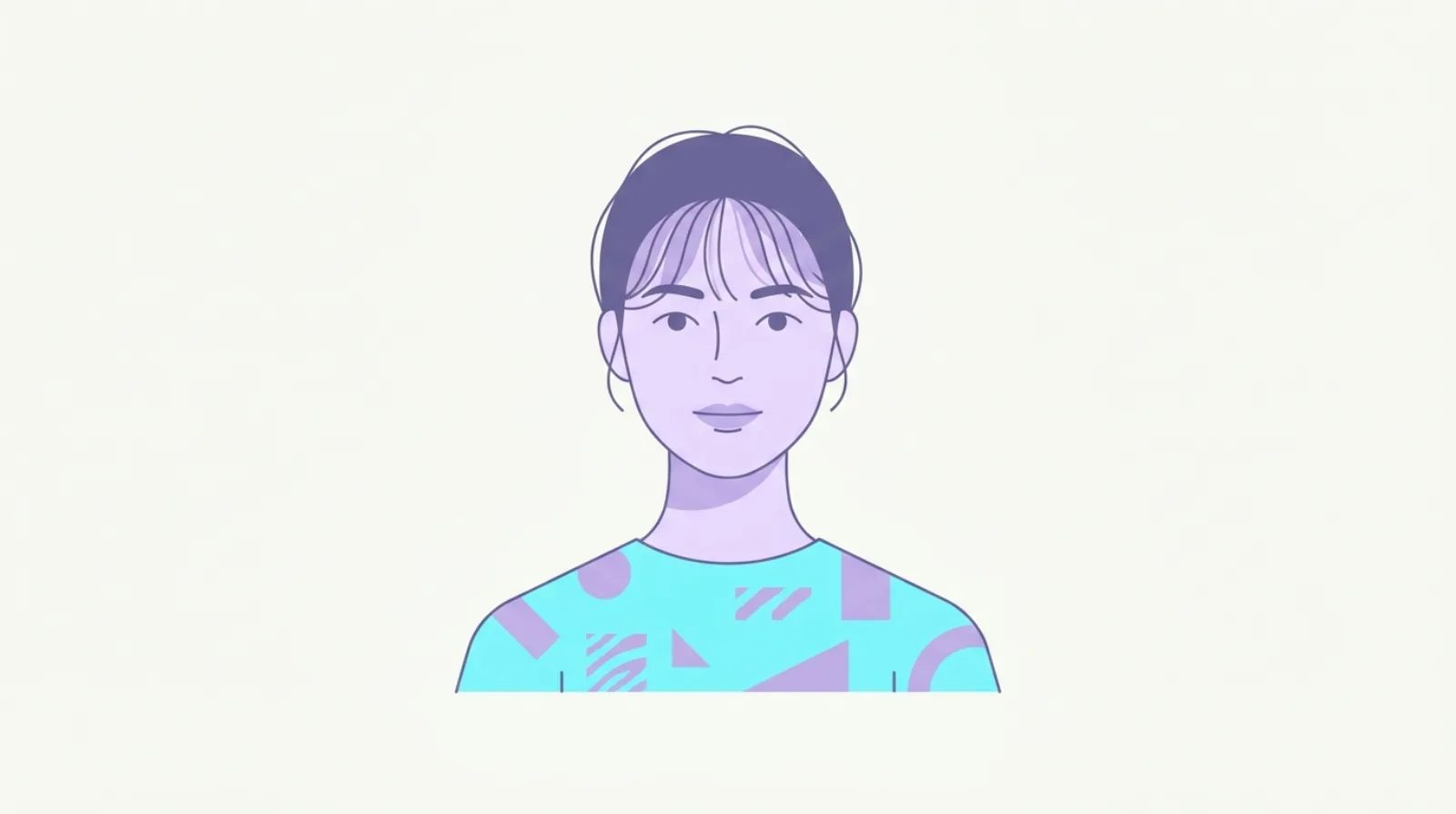
Illustration: Kurli