Bangs and fringe
Wispy bangs: the light, see-through fringe
A soft, airy fringe that shows skin between the strands. Made for fine hair.
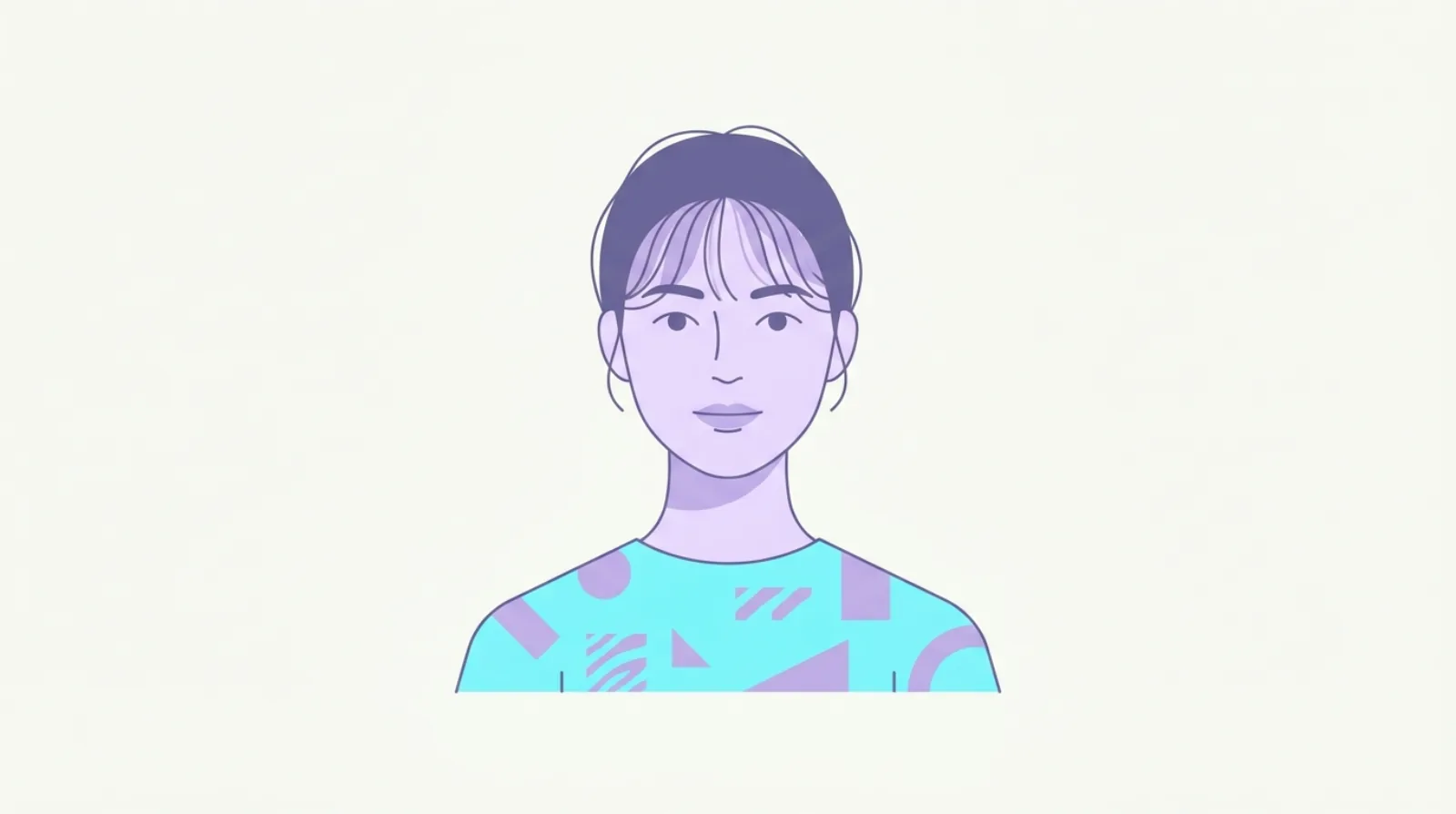
Wispy bangs are a fringe cut thin and soft on purpose, so that skin shows through between the strands. Where a blunt fringe is a solid wall of hair, a wispy fringe is a veil. The style has been everywhere for several years, partly pushed by Korean and Japanese salon trends, and it survives because it solves a real problem: it gives you a fringe without spending much hair on it. That makes it the natural choice for fine hair, for anyone nervous about committing a big section to a fringe, and for faces that want softening rather than coverage. This guide covers how the cut is built, who it suits, and the styling that keeps light from tipping into sparse. For every fringe family in one place, start with the bangs and fringe guide.
Find out whether this suits your face. One selfie, and the face-shape read and your top pick are free.
Kurli is an AI hairstyle advisor: upload one selfie and it reads your face shape, recommends the cuts that suit it, and renders any of them onto your own photo before you commit.
What makes a fringe wispy
Two things separate a wispy fringe from every other kind: how much hair is in it, and how the ends are cut.
The section is shallow. A stylist creating a blunt fringe takes a deep triangle of hair from the top of the head forward. For a wispy fringe, the triangle is shallow, sometimes only a couple of centimetres back from the hairline. Less hair enters the fringe, so the fringe is see-through by construction.
The ends are point cut. Instead of one clean horizontal line, the scissors cut up into the ends at an angle, leaving a soft, irregular edge where strands taper to different lengths.
The result reads light, casual, and slightly undone. It also weighs almost nothing, which matters more than it sounds: a wispy fringe moves, lifts, and lets your forehead breathe, where a heavy fringe sits like a fixed object. The trade is durability. With so little hair in it, the style depends on every strand behaving.
Why fine hair and wispy bangs belong together
Every fringe is a budget decision: you are spending hair from the top of your head to buy a shape at the front. Fine hair has the smallest budget, and the wispy fringe is priced for it.
Because the cut only needs a shallow section, it borrows little from the hair behind it. Fine-haired people who cut a deep blunt fringe often discover the top of their head looks flatter and emptier afterwards, since the fringe swallowed the hair that used to add cover. A wispy fringe avoids that cost almost entirely.
The see-through finish also matches the density around it. A solid, plush fringe over fine side hair can look borrowed from someone else's head. A light fringe over light hair looks coherent.
One honest caution: on genuinely very thin hair, even a wispy fringe can cross into sparse, showing more scalp line than strand. If your hair sits at that end of the range, read our fine and thin hair guide first, and consider whether a fuller straight-across fringe on a small section would flatter more, since concentrating hair is the other valid strategy.
Wispy versus blunt: the honest comparison
These two sit at opposite ends of the fringe spectrum, and choosing between them is mostly choosing what you want the fringe to do.
Coverage. Blunt hides the forehead completely. Wispy filters it, softening the hairline while leaving the face its full length. If your goal is shortening a long face, wispy under-delivers and blunt is the tool. If your goal is softening without shrinking, reverse that.
Effort. A blunt fringe demands a clean line daily. A wispy fringe is meant to look slightly imperfect, so bad fringe days barely exist.
Regret cost. Wispy wins clearly. Less hair is committed, so growing it out is quicker and the awkward stage is milder.
Statement. Blunt is a decision people notice from across a room. Wispy reads as texture rather than a feature.
A useful rule from stylists: pick blunt when hair in the fringe is plentiful and the face wants shortening, pick wispy when hair is scarce or the face just wants softening. The bangs by face shape overview maps both across every shape.
Which faces the veil flatters
Because a wispy fringe filters rather than covers, its face-shape effects are gentler versions of the blunt fringe's effects, and that gentleness is exactly what some shapes want.
Square faces are the standout match. The strong jaw and straight brow line want softening, not another hard horizontal, and the broken, feathery edge of a wispy fringe is the softest line in the fringe family. We take this further in bangs for square faces.
Heart faces benefit too: the veil quiets a wide forehead while the visible skin keeps the upper face from feeling capped.
Round faces can wear wispy well, since the fringe barely shortens the face, though a swept or curtain shape adds more of the diagonals a round face wants.
Long faces should know the limits: a wispy fringe softens a high hairline but does not meaningfully shorten a long face. For that job, see bangs for long faces.
If you are not sure which shape you are working with, our post on how to find your face shape sorts it out in a few minutes.
Getting the amount right
The single decision that makes or breaks this cut is how much hair goes into the fringe, and it is worth discussing in exact terms at the salon.
Too little, and the fringe reads as a few stray hairs rather than a style. The tell is that the individual strands separate into visible lines against the forehead, especially by afternoon when oil has gathered them into points.
Too much, thinned aggressively to fake wispiness, is worse. Some stylists build a wispy fringe by cutting a deep section and then attacking it with thinning shears. That produces a fringe that looks right for a week and then grows into a bulky, frizzy layer of mixed lengths. It is also the version that ruins the grow-out.
The good version starts shallow and stays mostly unthinned: a small section, point cut at the ends, adjusted strand by strand. Ask your stylist to "start conservative and take more in only if it needs it." You can deepen a wispy fringe at any visit. Undoing an over-thinned one takes months of growing, which is the growing out bangs problem you are trying to avoid.
Styling a fringe that barely exists
A wispy fringe needs less styling than any fringe, but the styling it needs is specific, because there is no mass of hair to hide mistakes in.
Dry it down and slightly forward. A quick pass with the dryer on low, directing the fringe down over the forehead, is usually the whole routine. High heat is unnecessary and unkind here: a thin section of fine strands is the fastest part of your head to damage, and repeated hot-tool passes on it are exactly the concentrated styling damage dermatologists warn about.
Use almost no product. A thin fringe shows every gram. If you need something, rub a drop of light serum between your fingertips and pinch a few strands into place. Skip wax, oil, and heavy cream entirely.
Manage the oil aggressively. With so few strands, forehead oil clumps a wispy fringe into strings faster than any other style. A small morning blast of dry shampoo at the roots, before the fringe looks greasy, works better than rescuing it at noon.
Refresh with water. Flattened or separated by afternoon? Damp fingertips, resettle the strands, thirty seconds of air. Done.
Keeping it trimmed without losing it
Wispy bangs sit in a comfortable middle on upkeep: less strict than blunt, slightly needier than a long sweep. Expect a trim every four to five weeks.
The risk at trim time is specific to this style: every trim is a chance for the fringe to lose its softness. A hurried trimmer, professional or otherwise, tends to square off the ends, and a wispy fringe with a straight edge is just a thin blunt fringe, which is the worst of both worlds.
So the standing instruction, at the salon or at home, is point cutting only: scissors entering the ends vertically or at a steep angle, never straight across. At home, this is actually the most beginner-friendly fringe to maintain, because the target is an irregular edge, and irregularity forgives error. Take off a few millimetres, on dry styled hair, with proper scissors, and stop early. The full method, including the scissors question and when a stylist is the better call, is in trimming bangs at home.
One more upkeep note: because the section is shallow, new growth along the hairline joins the fringe quickly, so the style actually thickens slightly between cuts. Pleasant surprise, as fringe problems go.
When wispy goes wrong, and the fixes
Most wispy-fringe complaints trace back to three causes, and all three have fixes short of growing it out.
It looks greasy by lunchtime. The strands are gathering forehead oil and clumping. Fix the inputs: lighter or no product in the fringe, sunscreen and skincare fully absorbed before the fringe comes down, hands off during the day, and pre-emptive dry shampoo in the morning. If your forehead itself breaks out under the fringe, the American Academy of Dermatology points at hair products as a common trigger, so lighten those before blaming your skin.
It reads sparse, not soft. There is too little hair in the section for your density. The fix is a deeper section, cut at the next visit: five minutes of work, no growing required.
It puffs or frizzes instead of lying softly. It was over-thinned, and the short interior lengths are surfacing. This one does need patience: keep trims to the ends only while the thinned lengths catch up, and press the fringe with a warm (not hot) dryer and a flat brush to settle it meanwhile.
If you conclude the style itself is not you, curtain bangs are the natural next stop, since a growing wispy fringe passes through that shape on its way out.
Preview it before you commit the section
The wispy fringe has the mildest failure mode of any fringe, but it still changes the most looked-at part of your face, and the variable that decides success, your hair's density at the front hairline, is invisible in anyone else's photos.
Kurli renders a wispy fringe onto your own selfie, which settles the two questions that matter: whether the softened hairline suits your face, and whether the light coverage does enough for what you wanted a fringe to do. If you try the render and find yourself wishing it covered more, that is your answer: you wanted a straight-across fringe or a heavier curtain all along, and better to learn it on a screen.
Compare it against side-swept bangs too, which occupy the same low-commitment territory with a different geometry.
And because this style is the fine-hair specialist, pair the decision with the cut advice in the fine and thin hair guide, so the fringe and the rest of the haircut are working from the same playbook. The complete tour of alternatives stays at the bangs and fringe guide.
Common questions
What are wispy bangs?
A fringe cut deliberately thin and soft, from a shallow section of hair, with point-cut ends that taper to different lengths. Skin shows through between the strands, so the fringe reads as a light veil over the forehead rather than a solid block of hair.
Are wispy bangs good for fine or thin hair?
They are the fringe designed for it. Because the cut uses only a shallow section, it borrows very little hair from the top of the head, and its see-through finish matches fine hair's natural density. On very thin hair, though, even a wispy fringe can look sparse, and a small solid fringe may flatter more.
What is the difference between wispy bangs and blunt bangs?
Blunt bangs use a deep section cut to one solid line, hiding the forehead completely and shortening the face. Wispy bangs use a shallow section with soft, broken ends, filtering the forehead rather than covering it. Blunt makes a statement and demands upkeep; wispy softens and forgives.
Do wispy bangs suit a square face?
Yes, better than any other shape. A square face already has strong horizontal and vertical lines at the jaw and brow, and the feathery, irregular edge of a wispy fringe is the softest line available in a fringe. It softens the upper face without adding another hard edge.
Will wispy bangs make my face look shorter?
Only slightly. Because skin stays visible through the strands, the face keeps most of its vertical length. That makes wispy bangs a weak tool for shortening a long face but a good choice for anyone who wants a fringe without changing their proportions much.
How do I ask for wispy bangs at the salon?
Ask for a shallow fringe section with point-cut ends, and ask the stylist to start conservative and add more hair only if needed. Ask them to avoid heavy thinning shears: a deep section thinned aggressively looks wispy for a week and then grows into a frizzy layer of mixed lengths.
Why do my wispy bangs look greasy so quickly?
A thin fringe has few strands, so the oil it picks up from your forehead clumps them into visible strings faster than a full fringe. Use no or minimal product, let sunscreen absorb before the fringe comes down, keep hands off it, and apply a little dry shampoo in the morning rather than rescuing it at noon.
How often do wispy bangs need trimming?
Every four to five weeks. Insist on point cutting at every trim, because squaring off the ends turns a wispy fringe into a thin blunt one. It is also the most forgiving fringe to trim at home, since the target is a soft irregular edge and small errors disappear into it.
Are wispy bangs easy to grow out?
The easiest after curtain and side-swept styles. The section is shallow, so there is less hair to grow, and the tapered ends blend into face-framing pieces early. An over-thinned wispy fringe is the exception: its short interior lengths take months to catch up.
Can thick hair wear wispy bangs?
Yes, and the section rules flip. On thick hair the stylist keeps the fringe section very shallow so only a light layer comes forward, and may soften the interior slightly. Done well it reads airy against the fuller hair behind it. Done by simply thinning a deep section, it turns frizzy.
Wispy bangs or curtain bangs: how do I choose?
Choose by geometry and coverage. Curtain bangs part in the centre and sweep outward, adding diagonals that reshape round and square faces. Wispy bangs hang lightly across the forehead, softening the hairline without much reshaping. If you want your fringe to change your proportions, choose curtain; if you want texture and softness, choose wispy.
Sources
Hair biology and hair-care facts on this page are supported by these sources. Styling recommendations are guidance.
- How to style hair without damage, American Academy of Dermatology
- 10 hair care habits that can damage your hair, American Academy of Dermatology
- Are your hair care products causing breakouts?, American Academy of Dermatology
- Tips for healthy hair, American Academy of Dermatology
- Hair Problems, MedlinePlus, U.S. National Library of Medicine
See it on your own face
Kurli reads your face from a selfie, recommends styles that suit you, and renders each one onto your photo.
The face-shape read and your top pick are free. Your photo is never sold or used to train AI.