Virtual try-on
AI butterfly cut simulator
Keeps your length, changes your whole front. Worth seeing before you commit.
A butterfly cut simulator shows you a cut designed to look like two lengths at once. Upload a front-facing selfie to Kurli and the AI renders the butterfly onto your own photo, so you can see the short face-framing layers sitting over your long lengths before you commit to cutting them.
Tap to pick a selfieDrop a selfie here, or click to browse
Front-facing, well-lit photos work best.
Your photo is used only to render the style and isn't stored.
Key takeaways
- A butterfly cut has two distinct layer sets: short face-framing pieces on top and long layers underneath.
- The cut creates the illusion of a shorter haircut while keeping almost all of your actual length.
- Butterfly layers give volume at the crown and around the face without removing overall length.
- The shortest top layers usually land between the chin and the collarbone, which is the key measurement.
- Straight and wavy hair show the two-layer effect most clearly, since the layers need to sit apart visibly.
- Growing a butterfly cut out is easy, because the short layers simply blend back into the lengths.
Variations to try
Tap any one to load it into the box above, then press see it on me.
Butterfly against other layered cuts
| Cut | Length lost | Volume added at | Effect | Grow-out |
|---|---|---|---|---|
| Butterfly cut | Almost none | Crown and face | Looks shorter than it is | Easy |
| Long layers | Very little | Mid-lengths | Movement through the ends | Easy |
| Face-framing layers | None | Front only | Frames the face | Invisible |
| Shag | Some | Throughout | Textured and lived-in | Easy |
| Wolf cut | Some | Crown | Strong short-long contrast | Easy |
Who a butterfly cut suits
The butterfly cut exists to solve one specific problem: wanting the look of a shorter, more shaped haircut without actually losing your length. If that describes you, this is the cut to render first.
It works by cutting two separate sets of layers. A short set frames the face and sits around the chin or collarbone, and a long set underneath keeps your existing length. When the hair moves, the two sets separate visibly, which is what creates the impression of a much shorter cut sitting over long hair.
On face shape, the short layers add width and volume around the cheekbones, and the crown layering adds height. That combination flatters a longer or oblong face, and it suits a round face too provided the short layers start at the chin or lower rather than at the cheekbone.
Texture decides how visible the effect is. Straight and wavy hair show the two-layer separation most clearly. Very curly hair can wear it, but the layers blend into the curl pattern and the butterfly effect is subtler.
The practical warning is density. This cut removes real weight from the top sections, so fine hair can end up with a thin-looking top layer over a thin-looking bottom one. Fewer, softer layers is the answer there.
The full breakdown is in the guide linked above.
How to describe a butterfly cut to the AI
Butterfly cut is a newer term than most on this site, so being specific pays off.
Say where the shortest top layer lands. At the chin, or at the collarbone. This single measurement is the difference between a dramatic butterfly and a subtle one, and it is the thing to decide before anything else.
Say how much volume you want at the crown. Heavy crown layering or light. The crown is where the height comes from, and it is what separates a butterfly from plain face-framing layers.
Keep the length explicit. Say long layers underneath or keeping length past the shoulders. The whole point is that the length survives, and saying so stops the model shortening everything.
Add a fringe if you want one. With curtain bangs is the most common pairing and completes the frame.
Render the chin version and the collarbone version. They are the same haircut in name and quite different in effect.
What the render gets right, and where it is approximate
Reliable. Where the short layers land against your face, how much volume sits at the crown, and whether the overall silhouette flatters your proportions. Crucially, it shows whether the two-length effect reads as deliberate on you or just as uneven, which is the real risk with this cut.
Approximate. How clearly the two layer sets separate, which depends heavily on your texture and on how the hair is styled. Butterfly cuts are almost always photographed blow-dried with a round brush, and that finish is doing a lot of the work.
Not modelled at all. How the cut looks air-dried, which for straight hair can be considerably flatter than the render. Your density, which decides whether the top layer looks full or sparse. And how much weight the stylist actually removes, which is a judgement made in the chair.
If your hair is fine, treat a good render with some caution here. This is a cut that depends on having enough hair to split into two convincing layers.
Why it keeps your length
This is the cut's whole selling point and it is worth understanding why it works, because it is genuinely unusual.
Most ways of changing your hair involve losing length. A bob, a lob, a pixie, even a shag all shorten the outline. A butterfly cut does not. The perimeter of your hair stays where it was, and all the cutting happens above it.
That means the change is visible from the front, where you see it in the mirror and where other people see it, while the length you have spent months or years growing is still there. For anyone growing their hair out but bored of it, this is close to the ideal compromise, and it is the reason the cut spread so quickly.
The grow-out is correspondingly gentle. The short layers lengthen and gradually merge into the rest, so there is no stage where the cut looks unfinished. That is a meaningful contrast with a fringe or a bob.
The honest caveat is that keeping the length means keeping the weight. If your hair is heavy and you were hoping a cut would make it feel lighter, a butterfly cut will disappoint you. That is a different problem and long layers or a shag solve it better.
Before you book
Ask the stylist to show you where the shortest top layer will land, holding the piece against your face. This is the single measurement the cut turns on and it takes ten seconds to check.
Say clearly that you want to keep your length. It sounds obvious, but butterfly cut is a newer term and some stylists will reach for a shag or long layers instead if the brief is loose. Saying keep the length, cut the layers above it removes the ambiguity.
Ask whether your density supports two distinct layer sets. Fine hair split into two layers can end up looking thin in both, and a stylist who suggests keeping the layering light is being realistic.
Ask about the crown specifically. Volume at the crown is what makes a butterfly cut read as a shape rather than as face-framing pieces, and it is the part most often underdone.
And ask how to style it. The two-length effect is much more visible with a round brush or a curling iron than air-dried, so find out what the finish requires before deciding whether it fits your mornings.
What to ask for at the salon
Bring the render and point at your own hair while you describe what you want. Body landmarks beat adjectives every time, and this is a cut where the difference between what you pictured and what you asked for is usually a single measurement.
Ask the stylist to show you where the shortest layer will sit before they start cutting. Holding the piece up takes ten seconds and prevents the most common surprise, which is layers considerably shorter than expected.
Ask what it will look like air-dried. Salons finish everything with a blow-dry, so the version you walk out with is the best-case one. The useful question is what you will see on an ordinary morning, and a stylist who answers honestly is worth keeping.
Ask whether your density suits the amount of layering you are requesting. Weight can be removed in seconds and takes months to grow back, so a stylist who suggests being conservative on a first appointment is giving you good advice rather than being unhelpful.
Finally, ask what they used to finish it. Most layered cuts depend on a small amount of the right product, and leaving without knowing what it was is why the salon result so often fails to survive the first wash at home.
Common questions
What is a butterfly cut?
A cut with two separate layer sets: short face-framing layers around the chin or collarbone, and long layers underneath. It creates the impression of a shorter haircut while keeping almost all your actual length.
Does a butterfly cut make you lose length?
Almost none. The perimeter stays where it was and all the cutting happens above it, which is exactly why the cut became popular with people growing their hair out.
Where should the short layers land?
At the chin for a dramatic version, or at the collarbone for a subtle one. This is the single measurement that decides the whole effect, so it is worth being specific about.
Does a butterfly cut suit fine hair?
It is the harder case. Splitting fine hair into two layer sets can leave both looking thin, so keep the layering light and expect a subtler effect than the photos show.
Is a butterfly cut hard to grow out?
No. The short layers simply lengthen and merge back into the rest, so there is no awkward stage where the cut looks unfinished.
Does a butterfly cut work on curly hair?
Yes, but the effect is subtler because the layers blend into the curl pattern. Ask for it cut dry so the stylist can see the shrinkage.
What is the difference between a butterfly cut and long layers?
A butterfly cut has a deliberate gap between two distinct layer sets, while long layers blend gradually from short to long. The butterfly effect is the visible separation between the two.
Is the butterfly cut simulator free?
Browsing styles and reading the guides is free. Rendering a look onto your own photo uses a credit, because that step runs an image model that costs money each time.
Sources
Hair facts on this page are supported by these sources. What the render will look like on you is a preview, not a promise.
- Tips for healthy hair, American Academy of Dermatology
- How to style hair without damage, American Academy of Dermatology
- Anatomy, Hair, StatPearls, NCBI Bookshelf
- Hair Follicle, Cleveland Clinic
Try another style
Keep reading
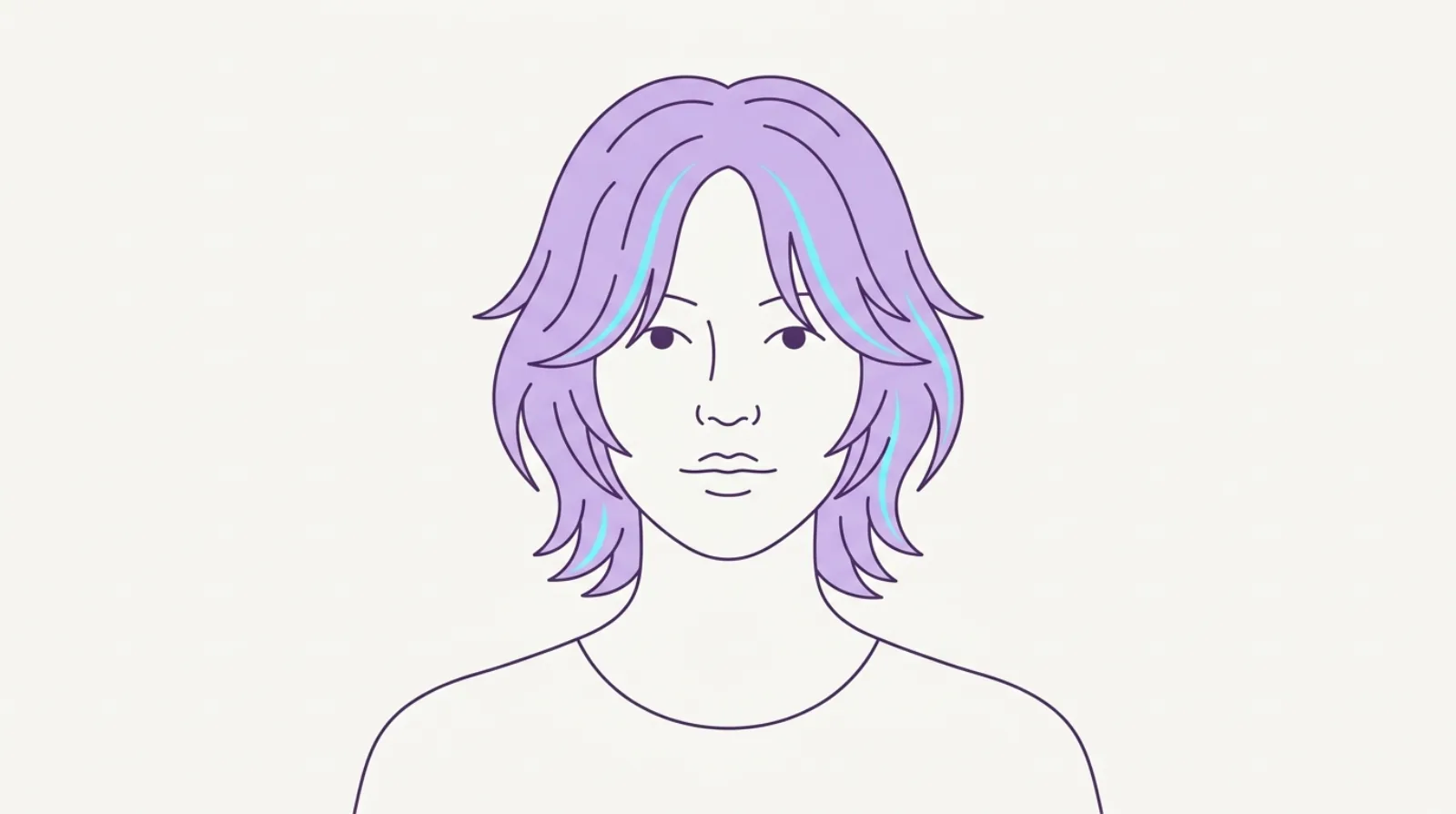
Illustration: Kurli