Virtual try-on
AI taper fade simulator
Low, mid, or high changes the whole face. Most people find out in the chair.
A taper fade simulator shows you where the fade should sit before the barber decides for you. Upload a front-facing selfie to Kurli, choose a low, mid, or high fade, and the AI renders it onto your own photo so you can see how each height changes the shape of your head and face.
Tap to pick a selfieDrop a selfie here, or click to browse
Front-facing, well-lit photos work best.
Your photo is used only to render the style and isn't stored.
Key takeaways
- A fade is defined by how high the shortest point sits on the head, which is what low, mid, and high mean.
- A high fade adds apparent height and narrows the head, while a low fade keeps more width at the sides.
- Taper and fade are not the same thing, and asking for the wrong one is the most common barbershop mix-up.
- Fades need re-cutting every two to three weeks, because the gradient blurs as soon as the hair grows.
- A fade pairs with almost any length on top, which is why it is the most versatile men's cut available.
- Skin fades expose the scalp at the shortest point and need sun protection like any other bare skin.
Variations to try
Tap any one to load it into the box above, then press see it on me.
Fade heights compared
| Fade | Starts at | Head looks | Re-cut every | Grow-out |
|---|---|---|---|---|
| Low fade | Just above the ear | Wider, softer | 3 weeks | Easy |
| Mid fade | At the temple | Balanced | 2 to 3 weeks | Easy |
| High fade | High on the skull | Taller, narrower | 2 weeks | Noticeable |
| Skin fade | Any height, down to skin | Sharpest contrast | 1 to 2 weeks | Noticeable |
| Taper only | Neckline and sideburns | Barely changed | 4 to 6 weeks | Very easy |
Who a taper fade suits
Almost everyone, which is why it has become the default men's haircut. The useful question is not whether a fade suits you but which height does.
A fade removes width at the sides and concentrates volume on top, so it makes the head look taller and narrower. That is directly useful on a rounder or wider face, and a mid or high fade is the usual recommendation there. On a longer or oblong face the same effect can overdo it, adding height where there is already length, so a low fade that keeps some width at the sides usually balances better.
A strong square jaw pairs well with a fade because the clean gradient echoes the jaw line. A softer jaw often benefits from a little more length left on top, which shifts the eye upward.
A fade is also one of the standard answers for thinning at the temples or a receding hairline, for the same reason a buzz cut is: reducing the contrast between thin and thick areas makes the thinning far less obvious.
The complete breakdown by face shape is in the guide linked above.
Taper and fade are not the same thing
This is the most common misunderstanding in the barbershop, and it is worth spelling out because it causes real disappointment.
A taper is a gradual shortening at the neckline and around the sideburns only. It is subtle, it grows out invisibly, and someone who has never had a haircut described to them would probably not notice it.
A fade takes that gradient much further up the sides and back, blending from very short at the bottom to longer at the top. It is a visible feature of the haircut.
A taper fade combines them: a fade through the sides that tapers cleanly at the neckline and sideburns. That is what most people mean when they say fade, and it is what most of the renders here show.
If you ask for a taper and expect a fade, you will leave thinking the barber did almost nothing. If you ask for a fade and wanted a taper, you will leave with a lot less hair than you planned. Say taper fade and name the height, and the ambiguity disappears.
How to describe a fade to the AI
Fades are among the easiest cuts to describe precisely, because the vocabulary is already standardised.
Name the height. Low, mid, or high. This is the most important word in the prompt and it changes the render more than anything else.
Say how short the shortest point is. Skin fade means down to bare skin. Number one or number two fade means a clipper guard. Skin and guard fades look noticeably different.
Describe the top separately. Short textured crop, two inches swept back, or a full pompadour. The fade is only half the haircut, and the top half is what most people actually see.
Add a shape if you want one. Drop fade and burst fade are real, distinct shapes and the model recognises both.
Render low, mid, and high in sequence. It takes a minute and it is the single most useful comparison in this whole tool.
What the render gets right, and where it is approximate
Reliable. Where the gradient sits on your head, how much width the fade removes, how tall the overall silhouette becomes, and how the fade height interacts with your jaw and cheekbones. That is what the decision turns on.
Approximate. How smooth the blend looks, which depends entirely on your barber's skill rather than on anything the model knows. Also the exact contrast at the shortest point, which varies with how dark your hair is against your skin.
Not modelled at all. Your hairline's real shape at the temples, which a photo with hair pushed back only partly reveals. Scars or unevenness on the scalp that a fade will expose. And how quickly your hair grows, which decides whether you are back in the chair in two weeks or three.
A fade is low-risk to try, which is worth saying. Unlike a pixie or a buzz cut, a fade that turns out too high simply grows back within a few weeks.
Before you book, and the maintenance nobody mentions
The fade is cheap to try and expensive to keep. That is the trade worth understanding before you commit to one as your regular haircut.
A fade looks its best for about a week and acceptable for two or three. After that the gradient blurs, the shortest point grows in, and the crispness that made it look deliberate is gone. A skin fade is the extreme case and can start looking untidy inside ten days.
Compare that with a taper, which holds for four to six weeks, or a longer cut which can go two months. If you dislike frequent appointments, a low fade or a taper is the honest recommendation regardless of what looks best in the render.
Ask your barber for the guard numbers they used and write them down. A fade is highly repeatable if you can name the numbers, and it means a different barber can reproduce it.
If you go for a skin fade, treat the exposed scalp as skin. Dermatologists advise protecting a bare scalp from sun in the same way as any other uncovered skin, and the shortest section of a high skin fade is genuinely bare.
What to ask for at the salon or barbershop
The sentence that works is short: a mid taper fade, skin at the bottom, about two inches left on top, textured. That names the height, the shortest point, the length on top, and the finish, which is everything the barber needs.
Point at your own head when you name the height. Barbers see a lot of people who say high and mean mid, and touching the spot removes the doubt entirely.
Ask what they recommend for your head shape, and listen. A barber who suggests dropping the fade lower because of how your skull curves behind the ear is telling you something a render cannot.
Ask them to check your hairline at the temples before starting, especially if you have any recession. A fade can be shaped to work with a receding hairline, but only if it is discussed before the clippers move.
And ask how they would keep it looking good for three weeks rather than one. The answer usually involves a slightly lower fade or a slightly softer blend, and it is the difference between a haircut you enjoy and one you feel is only good for the first weekend.
Common questions
What is the difference between a taper and a fade?
A taper only shortens the neckline and sideburns and grows out invisibly. A fade carries that gradient much further up the sides and is a visible feature of the cut. Asking for one and expecting the other is the most common barbershop mix-up.
Should I get a low, mid, or high fade?
A mid fade is the safest default. A high fade makes the head look taller and narrower, which suits rounder faces. A low fade keeps more width and usually balances a longer face better. Render all three, because the difference is obvious side by side.
Can I see a fade on my own photo?
Yes. Upload a front-facing selfie to Kurli, name the fade height, and the AI renders it onto your own face so you can compare heights before naming one at the barbershop.
How often does a fade need re-cutting?
Every two to three weeks, and as little as ten days for a skin fade. The gradient blurs as soon as the hair grows, which is what makes a fade the highest-maintenance men's cut.
Is a fade good for a receding hairline?
Often yes. Reducing the contrast between thinner and thicker areas makes recession much less obvious, which is the same reason a buzz cut works. Discuss it with your barber before they start, so the shape can be planned around your hairline.
What is a drop fade?
A fade where the line curves downward behind the ear rather than running straight around the head. It follows the natural curve of the skull and often looks softer than a straight fade line.
Do I need to protect my scalp with a skin fade?
At the very shortest point, yes. A skin fade exposes bare scalp, and dermatologists treat exposed scalp as skin that needs the same sun protection as anywhere else.
Is the fade simulator free?
Browsing styles and reading the guides is free. Rendering a look onto your own photo uses a credit, because that step runs an image model that costs money each time it runs.
Sources
Hair facts on this page are supported by these sources. What the render will look like on you is a preview, not a promise.
- Tips for healthy hair, American Academy of Dermatology
- Hair Loss Resource Center, American Academy of Dermatology
- Physiology, Hair, StatPearls, NCBI Bookshelf
- Hair Follicle, Cleveland Clinic
Try another style
Keep reading
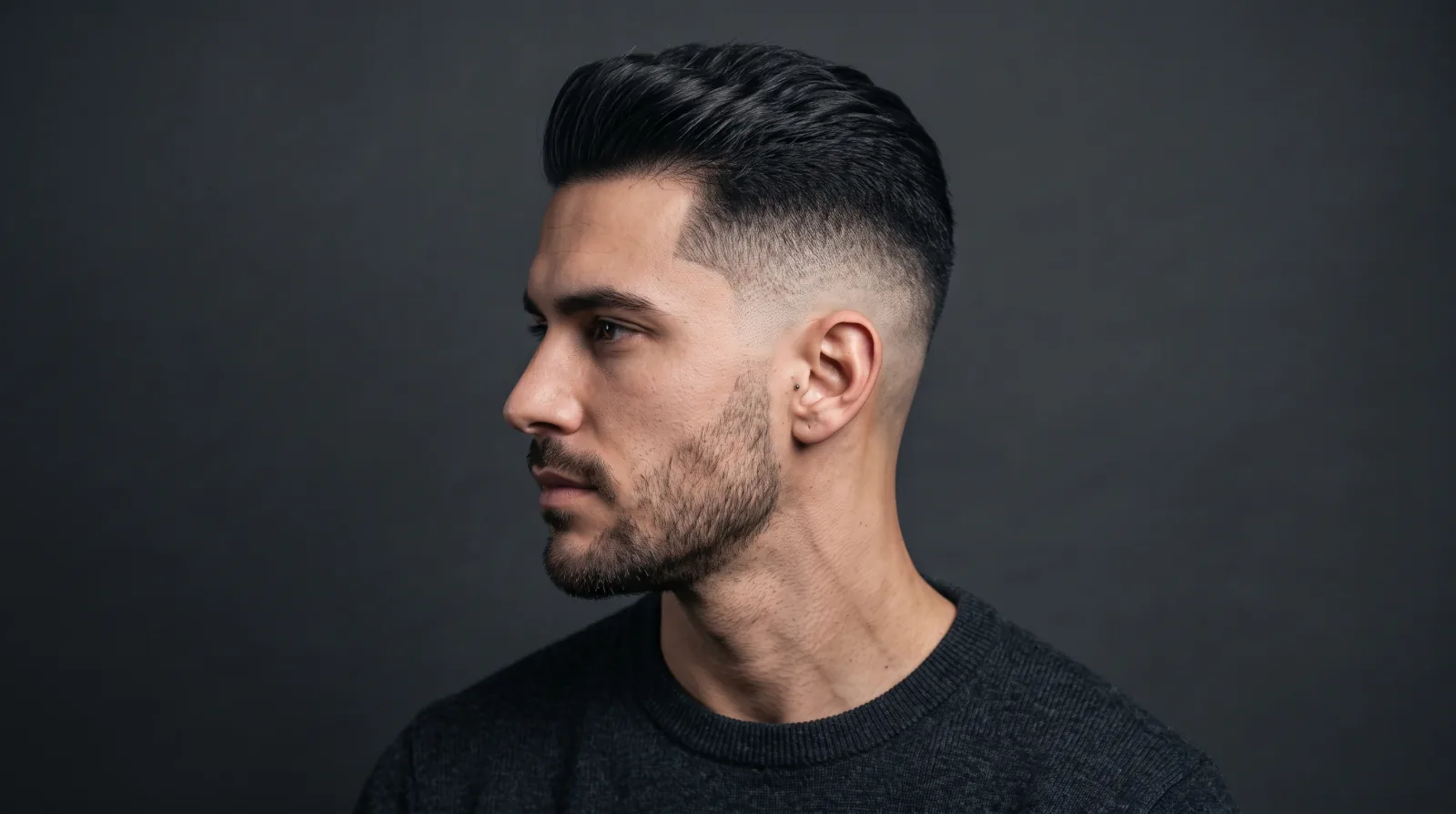
Illustration: Kurli