Virtual try-on
AI textured crop simulator
The fringe lands on your hairline. That is the part worth checking first.
A textured crop simulator shows a short cropped fringe on your own hairline before a barber cuts one. Upload a front-facing selfie to Kurli and the AI renders the crop onto your photo, so you can see exactly where the fringe lands and how much forehead it leaves.
Tap to pick a selfieDrop a selfie here, or click to browse
Front-facing, well-lit photos work best.
Your photo is used only to render the style and isn't stored.
Key takeaways
- A textured crop is defined by its short blunt fringe pushed forward onto the forehead, not by the length on the sides.
- The fringe covers a receding hairline better than almost any other short men's cut.
- Textured crops need natural or added texture on top, so poker-straight fine hair may need product to hold the look.
- The crop pairs with any fade height, and that pairing decides how bold the finished cut reads.
- Most textured crops hold their shape for three to four weeks, longer than a bare skin fade.
- A cropped fringe suits a taller forehead and can crowd a shorter one.
Variations to try
Tap any one to load it into the box above, then press see it on me.
Short men's cuts compared
| Cut | Fringe | Hides a receding hairline | Re-cut every | Product needed |
|---|---|---|---|---|
| Textured crop | Short, pushed forward | Very well | 3 to 4 weeks | Some |
| French crop | Very short, blunt | Very well | 3 weeks | Little |
| Buzz cut | None | Well | 2 to 3 weeks | None |
| Quiff | Swept up and back | Poorly | 4 weeks | Lots |
| Side part | Swept sideways | Moderately | 4 to 6 weeks | Some |
Who a textured crop suits
The textured crop earns its popularity by solving a specific problem: it puts hair forward onto the forehead rather than sweeping it back off it.
That single structural choice is why it is one of the best short cuts for a receding hairline or a high forehead. Where a quiff or a slick back exposes the hairline completely, a cropped fringe covers the corners where recession usually starts. If you have been avoiding short cuts because of your hairline, this is the one to render first.
On face shape, the crop keeps the silhouette compact and squares off the top of the head. That structure suits a rounder face well, since it replaces softness with a defined line. A longer face is usually better served by keeping a little more width at the sides with a low fade, so the cut does not add further height.
The practical requirement is texture. The look depends on the top pieces separating rather than lying flat, so wavy and slightly coarse hair carry it effortlessly. Very fine, straight hair can still wear a crop, but it will need a matte paste to hold the separation, and the honest version of this cut for fine hair is a shorter, blunter French crop.
The fuller face-shape breakdown is in the guide linked above.
Glasses are worth checking here too. A cropped fringe sits directly above the frames, and if the fringe is cut long it can rest on them and look crowded. Rendering the crop while wearing your glasses is the quickest way to settle how short the fringe needs to be, and it is a detail most people only discover after the cut.
Beards change the calculation as well. A crop keeps everything compact and squared at the top of the head, so pairing it with a full beard shifts a lot of visual weight downward. That balance suits some faces and unbalances others, which is another reason to render the combination rather than each half separately.
How to describe a textured crop to the AI
Textured crop is a reasonably specific term, but two details change the render substantially.
Say where the fringe lands. High on the forehead, or down at the brows. A short cropped fringe and a longer soft one read as different haircuts even with identical sides.
Name the fade height. With a low fade, with a mid fade, or with a high skin fade. The sides carry as much of the impression as the top does.
Say how textured. Blunt and neat, or choppy and messy. This decides whether the cut reads sharp or casual.
Mention your texture if it is curly. Textured crop on curly hair produces a noticeably different and often better render than the default straight-hair version.
Render the crop with a low fade and a high fade before choosing. It is the same haircut on top and a genuinely different result overall.
What the render gets right, and where it is approximate
Reliable. Where the fringe lands on your forehead, how much hairline is covered, how compact the overall silhouette becomes, and how the fade height changes the width of your head. For anyone considering a crop because of their hairline, that first point is the whole question.
Approximate. How much the top pieces separate, which depends on your natural texture and on product. Renders show crops styled with matte paste, which is the best case rather than the average one.
Not modelled at all. The exact shape of your hairline behind the fringe, which is hidden in a photo with the hair pushed back. Cowlicks at the front, which decide whether a fringe will sit forward willingly or keep flicking up. And how the cut looks on day one after a wash with no product, which for fine straight hair can be a considerable step down from the render.
A crop is low-risk though. If it turns out too short, it grows back into a longer crop within a few weeks.
Before you book, and living with it
A textured crop is one of the easier cuts to own. It holds its shape for three to four weeks, longer than a bare skin fade, and it looks deliberate rather than untidy as it grows.
Styling is quick but not zero. Most people use a small amount of matte paste or clay on dry hair, pushed forward with the fingers. That is a thirty second job, and it is what creates the separation the cut depends on. If you want a genuinely product-free haircut, ask for a French crop instead: the blunter fringe holds its shape without help.
Ask your barber to leave the fringe longer than you think you want at a first appointment. A cropped fringe cut too short sits awkwardly high and there is nothing to do but wait, whereas length can be removed in the same visit.
If your hairline is receding, say so directly. A good barber will shape the fringe to cover the corners rather than cutting a straight line that draws attention to them. That is the difference between a crop that solves the problem and one that highlights it.
What to ask for at the barbershop
The useful sentence names three things: a textured crop with a mid fade, fringe just above the brows, choppy on top. That covers the sides, the fringe length, and the finish.
Point at your forehead when you name the fringe length. Barbers hear short constantly and it means something different to everyone, and touching the spot removes all doubt.
Ask what they would do with your hairline. If you have any recession at the temples, this question changes the cut for the better, because the fringe can be shaped around it.
Ask whether your hair has enough texture to hold it, and take the answer seriously. A barber who tells you your hair is too fine and straight for a choppy crop is steering you toward a French crop that will actually look like the picture, which is more useful than agreement.
Finally, ask which product they used and how much. The crop is a cut that depends on a small amount of the right product, and copying what the barber did is far easier than working it out at home.
Common questions
What is a textured crop?
A short men's cut with a blunt fringe pushed forward onto the forehead and textured, separated pieces on top, usually over a fade. The forward fringe is what distinguishes it from a quiff or a side part.
Is a textured crop good for a receding hairline?
It is one of the best short cuts for one. The fringe sits forward and covers the temple corners where recession usually starts, unlike a quiff or slick back which expose the hairline completely.
Can I see a textured crop on my own photo?
Yes. Upload a front-facing selfie to Kurli and the AI renders the crop onto your own face, so you can see exactly where the fringe lands on your hairline before anyone cuts it.
What is the difference between a textured crop and a French crop?
Length and finish. A French crop has a shorter, blunter fringe cut straight across, while a textured crop leaves more length on top with choppier separation. The French crop needs less product.
Does a textured crop work on fine straight hair?
It can, but the separation the look depends on will need a matte paste to hold. If you want a product-free version, a French crop with its blunter fringe is the more honest recommendation.
How often does a textured crop need cutting?
Every three to four weeks, mostly to keep the fade tidy. The top holds its shape longer than the sides, so the fade height you choose really sets the schedule.
Does a textured crop suit curly hair?
Very well. Curls provide the texture the cut is built around without any product, and a crop keeps curly hair short enough to stay easy while leaving enough on top to show the curl.
Is the textured crop simulator free?
Browsing styles and reading the guides is free. Rendering a look onto your own photo uses a credit, since that step runs an image model that costs money on each render.
Sources
Hair facts on this page are supported by these sources. What the render will look like on you is a preview, not a promise.
- Tips for healthy hair, American Academy of Dermatology
- Hair Loss Resource Center, American Academy of Dermatology
- How to style hair without damage, American Academy of Dermatology
- Physiology, Hair, StatPearls, NCBI Bookshelf
Try another style
Keep reading
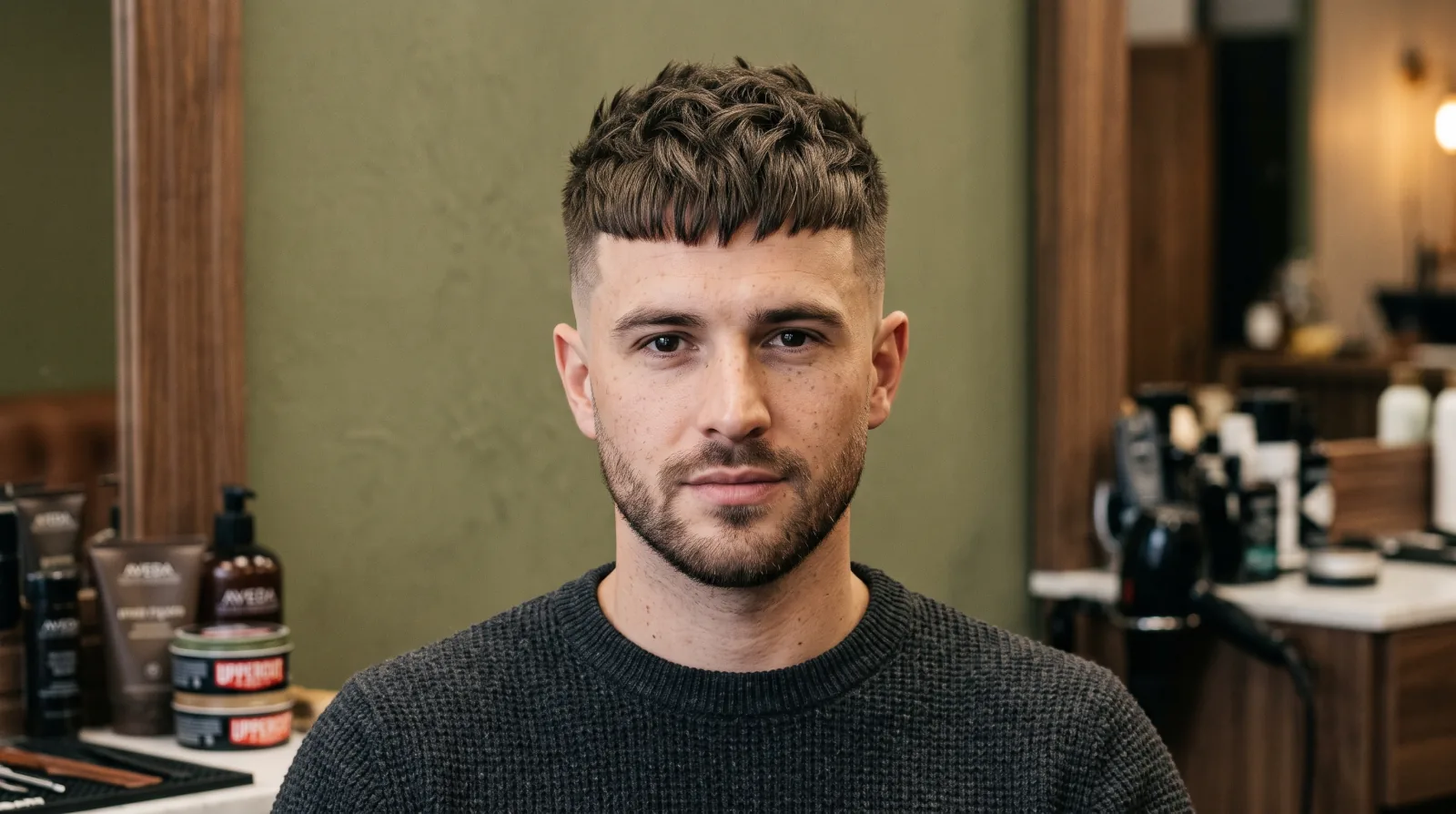
Illustration: Kurli