Virtual try-on
AI undercut simulator
A hard line between top and sides. Severe, and worth seeing before you commit.
An undercut simulator shows a hard line between short sides and long top on your own face. Upload a front-facing selfie to Kurli and the AI renders the disconnection onto your photo, so you can judge one of the most severe silhouette changes available before a barber makes it.
Tap to pick a selfieDrop a selfie here, or click to browse
Front-facing, well-lit photos work best.
Your photo is used only to render the style and isn't stored.
Key takeaways
- An undercut is disconnected, meaning the sides stop abruptly rather than blending into the top.
- The absence of a blend is what separates an undercut from a fade, and it is a deliberate hard line.
- An undercut narrows the head sharply, which suits a rounder or wider face and can over-narrow a long one.
- Growing an undercut out is awkward, because the disconnection stays visible until the sides catch up.
- The style removes bulk from thick hair very effectively, which is a practical reason to choose it.
- Undercuts need re-cutting every three to four weeks to keep the disconnection sharp.
Variations to try
Tap any one to load it into the box above, then press see it on me.
Undercut against a fade
| Cut | Sides blend? | Contrast | Re-cut every | Grow-out |
|---|---|---|---|---|
| Disconnected undercut | No, hard line | Very high | 3 to 4 weeks | Awkward |
| High fade | Yes, gradual | High | 2 weeks | Easy |
| Mid fade | Yes, gradual | Medium | 2 to 3 weeks | Easy |
| Taper | Yes, subtle | Low | 4 to 6 weeks | Very easy |
| Hidden undercut | Not visible | None visible | 6 to 8 weeks | Easy |
Who an undercut suits
An undercut is one of the strongest silhouette changes available, and its effect is largely about width.
By taking the sides very short and leaving real length on top, the cut narrows the head sharply and pushes all the visual weight upward. That is directly useful on a rounder or wider face, where narrowing the sides gives the face a more defined outline.
On a longer or oblong face the same effect is a risk. Narrowing the sides and adding height on top can stretch the face further, which is usually the opposite of what a long face wants. If you have a longer face and like the style, the answer is generally a subtle undercut with less contrast rather than a full disconnection.
A strong jaw carries an undercut well, because the hard line at the sides echoes the hard line of the jaw. A softer jaw can find the severity unbalancing, and leaving more length on top to soften the top half usually helps.
The practical case for an undercut has nothing to do with face shape: it removes a lot of bulk. If your hair is very thick and sits out at the sides, an undercut solves that problem more decisively than layering does.
The full face-shape breakdown is in the guide linked above.
Disconnected is the word that matters
The single most useful thing to understand about this cut is the difference between disconnected and blended, because asking for the wrong one produces a genuinely different haircut.
A fade blends. The hair moves gradually from very short at the bottom to longer at the top, and there is no point where you can put your finger on a line.
An undercut does not blend. The sides are taken to one short length and the top is left long, and the two meet at a visible edge. That edge is the entire point of the style.
People frequently ask for an undercut and mean a high fade, then feel the result looks too severe. The reverse also happens: someone wants the hard graphic line and gets a soft blend instead.
Say disconnected undercut if you want the line. Say high fade if you want the gradient. Those two words save more disappointment than anything else in this article, and a barber will know exactly what you mean by either.
If you are unsure, render both. They look quite different side by side and the choice usually becomes obvious immediately.
How to describe an undercut to the AI
Say disconnected. Without it you will get a fade. This is the most important word in the prompt.
Say how long the top is. Two inches, four inches, or past the eyebrows. The contrast between top and sides is the style, so the top length is half the description.
Say how the top is worn. Slicked back, styled up into a quiff, or forward as a fringe. This changes the render substantially and it also changes who the cut suits, since a fringe covers the hairline and slicking back exposes it.
Say how short the sides are. Clipped to a number one, a number two, or down to skin.
Render the slicked back version and the fringe version. They are the same haircut and they suit different faces, particularly if your hairline is receding.
What the render gets right, and where it is approximate
Reliable. How narrow the cut makes your head look, where the disconnection sits on your skull, how much contrast there is between top and sides, and whether the severity suits your features. That is the decision.
Approximate. How the top actually sits without product, which for an undercut is a significant gap. The style is almost always photographed with the top styled deliberately, and an undercut with an unstyled top can look shapeless.
Not modelled at all. Your hairline, which matters enormously if you plan to wear the top slicked back. Slicking back exposes the entire hairline, so an undercut worn that way will show any recession clearly. Your growth pattern at the crown, which decides whether the top will sit where you want it.
If your hairline is receding, render the fringe version rather than the slicked back one. It is the same cut and a very different result.
Before you book: the grow-out is the catch
An undercut is quick to get and slow to leave, and the grow-out is what people underestimate.
Because the sides are disconnected rather than blended, there is no gradient to soften as the hair grows. The short sides simply get longer while the line between them and the top stays visible, and the cut passes through several weeks of looking neither deliberate nor grown out.
Compare that with a fade, where growth blurs the gradient and the cut simply becomes softer. A fade grows out gracefully; an undercut does not.
The practical route out is to have a barber blend the disconnection into a fade once you decide to grow it, which converts the awkward line into a gradient. Ask about this before you commit, so you know the exit exists.
Maintenance while you keep it is every three to four weeks, mostly to keep the line sharp. A blurred disconnection is the thing that makes an undercut look unintentional.
If the severity or the grow-out worries you, the subtle undercut with less contrast is a real option, and so is the hidden undercut, which removes bulk without any visible change at all.
What to ask for at the barbershop
Bring the render and point at your own head as you describe it. A landmark beats an adjective every time, and it removes the ambiguity that produces most disappointing cuts.
Ask to be shown where the shortest point will sit before the clippers move. Ten seconds of checking prevents the commonest surprise, which is a cut shorter than the one you had in mind.
Ask what it looks like unstyled. Barbers finish everything at its best, so what you leave with is not what you will see on an ordinary morning, and an honest answer to that question is worth a lot.
Ask whether your hair will hold the shape. A barber who tells you your hair is too fine or too straight for a particular finish is being useful rather than negative, and it is better to hear it before than after.
Finally, ask which product they used and how much. Nearly all of these styles depend on a small amount of the right product, and not knowing what it was is the usual reason a barbershop result fails to survive the first wash.
Common questions
What is an undercut?
A cut where the sides are taken very short and the top is left long, with a hard visible line between them rather than a blend. That lack of blending is what separates it from a fade.
What is the difference between an undercut and a fade?
A fade blends gradually from short to long with no visible line. An undercut is disconnected, meaning the sides stop abruptly and the edge is deliberate. Asking for one and expecting the other is a common mix-up.
Does an undercut suit a long face?
Often not. Narrowing the sides and adding height on top can lengthen the face further. A subtle undercut with less contrast is usually the better option on a longer face.
Is an undercut hard to grow out?
Yes, harder than a fade. The disconnection stays visible as the sides grow, so the cut passes through an awkward stage. A barber can blend it into a fade to shorten that period.
How often does an undercut need cutting?
Every three to four weeks, mostly to keep the disconnection sharp. A blurred line is what makes the cut look unintentional rather than deliberate.
Is an undercut good for thick hair?
Very. It removes a large amount of bulk from the sides, which solves the problem of thick hair sitting out sideways more decisively than layering does.
What is a hidden undercut?
Hair clipped short underneath only, so it is invisible when the top is worn down. It removes weight and bulk without any visible change to your style.
Is the undercut simulator free?
Browsing styles and reading the guides is free. Rendering a look onto your own photo uses a credit, because that step runs an image model that costs money each time.
Sources
Hair facts on this page are supported by these sources. What the render will look like on you is a preview, not a promise.
- Tips for healthy hair, American Academy of Dermatology
- Hair Loss Resource Center, American Academy of Dermatology
- Anatomy, Hair, StatPearls, NCBI Bookshelf
- Hair Follicle, Cleveland Clinic
Try another style
Keep reading
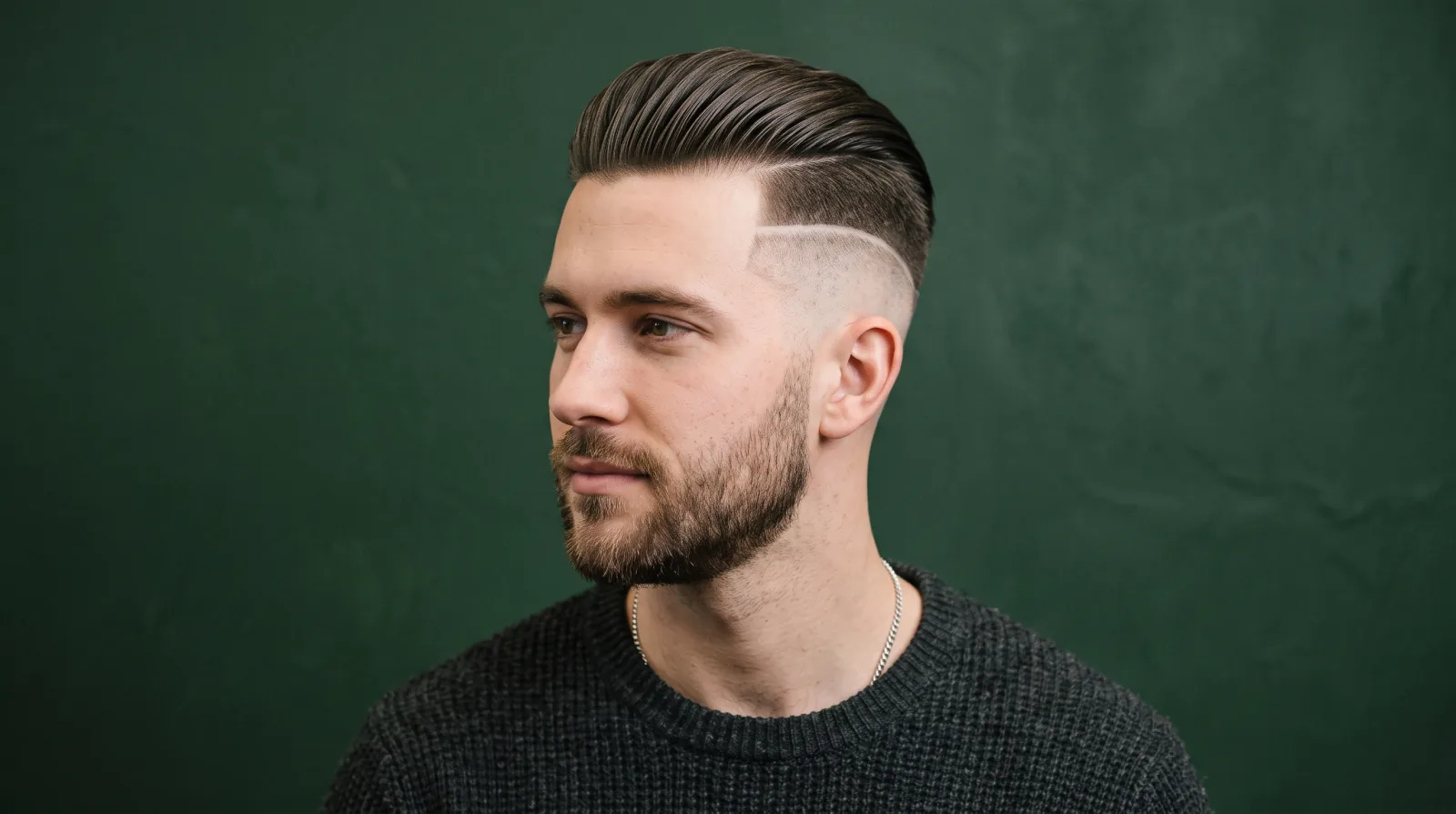
Illustration: Kurli