Virtual try-on
AI slicked back hair simulator
Exposes your whole hairline. That is the part worth looking at first.
A slicked back hair simulator shows your whole hairline exposed before you commit to the style. Upload a front-facing selfie to Kurli and the AI renders the hair swept straight back off your forehead, which is the single most revealing thing any style can do to a hairline.
Tap to pick a selfieDrop a selfie here, or click to browse
Front-facing, well-lit photos work best.
Your photo is used only to render the style and isn't stored.
Key takeaways
- Slicking back exposes the entire hairline and forehead, more than any other common style.
- The style needs enough length on top to sweep back, usually three inches or more.
- A high or receding hairline is fully visible in a slick back, which is the main reason to preview it.
- Product choice decides the finish, from a wet glossy look to a soft matte one.
- Slicked back hair pairs with an undercut or a fade at the sides for a sharper outline.
- Heavy daily product on the hairline can contribute to irritation, so washing it out matters.
Variations to try
Tap any one to load it into the box above, then press see it on me.
Styles ranked by how much hairline they show
| Style | Hairline exposed | Length needed on top | Product | Suits recession |
|---|---|---|---|---|
| Slick back | Completely | 3 inches or more | Heavy | Poorly |
| Pompadour | Mostly | 3 inches or more | Heavy | Poorly |
| Quiff | Partly | 2 to 4 inches | Medium | Moderately |
| Textured crop | Covered by fringe | 1 to 2 inches | Light | Very well |
| Buzz cut | Fully, but no contrast | None | None | Very well |
Who slicked back hair suits
Start with the honest part: this style exposes your hairline completely, and that fact decides more about whether it suits you than face shape does.
If your hairline is strong and even, slicking back is one of the most flattering things you can do. It opens the face, shows the brow and cheekbones, and reads as deliberate and confident. There is a reason it has stayed in fashion for a century.
If your hairline is receding at the temples or sitting high, the style will show it clearly. That is not a reason nobody with recession can wear it, but it is a reason to look at the render before booking rather than after. Plenty of people look at that render and decide the exposure suits them fine. Others look and immediately prefer a textured crop, which covers the same area.
On face shape, slicking back adds height and removes width, which lengthens the face. That works on a rounder or squarer face and can overdo it on a long one. A longer face usually does better with a looser, lower slick back rather than a tall one.
A beard changes the balance considerably. Adding weight at the jaw offsets the exposed forehead, which is why the two so often appear together.
The full breakdown by face shape is in the guide linked above.
The product decides the look
More than almost any other style here, slicked back hair is made by what you put in it rather than by how it is cut.
Pomade gives the traditional glossy, wet-looking finish. Oil-based pomades hold hardest and wash out least easily; water-based ones rinse out with shampoo, which most people now prefer.
Clay or paste gives a matte, textured finish where the hair is swept back but still looks like hair rather than a solid shape. This is the more contemporary look and it is far more forgiving of an imperfect sweep.
Gel gives the strongest hold and the hardest finish. It is effective and it is also the least natural-looking of the three, and it flakes if overused.
The practical advice is to start with less than you think. Most bad slick backs are over-producted rather than under-producted, and hair that looks lacquered reads worse than hair that is only mostly swept back.
One health note worth taking seriously: heavy product sitting on the scalp and hairline day after day is worth washing out properly. Dermatology guidance on hair and scalp care consistently points toward regular cleansing when using heavy styling products, since product build-up around the follicles can contribute to irritation.
How to describe slicked back hair to the AI
Say the finish. Glossy and wet-looking, or soft and matte. This is the biggest single difference between two renders of the same haircut.
Say what the sides do. With long sides, with a mid fade, or with a disconnected undercut. The sides change the silhouette more than the top does.
Say how tight. Slicked straight back tightly, or loosely swept back. A loose sweep is much more wearable and most people who dislike the tight version like the loose one.
Add a beard if you have one. Rendering the style without your actual beard gives you a misleading picture, since the balance between exposed forehead and jaw weight is a large part of the effect.
Render the tight glossy version and the loose matte one. They are the same instruction to a barber and two very different looks.
What the render gets right, and where it is approximate
Reliable, and this is the point. Exactly how your hairline looks fully exposed. How much forehead is on show. How the style changes the apparent length of your face. Whether the sides you chose balance the top. These are the questions worth answering before you buy a tin of pomade.
Approximate. The exact shine level, which depends entirely on product. How much volume stays at the front, which depends on your hair's thickness and how it is dried.
Not modelled at all. Whether your hair will actually stay back. This is the big one. Fine, straight, slippery hair often refuses to hold a slick back for more than an hour regardless of product, while coarser hair holds easily. No render knows which you have.
Also not modelled: your crown. Hair swept back from the front still has to go somewhere at the back, and a strong whorl at the crown can push it in an unhelpful direction.
Before you try it
The good news is that slicking back is the only style on this site that requires no cutting at all. If you already have three inches on top, you can test it tonight with a comb and some product, which makes the render a preview rather than a commitment.
That also means the sensible order is to render it, then actually try it at home before booking any cut. If you like it, then go and get the sides shaped to suit, whether that is a fade, an undercut, or simply a tidy.
If your hair is too short on top, you are looking at growing it out for a few months. Ask a barber to shape the sides while you grow, because the awkward middle stage is much easier with tidy sides.
Wash the product out properly at the end of the day rather than sleeping in it. Heavy styling products sitting on the scalp overnight, night after night, are worth avoiding, and regular cleansing is the standard dermatological advice when using them.
And if the exposed hairline in the render bothered you, take that seriously. It is real information, and a textured crop covers exactly the area you were worried about.
What to ask for at the barbershop
Bring the render and point at your own head as you describe it. A landmark beats an adjective, and it removes the ambiguity behind most disappointing appointments.
Ask to be shown where the shortest point will sit before anything is cut. Ten seconds of checking prevents the commonest surprise, which is a result shorter than the one you pictured.
Ask what it looks like unstyled. Barbers finish everything at its best, so what you walk out with is not what you will see on an ordinary morning.
Ask whether your hair will hold the shape. A barber who says your hair is too fine or too straight for a finish is being useful, and it is far better to hear it before than after.
Finally, ask which product they used and how much. These styles depend on a small amount of the right product, and not knowing what it was is the usual reason a barbershop result does not survive the first wash at home.
Common questions
Does slicked back hair suit a receding hairline?
It shows it clearly, more than any other common style, because the hair is swept entirely off the forehead. Plenty of people are happy with that, but it is worth looking at the render before deciding rather than after.
How long does my hair need to be to slick it back?
Usually about three inches on top, enough to sweep back and stay. Shorter than that and the hair tends to stand up rather than lie back.
What product is best for slicking hair back?
Pomade for a glossy traditional finish, clay or paste for a matte modern one, gel for the strongest hold. Start with less than you think, because over-producting is the commonest mistake.
Why will my hair not stay slicked back?
Usually texture. Fine, straight, slippery hair holds a slick back poorly regardless of product, while coarser hair holds easily. Blow-drying it backwards before applying product helps considerably.
Should I get a fade with slicked back hair?
It is the most common modern pairing and it sharpens the outline. Long sides give a softer, more classic look, and an undercut gives the most severe one. All three are worth rendering.
Is it bad to use pomade every day?
The product itself is fine, but wash it out properly rather than sleeping in it. Heavy product sitting around the follicles day after day can contribute to scalp irritation, and regular cleansing is the standard advice.
Do I need a haircut to slick my hair back?
No, which is unusual for a style on this site. If you already have the length on top you can test it tonight with a comb and some product before booking anything.
Is the slick back simulator free?
Browsing styles and reading the guides is free. Rendering a look onto your own photo uses a credit, since that step runs an image model that costs money each time.
Sources
Hair facts on this page are supported by these sources. What the render will look like on you is a preview, not a promise.
- Tips for healthy hair, American Academy of Dermatology
- Hair Loss Resource Center, American Academy of Dermatology
- Folliculitis, MedlinePlus, U.S. National Library of Medicine
- Hair Follicle, Cleveland Clinic
Try another style
Keep reading
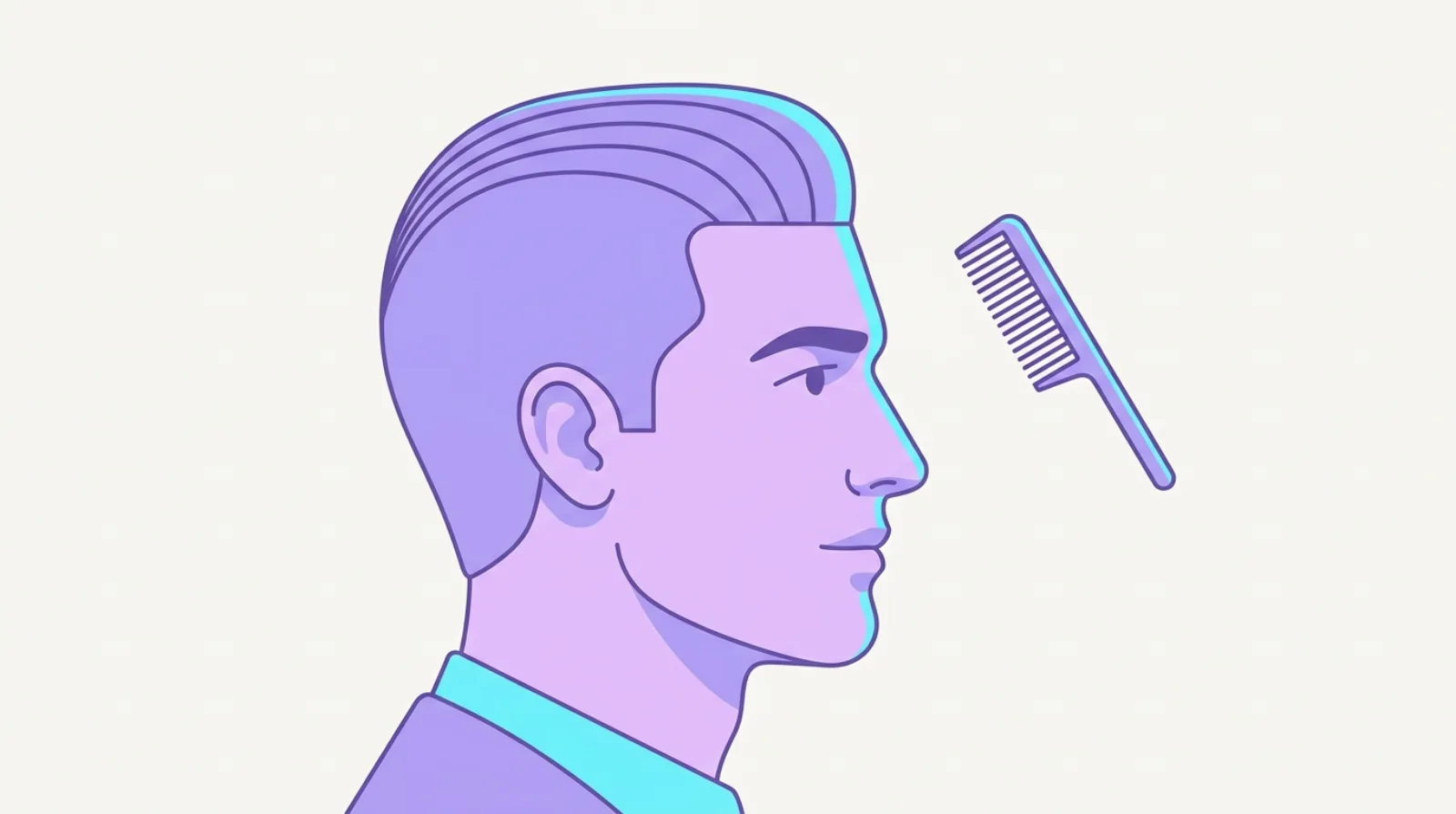
Illustration: Kurli