Virtual try-on
AI quiff simulator
The middle ground between a pompadour and a crop. Height without the formality.
A quiff simulator shows moderate height at the front of your head on your own face. Upload a front-facing selfie to Kurli and the AI renders the front swept up and slightly forward, which is the middle ground between a flat crop and a full pompadour.
Tap to pick a selfieDrop a selfie here, or click to browse
Front-facing, well-lit photos work best.
Your photo is used only to render the style and isn't stored.
Key takeaways
- A quiff sweeps the front hair up and slightly forward, unlike a pompadour which sweeps up and back.
- The forward angle means a quiff covers more of the hairline than a pompadour or a slick back.
- A quiff needs about two to four inches on top, less length than a pompadour requires.
- Height at the front lengthens the face, so a quiff suits rounder faces and can overdo a long one.
- A textured quiff is far more forgiving day to day than a smooth one, and it suits thinner hair better.
- The style is built during the blow-dry, so drying the front upward is more important than the product.
Variations to try
Tap any one to load it into the box above, then press see it on me.
Quiff against its neighbours
| Style | Front angle | Length needed | Hairline covered | Formality |
|---|---|---|---|---|
| Quiff | Up and forward | 2 to 4 inches | Partly | Casual to smart |
| Pompadour | Up and back | 3 to 5 inches | Barely | Formal |
| Slick back | Straight back | 3 inches or more | Not at all | Formal |
| Textured crop | Forward and flat | 1 to 2 inches | Fully | Casual |
| Side part | Sideways | 2 to 4 inches | Partly | Smart |
Who a quiff suits
A quiff is the compromise style, and that is meant as a compliment. It adds height at the front like a pompadour, but sweeps forward rather than back, which means it covers more of the hairline and reads less formal.
That forward angle is the practical difference and it matters for two groups of people. If your hairline is receding at the temples, a quiff hides more of it than a pompadour or a slick back does, while still giving you height. And if you find a full pompadour too dressed-up for your daily life, a textured quiff gets you most of the shape with none of the formality.
On face shape, the added height lengthens the face. That suits a rounder or squarer face, where vertical lift adds structure. On a longer face it can overdo things, and the usual adaptation is a short quiff with the sides left a little wider.
Texture decides how easy it is to live with. Wavy or slightly coarse hair holds a quiff readily. Fine, straight hair can struggle to keep the height, and a textured or messy quiff is the honest recommendation there, since separated pieces disguise a collapse far better than a smooth sweep does.
The full breakdown by face shape is in the guide linked above.
A beard changes the balance here as it does with a pompadour. Height on top pulls the eye upward, and weight at the jaw pulls it back down, so the two together tend to read as balanced rather than top-heavy. If you have a beard, render the quiff with it rather than without.
Quiff, pompadour, or slick back
These three styles are close relatives and people mix them up constantly, so it is worth being precise.
A slick back takes all the hair straight back off the forehead with no height. It exposes the hairline completely and is the most formal of the three.
A pompadour sweeps up and back, with the volume concentrated above the forehead. It exposes most of the hairline and needs the most length.
A quiff sweeps up and slightly forward. The front pieces angle over the forehead rather than away from it, so it covers more hairline, needs less length, and reads considerably more casual.
If you want maximum height and do not mind the formality, ask for a pompadour. If you want height that still looks like everyday hair, ask for a quiff. If you want neither and simply want the hair off your face, ask for a slick back.
Saying the right one of those three words gets you the right haircut. Saying just some volume on top gets you whatever the barber prefers, which is how most of the confusion starts.
How to describe a quiff to the AI
Say textured or smooth. This is the biggest fork. A textured quiff has visible separated pieces; a smooth one is a clean sweep. They look like different styles.
Say how much height. A short quiff with modest height, or a full one. Height is the main variable.
Say what the sides do. With a fade, with tapered sides, or with an undercut. This sets the formality more than the top does.
Say forward. Adding swept up and forward keeps the model from drifting into pompadour territory, which is the most common failure with this prompt.
Render a textured version and a smooth one. Most people find the textured one is the one they would actually wear, and it is easy to miss if you only render the polished version.
What the render gets right, and where it is approximate
Reliable. How much height suits your face, how much hairline the forward sweep covers, whether the balance between top and sides works on your proportions, and how the style changes the apparent length of your face.
Approximate. How well the pieces separate, which depends on your texture and product, and exactly how high the front sits after a few hours.
Not modelled at all. Whether your hair holds height at all. Fine, straight, slippery hair often collapses within an hour no matter how carefully it is dried, while coarse or wavy hair holds without much effort. That is the single biggest unknown and no image can answer it.
Also not modelled: a cowlick at the front hairline, which can push the front section sideways instead of up. Worth asking a barber to check before you grow your hair out for it.
Before you book, and the daily routine
A quiff is one of the more practical height styles because it needs less length than a pompadour, usually two to four inches. From a short cut that is roughly two to four months of growing rather than six.
If you already have the length, you can test it tonight without cutting anything. Dry the front upward and forward, add a small amount of clay or paste, and see whether you like the height on your own face. That is a genuinely free experiment and it settles the question faster than any render.
The daily routine is about two minutes. Dry the front section up and forward while the hair is still damp, then work a small amount of matte product through with your fingers. Drying is the part that matters; product only holds what the drying created.
Maintenance is every three to four weeks if the sides are faded, and longer if they are tapered. The top can grow considerably before it needs attention, since extra length simply gives you more to work with.
If the height in the render looked like too much, ask for a short quiff. It keeps the shape and the direction while being noticeably easier to wear.
What to ask for at the salon
Bring the render and point at your own hair as you describe what you want. A landmark on your own head beats an adjective every time.
Ask to be shown what will be removed before anything is cut, and ask what the result looks like without styling. Salons finish everything at its best, so the version you leave with is not the version you will see on an ordinary morning.
Ask whether your hair type will hold the finish. A stylist who tells you honestly that your texture will fight it is being useful, not discouraging.
Ask what they used and how they applied it, because most of these looks depend on a small amount of the right product and the right technique.
And ask what the upkeep genuinely costs, in both time and appointments, before you commit to a routine you have not tried.
Common questions
What is a quiff?
A style where the front section is swept up and slightly forward, creating height above the forehead. The forward angle is what separates it from a pompadour, which sweeps up and back.
What is the difference between a quiff and a pompadour?
The direction at the front. A quiff sweeps up and forward, covering more of the hairline and needing less length. A pompadour sweeps up and back, exposes more hairline, and reads more formal.
Does a quiff suit a receding hairline?
Better than a pompadour or a slick back does, because the forward sweep covers more of the temples while still giving height. A textured version disguises thinning better than a smooth one.
How long does my hair need to be for a quiff?
About two to four inches on top, which is less than a pompadour needs. From a short cut that is roughly two to four months of growing.
Does a quiff suit a round face?
Yes. The added height introduces vertical line to a face that is otherwise wide, which gives it more structure. A longer face usually wants a shorter quiff instead.
Why does my quiff collapse during the day?
Usually the drying rather than the product. Hair sets in the shape it dries in, so the front has to be dried upward while damp. Fine straight hair also holds height poorly regardless of technique.
Is a textured quiff better than a smooth one?
For most people, yes. Separated pieces are far more forgiving as the day goes on, disguise thinner hair better, and read as more casual, which suits everyday wear.
Is the quiff simulator free?
Browsing styles and reading the guides is free. Rendering a look onto your own photo uses a credit, since that step runs an image model that costs money each time.
Sources
Hair facts on this page are supported by these sources. What the render will look like on you is a preview, not a promise.
- Tips for healthy hair, American Academy of Dermatology
- How to style hair without damage, American Academy of Dermatology
- Hair Loss Resource Center, American Academy of Dermatology
- Hair Follicle, Cleveland Clinic
Try another style
Keep reading
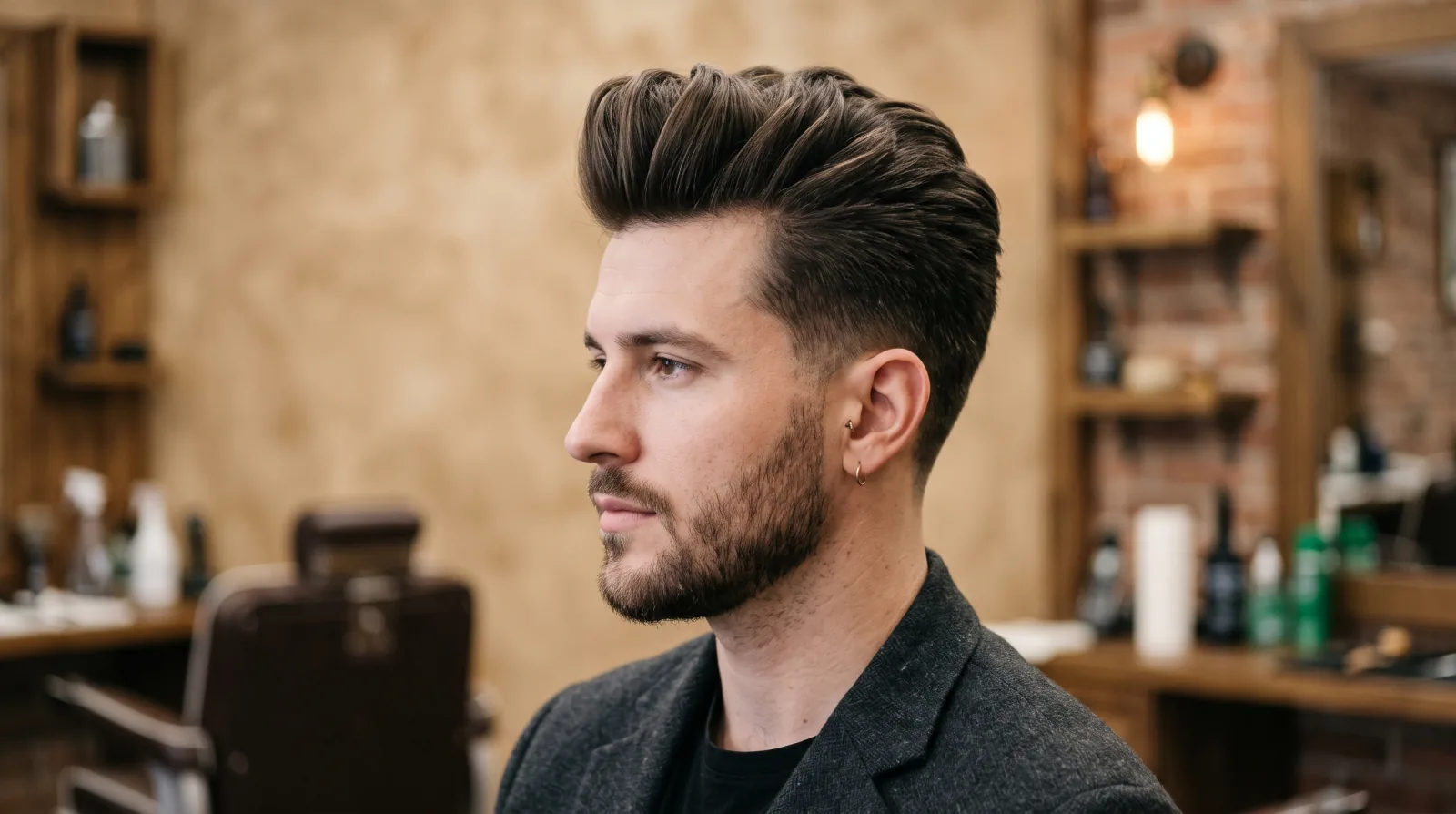
Illustration: Kurli