Men's hairstyles
Slicked-back hair
Hair combed straight back, from wet-look classic to modern matte. Here is how to wear it now.
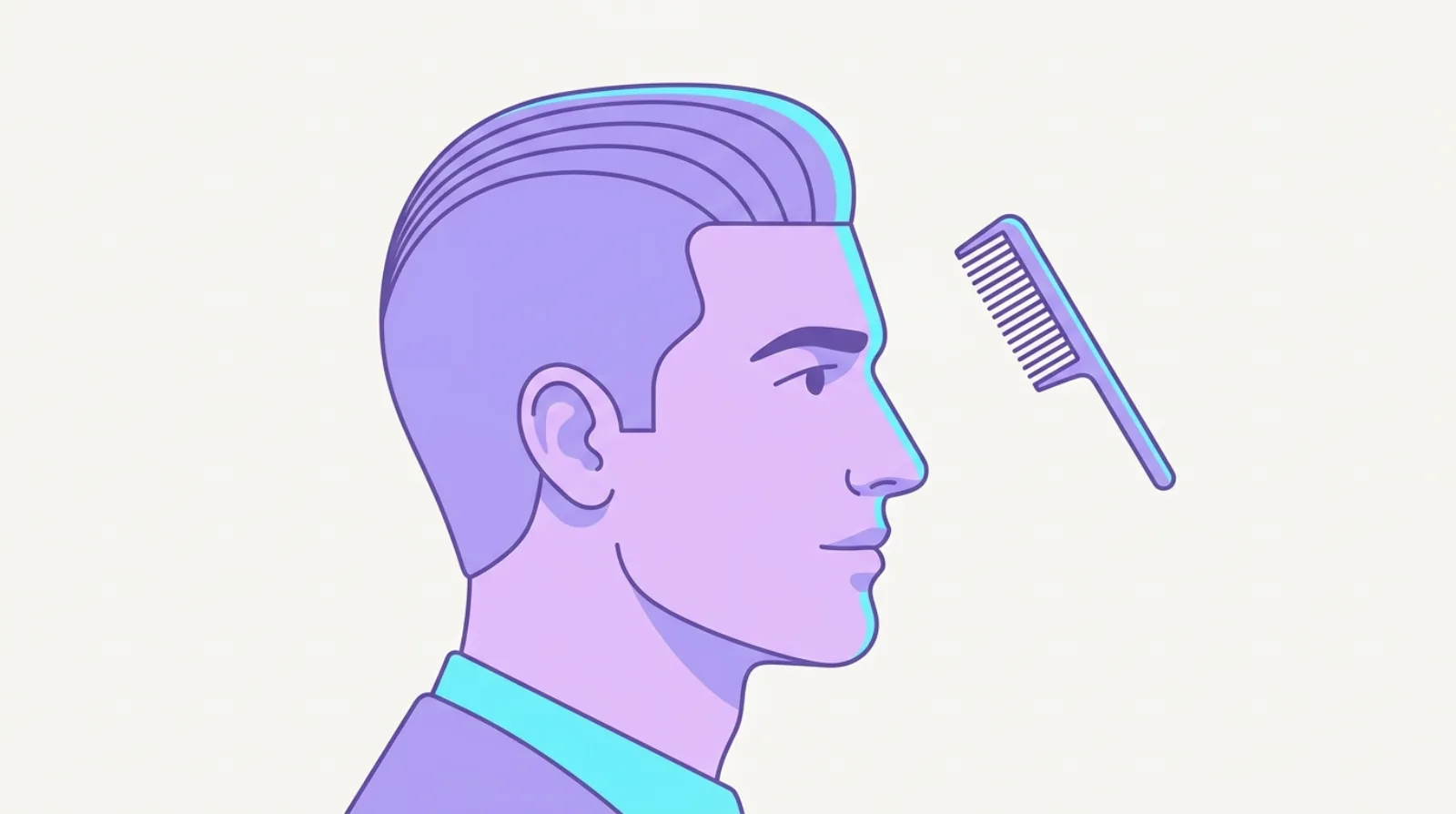
Slicked-back hair is exactly what it sounds like: the hair on top is combed straight back off the forehead, with no part, and held there. It is one of the oldest styles in the men's playbook and one of the most adaptable. With shine and a suit it reads formal. With matte product and a fade it reads current. This guide covers the length you actually need, the product decision that makes or breaks the look, and how the slick back compares with its two closest relatives.
Find out whether this suits your face. One selfie, and the face-shape read and your top pick are free.
Kurli is an AI hairstyle advisor: upload one selfie and it reads your face shape, recommends the cuts that suit it, and renders any of them onto your own photo before you commit.
What a slick back is, and the length you need
A slick back pushes all the top hair backward in one direction, with no parting line. The sides can be anything from scissor-blended to a skin fade, but the top must be long enough to lie back and stay back.
As a working rule most barbers give, the front needs to reach roughly ear length, about 10 to 15 cm, before it lies back properly. Treat that as stylist guidance rather than a law; hair thickness and growth direction shift the number. Shorter hair can be pushed back with strong product, but it stands up and drifts forward through the day, which becomes a different style (closer to a brushed-back quiff) rather than a true slick back.
Growing into one takes patience at the front. From a short crop, expect four to six months before the front reaches cooperative length. During the awkward stage, a swept-back style with a light hold product trains the hair backward, and daily backward blow-drying speeds up the training more than any product does.
Slick back vs side part vs comb over
All three are combed, deliberate, grown-up styles, and they get confused for one another. The parting line is the difference.
A slick back has no part at all. Everything goes straight back.
A side part splits the hair along a visible line, with most of the hair combed to one side. It is the most conventional of the three and the safest office default.
A comb over also parts to one side, but sweeps the top across the head with more coverage and more height on the heavy side. Despite its old reputation as a bald-spot disguise, the modern comb over with a fade is a fashionable, deliberate cut.
Choose by two factors. If you want the cleanest, most conservative signal, take the side part. If you want the boldest, most open-forehead look, take the slick back. The comb over sits between them, adding asymmetry and volume. All three need similar top length and share the same product logic, so you can move between them week to week with one haircut.
The product decision: pomade, gel, or clay
The slick back is a product-dependent style, and the finish you pick sets the whole tone.
Water-based pomade is the modern default. Medium to strong hold, medium shine, restyles with a comb during the day, and washes out easily. This is the right first product for most people.
Oil-based pomade is the classic. High shine, very strong all-day hold, and it does not wash out in one shampoo. It gives the vintage glossy look, at the cost of buildup and effort.
Gel sets hard and shiny. It holds anything, but the crunchy, frozen finish looks dated to many eyes now, and once it sets you cannot restyle without wetting the hair.
Matte clay or paste is the contemporary pick. It gives a softer, natural, low-shine slick back with movement, and pairs well with faded sides. Hold is medium, so very thick or stubborn hair may drift.
The technique is the same for all: start with damp, towel-dried hair, comb the product through from front to back, then finish with a comb for a tight look or with fingers for a looser one. A backward blow-dry before product doubles the hold of anything you apply afterward.
The wet look vs the matte slick back
The same cut delivers two different messages depending on finish.
The wet look uses gel or high-shine pomade so the hair looks freshly combed and glossy all day. It flattens the hair against the skull, sharpens the whole outline, and suits formal dress, thick dark hair, and occasions where you want a precise, controlled appearance. Its risks: on thin hair, shine exposes the scalp, and heavy gloss can read as costume outside formal settings.
The matte slick back uses clay, paste, or a light cream so the hair holds its backward direction but keeps volume and a natural texture. It photographs softer, works with casual clothes, and is far more forgiving on fine or thinning hair because the extra volume covers more scalp.
If you are unsure, go matte for daily wear and keep a water-based pomade for events. Whatever the finish, use less product than you think: a fingertip amount, added in two small doses, beats one big scoop that turns the hair greasy by noon.
Slick backs, hairlines, and thinning
The slick back exposes the entire hairline. That is its confidence and its constraint.
With a strong, straight hairline, pulling everything back showcases it, and few styles look sharper.
With a receding hairline, the honest answer is: it depends on the pattern. Slicking back can actually flatter early, even recession, because it owns the forehead rather than arranging hair to hide it, and it avoids the see-through look that forward-combed sparse fringes get. Many men with mature or slightly receded hairlines wear slick backs deliberately for exactly this reason. But with deep M-shaped corners, pulling the hair straight back outlines the recession precisely, and a textured crop or shorter cut usually looks stronger. Our receding hairline post walks through the stages.
Two cautions. Constant tight backward tension from aggressive daily combing with strong-hold product is unkind to fragile hairlines; keep the hand light. And on visibly thinning top hair, high-shine product clumps strands together and shows scalp, so switch to matte and add a backward blow-dry for volume. If your hairline is changing quickly or patchily, that is a conversation for a doctor or dermatologist, not a styling fix.
Common slick back mistakes
Most failed slick backs fail the same four ways, and all four are fixable tonight.
Too much product. One big scoop turns the style greasy by noon and glues strands into ropes that show scalp. Use a fingertip amount, work it through fully, and add a second small dose only where the hair will not stay. If your hair looks wet three hours after you styled it and you used a matte product, quantity is the problem.
Product on dry hair with no prep. Pomade cannot create a backward direction on hair that was never taught one. Comb the hair back while damp, blow-dry it backward with the nozzle following the comb, and only then apply product. The dryer does the shaping; the product just holds the shape.
Fighting the growth pattern at the front. A strong forward-growing hairline or a cowlick will push against the slick all day. The fix is training over weeks (daily backward drying), a slightly longer front so the weight of the hair helps hold it down, or accepting a small lift at the front and calling it a quiff day.
Neglecting the sides. A slick back with shaggy, untended sides reads as unfinished rather than relaxed. Whether you wear a fade or a scissor blend, keep the sides on a regular trim schedule; the style depends on the contrast between a controlled top and clean sides.
One maintenance note: oil-based pomades build up and need a clarifying shampoo or a dish-soap-strength degreasing wash once a week, or the hair starts each day heavy and dull. Water-based products rinse clean and skip that chore.
Face shapes and the slick back
Pulling all the hair off the face removes every softening element: no fringe, no side sweep, no width from loose hair. What remains is your actual face outline, so the cut favours shapes that benefit from full exposure.
Oval and square faces wear the slick back best. The square jaw plus a clean swept-back top is a classic pairing, and oval handles anything.
Round faces gain from the height version: instead of slicking flat, blow-dry the front up and back so there is lift at the forehead, which adds vertical length. Flat-to-the-skull slick backs make round faces look rounder.
Long and oblong faces should do the opposite: keep the top flatter and avoid extra height, since the exposed forehead already lengthens the face. A slick back with tapered rather than skin-faded sides keeps some visual width in balance.
Heart and diamond faces carry it well, though very tight glossy versions can emphasize a wide forehead; a matte finish with a little looseness softens that. Run your photo through the face shape quiz if you are guessing, and see the oval face guide for pairings. Better still, load a photo into Kurli and try a slick back rendered on your own face before you spend four months growing the length for one; a two-minute preview beats a season of guessing.
Not sure which face shape is yours? Kurli reads it from one selfie and shows the cuts that suit it.
Common questions
How long does hair need to be to slick back?
As a common stylist benchmark, the front needs roughly ear length, about 10 to 15 cm, to lie back and stay back through the day. Shorter hair can be pushed back with strong product, but it drifts forward and behaves more like a brushed-back quiff than a true slick back.
What product is best for slicked back hair?
Water-based pomade is the best all-round choice: medium-strong hold, moderate shine, restyleable, and easy to wash out. Use oil-based pomade or gel for a high-shine formal look, and matte clay or paste for the modern natural version. Apply to damp hair, combing front to back.
Does a slick back work with a receding hairline?
Often yes. Slicking back owns the forehead instead of hiding it, which flatters early or even recession better than a sparse forward fringe. Deep M-shaped corners are the exception, since pulling hair straight back outlines them; a shorter textured cut usually looks stronger at that stage.
What is the difference between a slick back and a comb over?
A slick back combs everything straight back with no parting line. A comb over parts the hair to one side and sweeps the top across the head. Both need similar length on top, so one haircut lets you switch between them.
Is a slick back the same as a side part?
No. A side part splits the hair along a visible line with most hair combed sideways, while a slick back has no part and sends everything backward. The side part is the more conservative of the two; the slick back exposes the full forehead.
How do I slick my hair back without it looking greasy?
Use less product in two small doses instead of one scoop, choose water-based pomade or matte paste over heavy oils and gels, and apply to damp rather than soaking hair. If it still reads greasy, you are using too much or the product is too heavy for your hair thickness.
How do I make a slick back last all day?
Blow-dry the hair backward while damp before any product goes in; the heat sets the direction so the product only has to hold it, not create it. Then comb through a medium or strong pomade. A pass of light hairspray locks stubborn hair without gel stiffness.
Should a slick back be shiny or matte?
Matte suits daily wear, casual clothing, and fine or thinning hair, because it keeps volume and looks natural. Shine suits formal dress and thick, dark hair. Many men keep a matte clay for weekdays and a shinier pomade for events, using the same cut.
Does a slick back suit a round face?
Yes, with height. Blow-dry the front up and back so there is lift at the forehead, which adds vertical length, and keep the sides faded. A slick back pressed flat to the skull does the opposite and makes a round face look wider.
How long does it take to grow hair for a slick back?
From a short crop, expect four to six months for the front to reach the 10 to 15 cm range where it lies back reliably. Training helps: blow-dry backward daily and wear it swept back with light product through the awkward stage.
Do slick backs cause hair loss?
The style itself does not, but constant hard tension does no favours to a fragile hairline, so comb with a light hand and avoid pulling the hair tight against the scalp every day. If you notice rapid or patchy hairline change, see a doctor or dermatologist rather than adjusting styling.
Sources
Hair biology and hair-care facts on this page are supported by these sources. Styling recommendations are guidance.
- Tips for healthy hair, American Academy of Dermatology
- Everyday hair care, American Academy of Dermatology
- How to style hair without damage, American Academy of Dermatology
- Hair Loss Resource Center, American Academy of Dermatology
- Hair Problems, MedlinePlus, U.S. National Library of Medicine
See it on your own face
Kurli reads your face from a selfie, recommends styles that suit you, and renders each one onto your photo.
The face-shape read and your top pick are free. Your photo is never sold or used to train AI.