Bangs and fringe
Curtain bangs: the parted fringe that suits almost everyone
Parted in the middle, swept to the sides, and the lowest-risk fringe you can ask for.
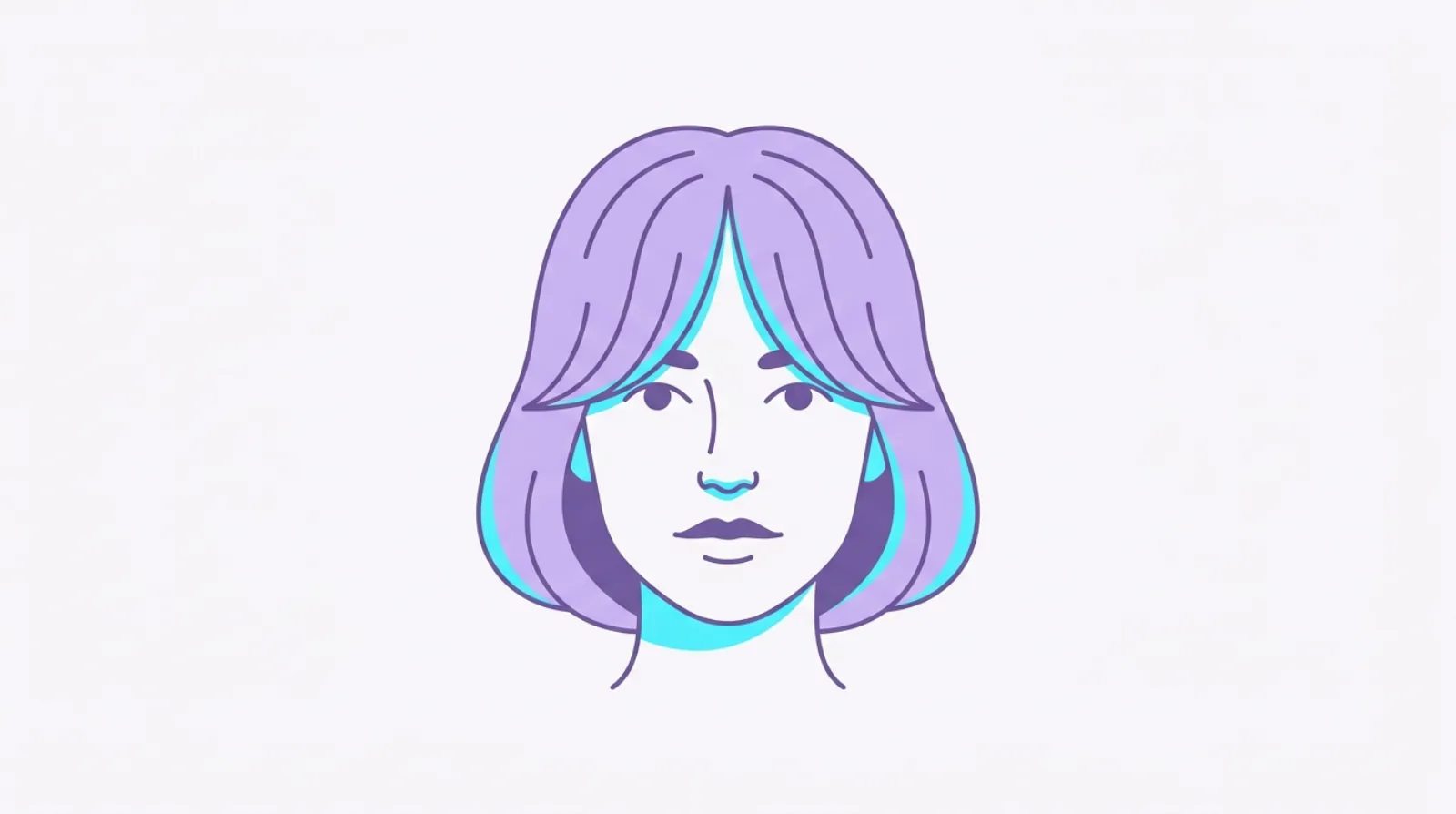
Curtain bangs are a fringe parted in the middle, with the two halves sweeping outward past the temples like curtains opening at a window. They are the most requested fringe of the last several years, and the popularity is earned: they frame the face without covering it, they suit nearly every face shape, and they grow out into face-framing layers instead of an awkward stage. If you want a fringe but you are nervous about committing, this is the one to start with. This guide covers the shape itself, the length and part decisions that make or break it, and the styling that produces the sweep. For how every fringe family compares, start with the full bangs and fringe guide.
Find out whether this suits your face. One selfie, and the face-shape read and your top pick are free.
Kurli is an AI hairstyle advisor: upload one selfie and it reads your face shape, recommends the cuts that suit it, and renders any of them onto your own photo before you commit.
What makes a fringe a curtain fringe
Three things define curtain bangs, and losing any of them turns the cut into something else.
The part. The fringe splits in the centre or slightly off centre. That split is the curtain opening, and it is why some forehead always shows through the middle.
The graduation. The hair is shortest near the part and gets longer toward the temples, so each half falls on a soft diagonal. This is the opposite of a straight-across fringe, which is one even length with no split.
The blend. The longest pieces of the fringe merge into the hair around your face rather than ending in a hard line. That blend is what makes the cut forgiving and what makes growing it out painless.
Because the shape is built from diagonals and blends rather than a single hard line, small errors disappear into it. That is the honest reason curtain bangs are low risk: not magic, geometry.
Why they flatter almost every face
Most fringes trade one benefit against one cost. A blunt fringe shortens a long face but can widen a round one. Curtain bangs mostly avoid the trade, for three reasons.
They add diagonal lines, and diagonals are the most flattering line in hairdressing. They soften angles on a square face and cut across width on a round one.
They show a strip of forehead through the centre. The face keeps some of its vertical length, so the fringe does not shorten the face the way a solid fringe does.
They frame the eyes and cheekbones, pulling attention to the centre of the face rather than its outline.
The practical result is that round, oval, square, heart, and diamond faces can all wear them well with small adjustments to length and part. The one real exception is a very long face that wants maximum forehead coverage, where a heavier fringe does the shortening job better. Our blog post on curtain bangs by face shape is the deeper read on tuning them shape by shape, and the bangs by face shape overview compares all fringe types across every shape.
Choosing the length
Length is the decision people get wrong most often, and the mistake is nearly always cutting too short.
Cheekbone length is the boldest true curtain fringe. The shortest pieces sit near the brow and the sweep lands at the cheekbones. It frames the eyes strongly and needs the most upkeep.
Cheekbone to jaw is the sweet spot for a first fringe. The sweep highlights the cheekbones, the ends blend into layers, and a missed trim is invisible.
Chin length and longer barely reads as a fringe at all. It is really a face-framing layer, which makes it the zero-commitment version and a common way to test the idea.
Start longer than you think you want. A stylist can take a curtain fringe shorter in two minutes at your next visit. Adding length back takes a month per centimetre, roughly, which is the same arithmetic behind every fringe decision on this site. When in doubt between two lengths, take the longer one home first.
The part decides the character
Curtain bangs are built around a part, so where you place it changes the whole effect.
A centre part gives the classic, symmetrical look. It suits oval and long faces and reads balanced and calm. It is also the least forgiving option for a round face, because a dead-centre split adds a vertical line but frames the width evenly on both sides.
A slightly off-centre part is the most flattering for most people. The small asymmetry adds an extra diagonal, softens roundness and squareness, and looks less styled.
A deep side part turns the cut into something close to side-swept bangs: one side becomes a long sweep across the forehead and the other mostly disappears. It is a useful second way to wear the same cut on days you want a change.
That flexibility is a genuine advantage. One curtain fringe can be worn three ways, which no blunt fringe can do.
Styling: how the sweep actually happens
The outward sweep is not automatic. Freshly washed curtain bangs dry flat and shapeless unless you set the bend, and the setting is easy once you know the trick.
The round brush method. On damp hair, take each half of the fringe and blow-dry it around a medium round brush, rolling away from the centre part. Hit it with heat for a few seconds, then let it cool on the brush. The cool-down is what locks the bend in.
The velcro roller method. Even easier. While the fringe is slightly damp, roll each half back and outward onto a large velcro roller, leave the rollers in while you have breakfast, and pull them out. No skill required, and less heat than daily ironing, which your hair will thank you for.
Between washes, a quick pass with the roller or a heat-free overnight twist revives the shape.
Keep product minimal: a light flexible spray or a drop of serum. Heavy wax or oil drags the sweep down within an hour, and the whole point of this fringe is movement.
Curtain bangs and your hair type
The cut adapts to most textures, but the version changes.
Wavy hair is the best match on the head chart. A soft natural wave produces the outward bend with almost no styling. If you have waves, this fringe is close to free.
Straight hair holds the shape crisply once it is set, but the set does the work: expect the round brush or rollers most mornings.
Fine hair should keep the fringe on the fuller side. Ask the stylist to bring a little more hair into the fringe section, because thin, gappy curtain bangs read as stringy rather than soft. Our fine and thin hair guide explains the fullness logic across whole cuts.
Curly hair can absolutely wear the shape, cut dry and left longer to allow for shrinkage. The result is looser and springier than the ironed version and better for it. The curly bangs guide covers the method in detail.
The easiest fringe to grow out
Every fringe eventually faces the question: keep trimming, or grow it out? Curtain bangs answer it better than any other style, and the reason is built into the cut.
Because the fringe is already graduated and already blended into the hair around your face, growth does not create a new awkward shape. The shortest pieces simply become cheekbone pieces, then jaw pieces, then ordinary face-framing layers. There is no stage where a solid line hangs in your eyes, which is the misery stage of growing out a blunt fringe.
You can speed the blend by asking for one or two reshaping trims during the grow-out, where the stylist trims nothing off the length and only softens the ends so the fringe merges evenly.
This grow-out behaviour is also why stylists suggest curtain bangs as the transition step for someone abandoning a heavier fringe. The full stage-by-stage plan, including pinning tricks for the in-between weeks, is in our growing out bangs guide.
What to say at the salon
Curtain bangs went viral enough that every stylist knows the name, but the name alone leaves too much open. Five decisions are worth stating out loud.
Where the shortest point sits. Brow level is bold, mid-nose is moderate, cheekbone is soft. Point to the spot.
Where the sweep ends. Cheekbone, jaw, or chin.
How much forehead shows. A wider centre gap is lighter and shows more skin. A narrower gap covers more and shortens the face more.
How full the fringe is. More hair in the section reads plush, less reads wispy.
Your real styling budget. Say honestly how many minutes you will spend on it each morning. A good stylist adjusts the cut to that number, and it changes the answer more than any photo does.
Bring a photo anyway, but bring it as a direction rather than a contract. And if you are choosing between curtain bangs and a softer alternative, the wispy bangs guide covers the lighter neighbour.
Try the curtain on before you cut it
Curtain bangs are the lowest-risk fringe, but low risk is not no risk, and the variables that matter, your hairline, your cowlicks, your face, do not appear on anyone else's photo.
Kurli renders curtain bangs onto your own selfie, so you can see the parted shape against your actual forehead height and your actual cheekbones before anything is cut. Compare a cheekbone-length version against a longer one. Compare a centre part against an off-centre part. The differences that read as tiny in words are obvious on your own face.
It is also the fastest way to settle the classic either-or: curtain fringe or straight-across fringe. Render both on the same selfie and the decision usually makes itself.
If you find yourself hesitating even on the rendered version, take the hint and start with the chin-length variant, which is barely a fringe at all. Everything in the wider bangs and fringe guide is reachable from there without regret.
Common questions
What are curtain bangs?
Curtain bangs are a fringe parted in the middle or slightly off centre, cut shorter near the part and longer toward the temples, so the two halves sweep outward like open curtains. The ends blend into the hair around the face rather than ending in a hard line.
Do curtain bangs really suit every face shape?
Almost. They flatter round, oval, square, heart, and diamond faces because their diagonal lines soften angles and cut across width, while the open centre keeps some forehead showing. The main exception is a very long face that wants maximum forehead coverage, where a heavier, more closed fringe works harder.
How are curtain bangs different from blunt bangs?
Blunt bangs are one even length with a solid horizontal line that covers the whole forehead. Curtain bangs split at a part, angle longer toward the temples, and show skin through the centre. Blunt shortens the face strongly; curtain frames it while keeping most of its length.
How long should curtain bangs be for a first try?
Between the cheekbone and the jaw. That length frames the face clearly but blends into layers, survives missed trims, and grows out invisibly. Cutting shorter than the cheekbone on the first attempt is the most common regret, because length cannot be added back.
Do curtain bangs need to be styled every day?
The sweep needs setting, but it is quick. Blow-dry each half around a round brush rolling away from the part, or set both halves on a large velcro roller while the fringe is damp. On wavy hair the natural bend often does the job with no tools at all.
What part should I wear with curtain bangs?
A slightly off-centre part flatters the most people, because the small asymmetry adds an extra diagonal. A true centre part reads classic and balanced and suits oval and long faces. A deep side part converts the same cut into a swept, one-sided look for variety.
Are curtain bangs good for thin hair?
Yes, if they are cut full. Ask the stylist to bring slightly more hair into the fringe section so the two halves have body. Very thin, gappy curtain bangs show scalp and read stringy. A little root lift from a round brush or roller matters more on fine hair than on thick hair.
Can curly hair have curtain bangs?
Yes. The fringe should be cut dry, in its natural curl, and left longer than the target length to allow for shrinkage. The curly version sweeps looser and springier than the straight version. Forcing it flat with a daily iron defeats the shape and damages the hair.
How often do curtain bangs need a trim?
Every four to six weeks to hold the shape, but they are the most forgiving fringe about waiting longer. Because the ends blend into face-framing layers, an overgrown curtain fringe still looks intentional, which is not true of an overgrown blunt fringe.
Are curtain bangs easy to grow out?
The easiest of any fringe. The graduated shape means growing hair simply becomes face-framing layers, with no stage where a solid line hangs in your eyes. One or two blending trims during the grow-out keep the merge smooth.
Will curtain bangs make my face look wider or longer?
Slightly longer and more balanced for most people. The open centre keeps vertical length visible while the outward sweep adds soft diagonals. Worn heavier and more closed across the brow, the same cut covers more forehead and shortens a long face instead.
Should I get curtain bangs or side-swept bangs?
Choose curtain bangs for a balanced, symmetrical frame that grows out invisibly, and side-swept bangs when you want a single strong diagonal across the forehead, for example to break up a round face or cover a high hairline on one side. A curtain fringe can be worn side-swept on a deep part, so it is the more flexible buy.
Sources
Hair biology and hair-care facts on this page are supported by these sources. Styling recommendations are guidance.
- Tips for healthy hair, American Academy of Dermatology
- Everyday hair care, American Academy of Dermatology
- How to style hair without damage, American Academy of Dermatology
- Physiology, Hair, StatPearls, NCBI Bookshelf
- Hair Follicle, Cleveland Clinic
See it on your own face
Kurli reads your face from a selfie, recommends styles that suit you, and renders each one onto your photo.
The face-shape read and your top pick are free. Your photo is never sold or used to train AI.