Bangs and fringe
Micro bangs: the short fringe, honestly explained
A fringe that stops halfway down the forehead. Striking, specific, and a real commitment.
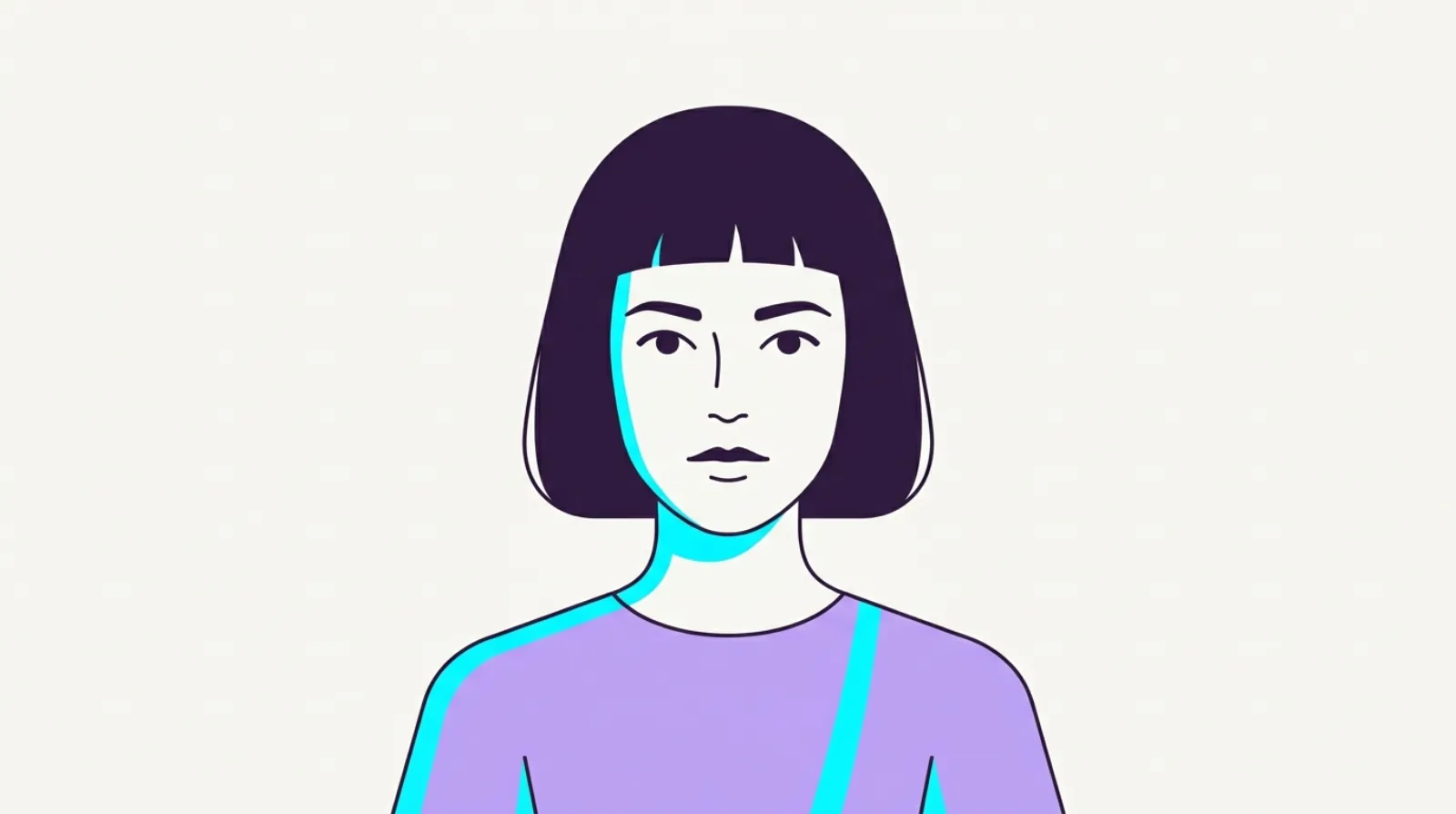
Micro bangs, also called baby bangs, are a fringe cut to end well above the eyebrows, often around the middle of the forehead. They are the most striking style in the fringe family and the least forgiving: worn by the right face with the right conviction they look editorial and sharp, and worn as an experiment they are the fringe most likely to be regretted, because there is no way to hide them and a long way to grow them. This guide is deliberately more honest than most write-ups of the style. It covers what micro bangs actually do to a face, who genuinely suits them, who should think twice, and what the upkeep costs. For gentler members of the family, the full bangs and fringe guide has every alternative.
Find out whether this suits your face. One selfie, and the face-shape read and your top pick are free.
Kurli is an AI hairstyle advisor: upload one selfie and it reads your face shape, recommends the cuts that suit it, and renders any of them onto your own photo before you commit.
What micro bangs are
A standard fringe ends at or near the eyebrows. Micro bangs stop distinctly higher, anywhere from a centimetre above the brows to the middle of the forehead. The cut is usually straight across or gently arched, and it can be solid like a short blunt fringe or softened with point cutting into a wispier edge.
The defining consequence is exposure. Every other fringe covers the forehead partly or fully. Micro bangs frame the forehead and leave most of it visible, along with the full length of your brows and the whole architecture of your upper face. Nothing about the style is camouflage. It is closer to underlining: it draws a line high on the face and dares the viewer to look at everything below it.
The style carries a strong cultural signature, vintage and editorial at once, associated with 1950s film stars and with modern fashion styling. That signature is part of what you are choosing. Micro bangs are read as a deliberate statement in a way no curtain fringe ever is.
What they do to a face
Micro bangs behave differently from every longer fringe, and the differences decide who they suit.
They shorten the forehead but lengthen the face. The fringe covers the top of the forehead, yet the expanse of skin left between fringe and brows keeps the face visually open and tall. A longer blunt fringe shortens the whole face; micro bangs mostly shorten just the forehead while leaving the face its height. This distinction matters when choosing by shape, and it is why the two styles are not interchangeable.
They magnify the brows and eyes. With the fringe line sitting high, brows become the strongest horizontal on the face. Good brows become a feature; uneven brows become noticeable.
They expose the hairline. Cowlicks, widow's peaks, and any unevenness at the front hairline are on display, since there is no length to cover them. Some hairlines make the style; some fight it.
They sharpen everything. The high line reads graphic and intentional, and it pushes the whole look toward crisp. Micro bangs over an unstructured, casual cut can look accidental rather than styled.
Who genuinely suits them
Being specific is kinder than being encouraging, so here is the honest profile of the person micro bangs flatter.
Balanced, compact faces do best. Oval faces carry the style with the least adjustment, as they carry most things. Round and heart faces can do surprisingly well too, because the style leaves the face its height while trimming the forehead, and on a heart shape the exposed brow area softens the wide-forehead effect rather than capping it. The bangs by face shape overview situates this among all the fringe options per shape.
Small or low foreheads have an advantage. Micro bangs on a short forehead read proportionate, where a brow-length fringe would crowd the eyes.
Strong, groomed brows help enormously, since the style hands them the spotlight.
A smooth, cooperative front hairline matters more than for any other fringe: minimal cowlick, growth that falls forward willingly.
And temperament is a real criterion. The style needs wearing with intent. If your instinct on a bad hair day is to hide, the fringe that cannot hide is the wrong fringe.
If you are unsure where your face sits in that list, settle it first with how to find your face shape.
Who should think twice
The same specificity, pointed the other way.
Long and oblong faces should be cautious: the exposed forehead band keeps vertical height in play, and the face reads taller, which is the opposite of what that shape usually wants. A fuller fringe serves a long face far better, as covered in bangs for long faces.
Strong square jaws get amplified. The high horizontal line at the top mirrors the jaw line at the bottom and frames the angularity between them. Softening styles do the opposite job, and bangs for square faces explains the alternatives.
Strong cowlicks or a very high forehead turn daily styling into a negotiation you will not always win.
Very curly hair can wear a micro fringe, but shrinkage makes short far shorter, and the margin for error approaches zero; the curly bangs guide explains why length is the curly fringe's safety net, and a micro cut removes the net.
None of these are prohibitions. They are the honest list of headwinds, and choosing the style into a headwind should at least be done knowingly.
The commitment, in plain numbers
Micro bangs are the most committed fringe decision available, and the arithmetic deserves to be stated flatly.
Hair grows about a centimetre to a centimetre and a quarter a month. A fringe cut mid-forehead is six to eight centimetres short of tucking behind an ear. That is six months to a year of growing before the fringe stops being a fringe, passing on the way through every length stage, including the in-the-eyes stage that makes people miserable growing out ordinary bangs. The full staircase is described in growing out bangs, and micro bangs enter it from the very top step.
Meanwhile, maintaining the style means trims every two to three weeks, the shortest cycle of any fringe, because a centimetre of growth visibly changes a fringe this short.
And there is no hiding option. A grown-out sweep tucks away; a blunt fringe pins back at a stretch. A micro fringe is too short to pin, too short to tuck, and too high to blend. Its only off switch is time.
If those numbers read as fine, you are the audience for this style. If they gave you pause, that pause is data.
Styling and wearing them
The daily routine is short, which is the style's one convenience: there is simply not much hair to manage.
Set the direction early. Dry the fringe flat and slightly forward as soon as it is washed, before the roots choose their own way. On a short fringe the roots are most of the fringe, so their direction is the style.
Micro amounts of product. A fingertip of matte paste or light cream settles flyaways and defines the edge. Shine products enlarge every gap at this length.
Expect weather to matter. Humidity lifts a short fringe fast, and there is no weight of length to pull it back down. A flexible spray on damp days is the practical answer, along with a sense of humour.
Pair the rest of the look deliberately. Micro bangs read best over structured cuts: sharp bobs, sleek lengths, cropped styles, strong curls with defined shape. They also interact heavily with glasses, since frames and fringe now occupy neighbouring bands of the face; bring your glasses to the salon appointment, literally.
Brow grooming quietly becomes part of the hairstyle. Budget for it.
The salon conversation
More than any other fringe, this one should be negotiated in exact terms before scissors move, because the distance between versions is a few millimetres.
Fix the length to a landmark, not a word. "Micro bangs" spans everything from just-above-brow to mid-forehead. Touch your forehead where you want the fringe to end and have the stylist confirm it back. Just above the brow is the cautious entry; mid-forehead is the full statement.
Choose the edge. A solid straight edge is the boldest and demands the most cooperative hair. A softly point-cut edge forgives cowlicks, weather, and regrowth, and is the better first version for almost everyone.
Choose the width. A narrower fringe that ends above the arch of each brow is gentler; full temple-to-temple width is maximum impact.
Stage the descent. A reasonable stylist will happily cut to just-above-brow first and take it higher after you have lived a week with it. Ask for exactly that. The staircase down costs two short visits; the staircase back up costs half a year.
And if the stylist tries to talk you into starting longer, hear them out. They have watched more micro-bang regret than you have.
Try them on before they are real
Every guide in this hub recommends previewing a fringe before cutting it. For micro bangs the recommendation turns into something closer to a rule, because this is the single highest-regret cut in the fringe family: maximum visibility, zero hiding options, and the longest grow-out on the menu.
Kurli renders micro bangs onto your own selfie, on your real forehead, hairline, and brows, which are exactly the features that decide whether the style lands. Look at the render and ask the specific questions: does the exposed forehead band suit your face's proportions, do your brows carry the spotlight the fringe hands them, does the high line sharpen your features in a way you like?
Then render the fallbacks beside it: a brow-length straight-across fringe, which delivers much of the graphic quality with an escape hatch, and wispy bangs, which sketch the idea in pencil rather than ink.
If the micro version still wins on your own face, cut it with confidence; conviction is half the style. If it does not, the preview just saved you the better part of a year, and the rest of the bangs and fringe guide is open.
Common questions
What are micro bangs?
A fringe cut to end well above the eyebrows, anywhere from a centimetre over the brow to the middle of the forehead. Also called baby bangs. The style leaves most of the forehead, the brows, and the upper face fully visible, which makes it the most graphic and least concealing fringe.
Are micro bangs and baby bangs the same thing?
Yes. Both names describe the same short fringe ending high above the brows. Micro bangs is the more common salon term; baby bangs is the everyday name. Some stylists use baby bangs for the slightly longer, softer end of the range, but there is no fixed boundary.
Who suits micro bangs?
Balanced oval faces, round and heart faces that want a shorter forehead without losing facial height, people with smaller foreheads, and anyone with strong brows and a smooth front hairline. Just as important is intent: the style reads as a deliberate statement and needs to be worn as one.
Who should avoid micro bangs?
Think twice with a long or oblong face, since the exposed forehead band keeps the face reading tall; with a strong square jaw, which the high horizontal line mirrors and emphasises; with a strong cowlick at the front hairline; and with very tight curls unless you accept near-zero margin on shrinkage.
Do micro bangs make your face look longer or shorter?
Mostly longer, which surprises people. The fringe shortens the forehead itself, but the strip of skin left between fringe and brows keeps the face visually open and tall. A brow-length blunt fringe is the style that genuinely shortens the whole face; micro bangs do a different job.
How often do micro bangs need trimming?
Every two to three weeks, the shortest cycle of any fringe. At this length a single centimetre of growth visibly changes the style, and hair grows about that much in a month. Budget for the appointments or learn precise home trimming before you cut.
How long do micro bangs take to grow out?
From mid-forehead to tuckable-behind-the-ear length is six to eight centimetres, which at roughly a centimetre a month means six months to a year. The grow-out passes through every awkward stage a longer fringe has, plus its own, and there is no pinning or tucking option along the way.
Can micro bangs be hidden on a bad day?
No, and this is the most honest single fact about the style. The fringe is too short to tuck behind an ear, too short to pin flat, and too high to blend into other hair. Every other fringe has an off switch; micro bangs only have time.
Do micro bangs work with glasses?
They can look excellent with glasses, since fringe line and frame line become parallel graphic elements, but the pairing needs checking rather than assuming. Bring your actual glasses to the salon and look at the gap between fringe, brows, and frames together before agreeing the final length.
Can curly hair wear micro bangs?
It is the hardest combination in the fringe family. Shrinkage makes a short cut dramatically shorter once dry, so the fringe must be cut dry, curl by curl, by someone experienced, and even then the finished length varies day to day with weather. A longer curly fringe keeps a safety margin that a micro cut removes.
Should I cut micro bangs myself?
No. Home fringe trimming is workable for maintaining longer styles, but cutting a fringe this short freehand concentrates every risk: no length in reserve, no way to hide errors, and months of growing if it goes wrong. Have it cut professionally, then ask the stylist to show you a safe maintenance trim.
How do I know if micro bangs will suit me before cutting?
Preview them on your own face rather than on photos of other people. Kurli renders micro bangs onto your selfie, using your real hairline, forehead, and brows, and lets you compare the result against a brow-length fringe and a wispy fringe side by side. For this style specifically, deciding on screen first is the single best regret-prevention available.
Sources
Hair biology and hair-care facts on this page are supported by these sources. Styling recommendations are guidance.
- Tips for healthy hair, American Academy of Dermatology
- Everyday hair care, American Academy of Dermatology
- Physiology, Hair, StatPearls, NCBI Bookshelf
- Hair Follicle, Cleveland Clinic
- How to style hair without damage, American Academy of Dermatology
See it on your own face
Kurli reads your face from a selfie, recommends styles that suit you, and renders each one onto your photo.
The face-shape read and your top pick are free. Your photo is never sold or used to train AI.