Hair colour
Balayage, highlights, and babylights compared
Five techniques, what each one costs you in upkeep, and which suits your hair.
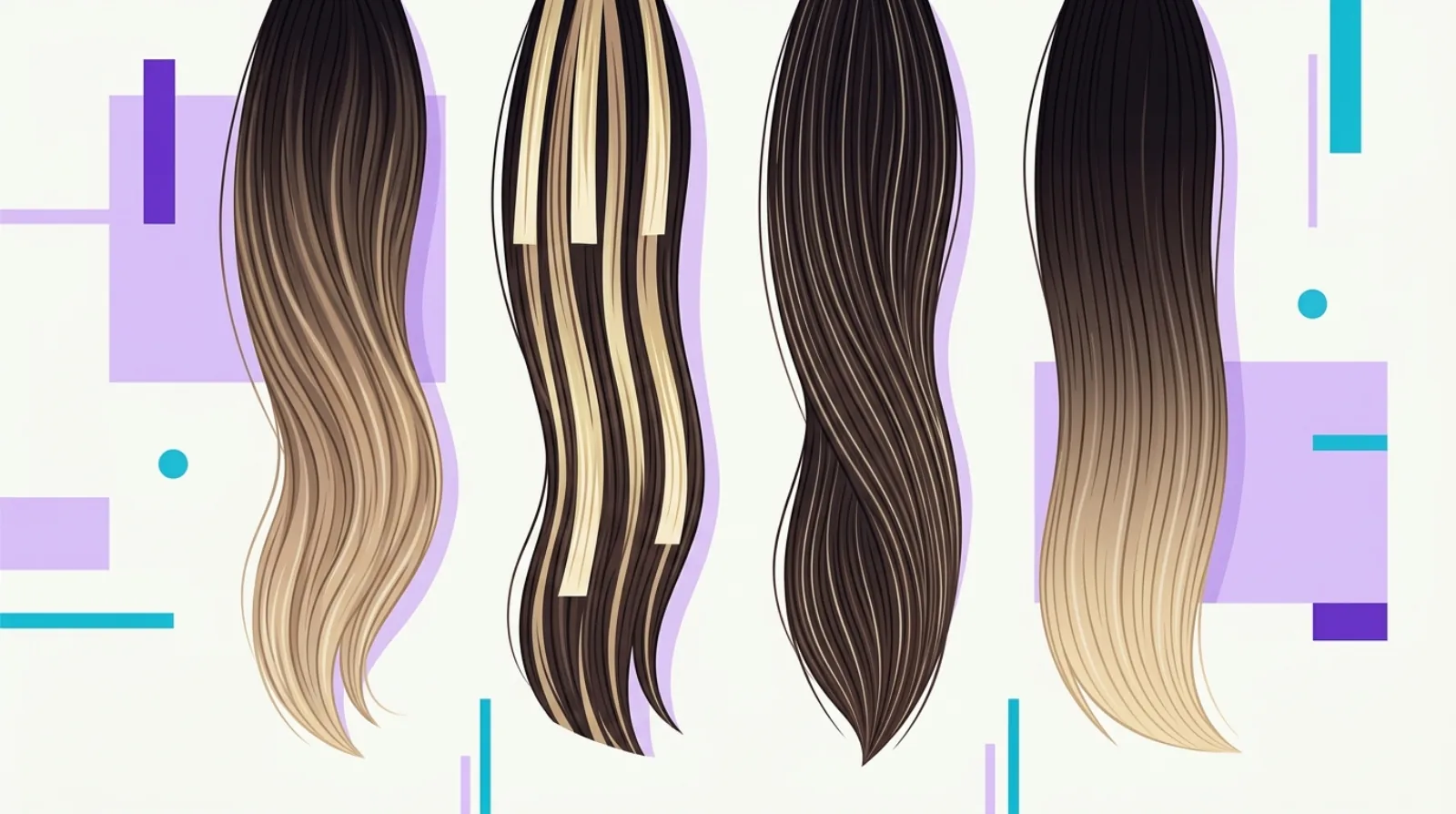
Balayage and highlights are often used as if they mean the same thing, and they do not. They are different application methods, they produce different results, and they cost you very different amounts of time and money over a year. Picking the right one matters more than picking the shade, because the technique decides how often you are back in the chair. This guide compares the five techniques you will actually be offered.
Find out whether this suits your face. One selfie, and the face-shape read and your top pick are free.
Kurli is an AI hairstyle advisor: upload one selfie and it reads your face shape, recommends the cuts that suit it, and renders any of them onto your own photo before you commit.
Highlights: lightener in foil, applied at the root
Traditional highlights are made by taking thin sections of hair, painting lightener on them, and wrapping each section in foil. The foil holds heat and keeps the product wet, which lets it lift further and more evenly than open-air methods.
Highlights usually start right at the root. That gives maximum brightness and a uniform, all-over lightness, which is exactly why they suit anyone who wants genuinely light hair rather than a sun-kissed effect.
Upkeep: every six to eight weeks, because the regrowth line is obvious.
Best for: all-over brightness, fine hair that needs the appearance of more depth and dimension, and grey blending. Foils lift more reliably than painting, so they are also the safer choice on darker or stubborn hair.
Balayage: lightener painted by hand, freehand
Balayage comes from the French word for sweeping. The colourist paints lightener onto the surface of the hair freehand, usually starting partway down and getting heavier towards the ends. It is normally done in the open air rather than in foil.
Because the product is placed by eye and starts below the root, the result is soft and graduated, with no hard line where the colour begins. The lightest pieces sit at the ends.
Upkeep: every three to four months, sometimes longer. This is balayage's real selling point.
Best for: low maintenance, a natural sun-lightened look, and anyone who wants to grow out their colour without a visible line. It is less good if you want serious overall lightness, since freehand painting lifts less than foil.
Babylights: very fine highlights
Babylights are highlights taken in extremely fine sections, mimicking the delicate natural lightness children often have. They are usually done in foil and often start at or near the root.
The effect is subtle and soft rather than striped, because each piece is too fine to read as a separate stripe. Blended together they brighten the whole head by a level or so.
Upkeep: every eight to ten weeks, and the regrowth is gentler than standard highlights because there is no chunky line.
Best for: a natural look with real brightness, fine hair, and anyone who has been unhappy with obvious stripes before. The trade-off is time: taking hundreds of tiny sections takes longer and costs more than standard foils.
Ombré and sombré: a gradient from dark to light
Ombré is a graduated effect where the roots stay dark and the ends are much lighter, with a noticeable transition somewhere in between. Sombré is the softer version, with a far more gradual blend and less contrast.
Unlike balayage, ombré is about the overall gradient rather than individual painted pieces, and the transition zone is often more defined.
Upkeep: very low, three to six months, since the roots are meant to be dark.
Best for: high contrast, long hair where the gradient has room to show, and very low maintenance.
Careful with: face shape. A hard ombré line landing at your jaw draws a horizontal line across it. If you have a square jaw or a round face, ask for the transition to sit well above or below the jawline, as covered in hair colour by face shape.
Face-framing and the money piece
Face-framing means lightening only the sections directly beside your face. The money piece is the bolder version, where the front pieces are noticeably lighter than everything else.
This is the cheapest, fastest way to change how your colour reads, and it is the most powerful per pound spent, because it sits exactly where people look when they talk to you.
Upkeep: six to eight weeks if taken to the root, longer if started lower.
Best for: a first step into lightening, brightening your face without committing to a full head, and anyone on a budget. It is also the easiest option to reverse, since a small amount of hair is involved.
Where you place it matters more than how light it is. See the placement rules in our face shape guide before booking.
The real cost: upkeep over a year
The appointment price is only part of the cost. What matters is how many appointments a year the technique needs.
Highlights at six to eight weeks means roughly seven to nine visits a year.
Babylights at eight to ten weeks means about five to six visits.
Balayage at three to four months means three to four visits.
Ombré at three to six months means two to four visits.
Face-framing only is a short, cheap appointment even when done often.
A balayage appointment usually costs more than a highlight appointment, but needing half as many of them often makes it cheaper across a year. Work out the annual figure before deciding, and be honest about whether you will actually keep up with a six-week cycle.
Which suits your hair type
Technique should follow your hair, not just the photo you like.
Fine hair: babylights and foils. Fine hair benefits from the dimension that many small light pieces create, and freehand balayage can look patchy because there is less hair to blend into.
Thick hair: balayage and foils both work. Thick hair hides a regrowth line better, so balayage is very effective here.
Curly and coily hair: balayage, applied to the curl pattern rather than in straight sections. Colour placed in flat foils can disappear inside a curl or show up in the wrong place once the curl springs back. A colourist who works with curls should paint following the curl clumps.
Grey hair: foils, usually. Grey is resistant and needs the extra lift and even saturation that foil provides. See our covering grey hair guide.
Previously coloured hair: get an assessment first. Lightener behaves differently over old artificial pigment.
How to choose in one decision
Answer two questions and the choice narrows to one or two options.
Question one: how often are you honestly willing to go back? If the answer is every six to eight weeks, foils and highlights are open to you. If the answer is two or three times a year, you want balayage or ombré. Choosing a technique whose cycle you will not keep is the most common way people end up unhappy with their colour.
Question two: do you want brightness or softness? Brightness across the whole head means foil. A soft, grown-in effect means painting.
High maintenance plus brightness is highlights or babylights. Low maintenance plus softness is balayage or ombré. Low budget with real impact is face-framing.
What to bring to the appointment
Bring three or four photos of what you want, taken in natural light, and at least one photo of a result you do not want. The second kind saves more appointments than the first.
Say how often you can realistically return, because a good colourist will change the technique based on that answer alone. Say whether you have used box dye or henna, ever, even years ago. Henna in particular can react badly with lightener, and hiding it is how hair gets damaged.
Ask what the colour will look like at week eight, not just on the day. Any technique looks good fresh. The one that still looks good when you are due back is the right one for you. Our post on how to ask your stylist for the right cut has more on getting this conversation right.
How long each appointment takes
Time is part of the decision, and salons do not always mention it when you book.
Face-framing only: about an hour. Easy to fit into a lunch break.
A half head of foils: roughly two hours, covering the top and sides that show most.
A full head of foils: two and a half to three and a half hours, longer on thick or very long hair.
Balayage: two to four hours, because painting freehand takes longer than sectioning into foils, and it usually finishes with a toner.
Going lighter from dark hair: four hours or more, and often more than one appointment.
Add time for a toner or gloss at the end of almost any lightening service, plus the cut and blow-dry if you are having those too. Book a morning slot for anything involving lift, since a rushed colourist at the end of the day is more likely to over-process or under-tone. If you are short of time, face-framing gives the best visible change per hour spent.
Can you combine techniques?
Yes, and most good colour is a combination rather than one pure technique.
A very common mix is balayage through the lengths with a few fine foils near the crown, giving softness overall with a bit of extra brightness where the sun would naturally hit. Another is balayage plus a brighter money piece at the front, so the face is lifted while the rest stays low maintenance.
Adding a root shadow to foil highlights is also common, and it turns a six-week cycle into more like ten weeks by deliberately blurring the regrowth line.
If your budget is limited, combining a small amount of foil with a mostly painted result usually gives the best value: enough brightness to notice, without committing to a full head of foils several times a year.
Common questions
What is the difference between balayage and highlights?
Highlights are painted onto sections and wrapped in foil, usually starting at the root, which gives even, all-over brightness. Balayage is painted freehand on the surface, starting lower down, which gives a soft graduated effect with no hard line. Highlights need touch-ups every six to eight weeks, balayage every three to four months.
Which lasts longer, balayage or highlights?
Balayage, by a wide margin. Because it starts below the root and blends gradually, there is no obvious regrowth line, so it typically lasts three to four months. Highlights taken to the root show a clear line within six to eight weeks. That difference is the main reason people choose balayage.
Is balayage cheaper than highlights?
Per appointment it is usually more expensive, but over a year it often costs less because you need roughly half as many appointments. Highlights might mean seven to nine visits a year, balayage three to four. Work out the annual total rather than comparing single appointment prices.
What are babylights and who are they for?
Babylights are highlights taken in very fine sections, so the result is soft and blended rather than striped. They suit fine hair, anyone who wants real brightness without an obvious stripe, and anyone who has disliked chunky highlights before. They take longer to apply and usually cost more than standard foils.
Does balayage work on short hair?
It can, but it has less room to show. Balayage relies on a gradient from darker roots to lighter ends, and short hair does not give much distance for that transition. On short hair, face-framing pieces or fine foils usually give a better result than a full balayage.
Is balayage or foil better for curly hair?
Balayage, applied following the curl pattern rather than in straight horizontal sections. Colour placed in flat foils can disappear inside a curl or surface in an unexpected spot once the curl springs back. Look for a colourist who paints onto curl clumps while the hair is in its natural shape.
Will highlights damage my hair more than balayage?
Usually a little, for two reasons. Foils hold heat and keep the lightener active longer, so they lift further, and highlights are redone more often. Balayage sits mostly on mid-lengths and ends and is refreshed less frequently. That said, both use lightener, and how it is applied matters more than the label.
What is a root shadow and why would I add one?
A root shadow is a deliberately darker colour applied at the roots over highlights, blurring the line where regrowth appears. It adds depth, stops highlights looking flat, and can stretch a six-week touch-up cycle to around ten weeks. It is one of the cheapest ways to make foils lower maintenance.
Can I get balayage if my hair is already box dyed?
Often yes, but tell your colourist before they start. Lightener behaves less predictably over artificial pigment than over natural hair, and box dye can sit unevenly, especially on the ends. Expect a strand test, and expect it may take more than one session to reach the result you want.
How light can I go in one appointment?
Realistically two to four levels, depending on your starting colour and hair condition. A responsible colourist will stop before your hair is compromised, even if that means you leave darker than the photo you brought. Going from dark brown to blonde in a single session is where most serious breakage happens.
Which technique is best for grey hair?
Foils, usually. Grey hair is resistant and needs even, controlled saturation to take colour properly, which foil provides better than freehand painting. Highlights and lowlights together are also the standard way to blend grey softly rather than covering it with a solid colour that needs frequent root touch-ups.
What should I ask for if I want low maintenance?
Ask for balayage or sombré with a root shadow, and ask for the lightest pieces to stay away from your root. Tell your colourist plainly how often you can return, since a good one will pick the technique based on that. Also ask what it will look like at week eight rather than just on the day.
Sources
Hair biology and hair-care facts on this page are supported by these sources. Styling recommendations are guidance.
- Coloring and perming tips for healthier-looking hair, American Academy of Dermatology
- 10 hair care habits that can damage your hair, American Academy of Dermatology
- Physiology, Hair, StatPearls, NCBI Bookshelf
- How to style hair without damage, American Academy of Dermatology
- Tips for healthy hair, American Academy of Dermatology
See it on your own face
Kurli reads your face from a selfie, recommends styles that suit you, and renders each one onto your photo.
The face-shape read and your top pick are free. Your photo is never sold or used to train AI.