Hair colour
Repairing colour-damaged hair
What damage actually is, what genuinely helps, and what is only marketing.
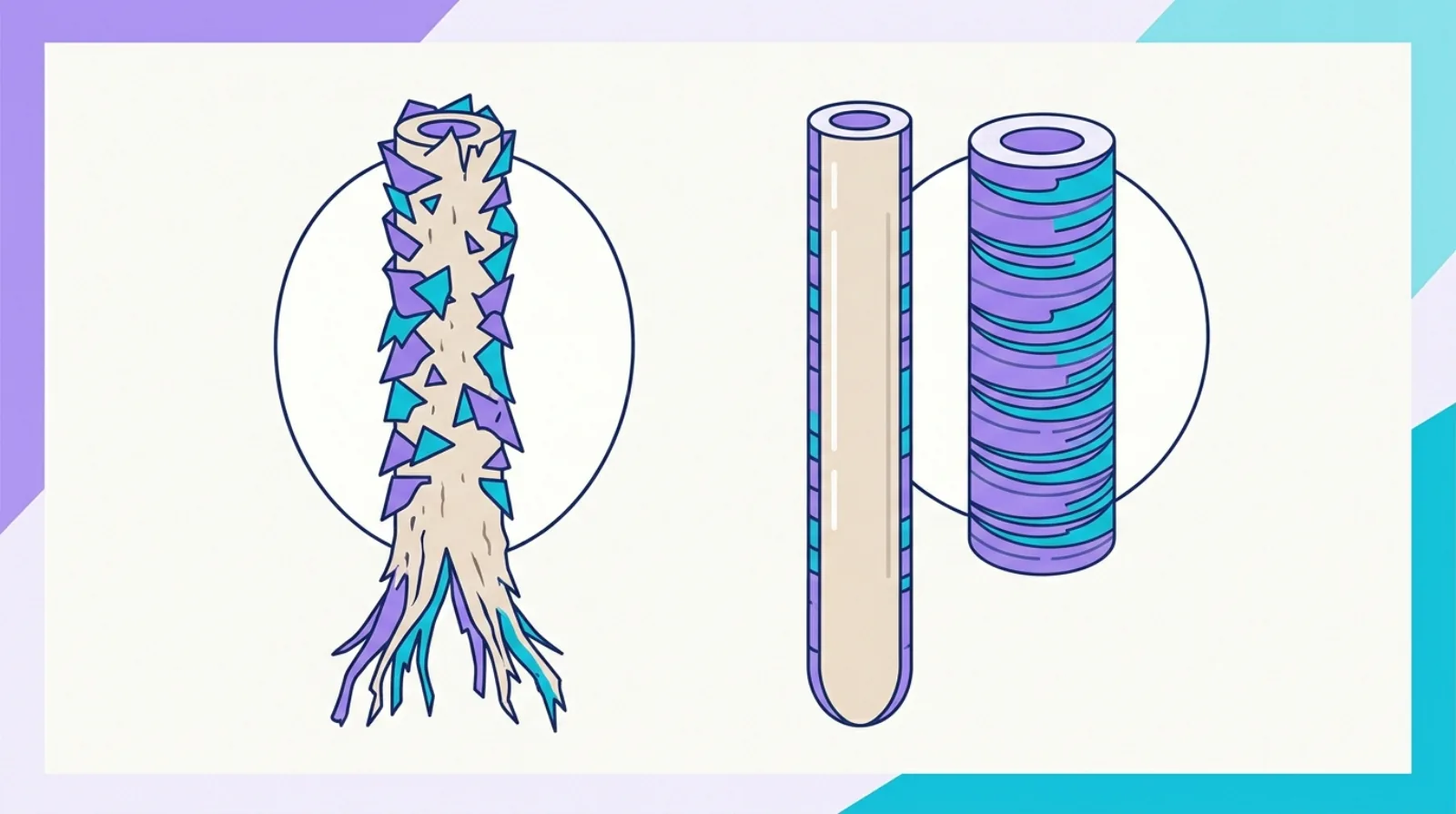
Colour damage is real, but the word gets used loosely, and that makes it hard to fix. Dryness, breakage, porosity, and split ends are different problems with different solutions, and using the wrong treatment can make things worse. Loading protein onto hair that needs moisture leaves it stiff and snapping. This guide explains what colouring actually does to a strand, how to work out which problem you have, and what genuinely helps versus what only feels like it does.
Find out whether this suits your face. One selfie, and the face-shape read and your top pick are free.
Kurli is an AI hairstyle advisor: upload one selfie and it reads your face shape, recommends the cuts that suit it, and renders any of them onto your own photo before you commit.
What colouring does to a strand
Two things cause the damage, and they are separate.
Opening the cuticle. Permanent colour and bleach use an alkaline agent to swell the cuticle scales open so product can reach the cortex. Those scales never lie quite as flat again. A raised cuticle means hair feels rougher, tangles more, reflects less light, and loses moisture faster. This is porosity.
Breaking bonds in the cortex. Bleach in particular breaks some of the protein structures that give hair its strength and elasticity. Fewer intact bonds means the strand stretches too easily when wet and snaps under tension.
The crucial fact: hair is not living tissue. Once it leaves the follicle it has no blood supply and no ability to repair itself. Skin heals. Hair does not. Everything sold as repair is really about filling gaps, smoothing the surface, and holding the structure together so the hair behaves better. That is genuinely useful, but it is management rather than healing.
Protein loss or moisture loss? A test
Almost all treatment mistakes come from not knowing which of the two you have. There is a simple test.
Take one shed hair, wet it, hold it at both ends and stretch it gently.
It stretches a long way and does not return, or snaps limply: you need protein. The internal structure is weakened. Hair like this often feels mushy, gummy, or overly soft when wet, and limp when dry.
It barely stretches at all and snaps quickly: you need moisture. Hair like this feels rough, stiff, straw-like, and brittle, and tangles badly.
It stretches a little and springs back: your balance is fine.
Most colour-damaged hair needs both over time, alternating. Roughly one protein treatment to two moisture treatments is a sensible rhythm. Retest every few weeks, because the balance shifts as you treat it. Too much protein is a real problem: it makes hair stiff and brittle, and people often respond by adding more protein, which makes it worse.
What actually helps
These have a real mechanism behind them.
Bond builders. Used during and after lightening, they help hold the internal structure together. Genuinely effective, and worth using both in salon and at home.
Protein treatments. Small hydrolysed proteins temporarily fill gaps in a damaged cuticle and cortex, which restores some strength and elasticity. Temporary, so they need repeating, and easy to overdo.
Deep conditioning and masks. Restore moisture and lay the cuticle flatter, which improves shine, softness, and tangling immediately.
Leave-in conditioner and oils. Reduce friction and slow moisture loss. Oils do not repair anything, but reducing friction genuinely prevents further breakage.
Heat protectant. Prevents new damage rather than fixing old damage, which makes it one of the highest-value products you own.
Trims. The only thing that truly removes damage. A split end travels up the strand if left, so cutting it off protects the healthy hair above it.
What does not work
Some claims are simply not physically possible, and it is worth knowing which.
"Repairs split ends." A split end cannot be rejoined. Products can glue the two halves together temporarily so it looks and feels smoother, and that is genuinely nice, but it survives until the next wash. The split is still there, and it will keep travelling upwards. Only scissors remove it.
"Restores your hair's natural structure." Broken bonds are not regrown. Bond builders hold things together, which is real and valuable, but it is not regeneration.
Very heavy coconut or castor oil on fine, damaged hair. Weighs it down without addressing either protein or moisture, and can make limp hair limper.
Protein treatments used weekly by default. This causes protein overload: stiff, brittle, snapping hair. Do the stretch test rather than following a schedule.
More product on already overloaded hair. If hair suddenly feels worse after treatment, the answer is often to strip back with a clarifying wash and start again with moisture.
A realistic repair routine
For hair that is damaged but not at the point of breaking off, this is a sensible structure.
Every wash: a gentle, sulphate-free shampoo focused on the scalp, and conditioner on mid-lengths and ends. Rinse in cool water.
Weekly: a deep conditioning mask, left on for the stated time. Warmth helps, so a shower cap works well.
Every two to three weeks: a protein or bond-building treatment, adjusted by the stretch test.
Monthly: a clarifying wash to remove build-up, followed immediately by a deep conditioner.
Daily: a leave-in on the ends, a heat protectant whenever heat is used, and a wide-tooth comb starting at the ends and working up.
Every eight to twelve weeks: a trim, even a small one.
The boring parts of this list do more than the expensive parts. Cooler water, less heat, gentle detangling, and regular trims outperform any single miracle product.
Reduce the friction, not just the chemistry
A lot of what people read as colour damage is mechanical damage layered on top of it. Coloured hair has a raised cuticle, which makes it far more vulnerable to friction.
Detangle wet hair from the ends upwards with a wide-tooth comb, never from the roots down. Wet hair is at its most stretchy and most fragile.
Use a microfibre towel or a cotton t-shirt instead of rubbing with a terry towel.
Sleep on silk or satin, or use a silk scarf or bonnet. Cotton pillowcases create friction all night.
Avoid tight styles worn daily. Constant tension on the same spot causes breakage at the hairline. The AAD specifically lists tight hairstyles among habits that damage hair.
Take styles out before sleeping, and use fabric-covered elastics rather than ones with metal joins.
Heat and colour together
Heat styling and chemical colouring are the two biggest causes of hair damage, and their effects compound.
Coloured hair is more porous, so it heats faster and loses moisture faster than virgin hair at the same temperature. A setting that was fine before you coloured may now be too hot.
Always use a heat protectant. It is the single highest-value product for anyone who colours and styles.
Lower the temperature. Most people use far more heat than they need. Start low and only increase if the style genuinely will not hold.
Take heat-free days. Even two a week makes a visible difference over a couple of months.
Never use heat on soaking wet hair other than with a dryer on a moderate setting. Straighteners on wet hair boil the water inside the strand and cause immediate damage.
If you are actively trying to repair damage, cutting heat right down for a month or two will do more than any treatment you can buy.
When it can only be cut off
There is a point past which treatment cannot deliver, and recognising it saves months of frustration and money.
Cut, rather than treat, when you see: gumminess when wet that does not improve after several protein treatments, short broken pieces all over the crown and hairline, ends that tangle within minutes of being combed, or hair that snaps when you brush it gently.
This does not always mean a dramatic cut. Often a series of small trims every six to eight weeks removes the worst gradually while you grow healthier hair from the root. Ask for a "dusting" if you want length kept.
It is also fine to stop colouring for a while. Hair grows roughly a centimetre or so a month for most people, so a year of growth is a meaningful amount of undamaged hair. Pausing lightening and letting the healthy growth come through is often the fastest genuine fix.
Preventing the next round of damage
Once your hair is in better shape, these choices keep it that way.
Choose the gentlest colour type that achieves your goal. Demi-permanent instead of permanent where possible, and a gloss instead of a recolour when the level is already right.
Colour roots only, pulling through the lengths only briefly and only when needed.
Space out lightening sessions and follow your colourist's timing rather than pushing for faster results.
Pick a lower-maintenance design. Balayage with a dark root or face-framing pieces means far fewer chemical services per year than root-to-tip highlights.
Do only one chemical service at a time. The AAD advises not combining colouring with perming or relaxing, and if you want both, doing them about two weeks apart.
Protect from sun and chlorine, both of which degrade colour and dry hair. A hat, or a leave-in with zinc oxide, and rinsing before and after swimming.
Common questions
Can damaged hair actually be repaired?
Not truly. Hair is not living tissue and cannot heal itself once it leaves the follicle. Treatments fill gaps, smooth the cuticle, and hold the structure together, which genuinely makes hair look and behave better, but the damage itself remains until it is cut off. Managing damage and preventing more is the realistic goal.
How do I know if my hair needs protein or moisture?
Wet one shed hair and stretch it gently. If it stretches a long way and does not spring back, or snaps limply, it needs protein. If it barely stretches and snaps quickly, it needs moisture. If it stretches a little and recovers, your balance is fine. Retest every few weeks, since the balance shifts.
Can too much protein damage my hair?
Yes. Protein overload makes hair stiff, brittle, and prone to snapping, and it is easy to cause by using protein treatments on a fixed weekly schedule. The confusing part is that it feels like more damage, so people add more protein and make it worse. Use the stretch test instead of a schedule.
Do bond builders really work?
Yes, within limits. They help hold the hair's internal structure together during and after lightening, and hair genuinely comes through the process in better condition with them than without. What they do not do is make bleach harmless or regrow broken bonds, so they are not a reason to attempt a bigger change in one session.
Can anything actually fix split ends?
No product can rejoin a split end. Some can temporarily glue the halves together so the hair looks and feels smoother, but that washes out and the split keeps travelling up the strand. Cutting is the only real fix, and doing it promptly protects the healthy hair above the split.
How often should I deep condition coloured hair?
About once a week for most people, with the mask left on for the time stated on the packaging. Add gentle warmth, such as a shower cap, to help it work. If your hair feels limp and mushy rather than dry, you may be over-conditioning, so switch to a protein or bond treatment and retest.
Why does my coloured hair feel gummy when wet?
Gumminess is the classic sign of over-processing: too many protein bonds inside the strand have been broken, so it stretches like wet chewing gum instead of springing back. Stop all lightening, use protein and bond treatments, cut heat right down, and expect to need trims. If it does not improve, the damaged section has to be cut off.
Does coconut oil repair coloured hair?
It does not repair anything, but it can help by reducing friction and slowing moisture loss, which prevents further breakage. On fine or already limp hair, heavy oils often weigh it down without solving either a protein or a moisture problem. Use it as a pre-wash treatment or lightly on ends rather than as a fix.
How much does heat styling add to colour damage?
A lot, because the effects compound. Coloured hair is more porous, so it heats faster and loses moisture faster than virgin hair at the same setting. Heat styling and chemical processing are the two leading causes of hair damage, and always using a heat protectant plus a lower temperature makes a visible difference.
How often should I trim colour-damaged hair?
Every eight to twelve weeks, even if only a small amount. Split ends travel upwards if left, so removing them early protects the healthy hair above. If you want to keep length, ask for a dusting, which takes off just the damaged tips rather than a full cut.
Should I stop colouring my hair to let it recover?
Pausing lightening is often the fastest genuine improvement, because it lets undamaged hair grow through. Hair grows roughly a centimetre a month for most people, so a year is a meaningful length of healthy hair. If you want to keep colouring, switch to a gentler type such as a demi-permanent gloss and keep it off the ends.
Can I colour and perm my hair in the same period?
The American Academy of Dermatology advises having only one chemical service at a time. If you want both, perm or relax first, then wait about two weeks before colouring. Doing both close together significantly raises the risk of breakage, because each process stresses the same internal structure.
Sources
Hair biology and hair-care facts on this page are supported by these sources. Styling recommendations are guidance.
- 10 hair care habits that can damage your hair, American Academy of Dermatology
- How to style hair without damage, American Academy of Dermatology
- Coloring and perming tips for healthier-looking hair, American Academy of Dermatology
- Physiology, Hair, StatPearls, NCBI Bookshelf
- Tips for healthy hair, American Academy of Dermatology
See it on your own face
Kurli reads your face from a selfie, recommends styles that suit you, and renders each one onto your photo.
The face-shape read and your top pick are free. Your photo is never sold or used to train AI.