Hair colour
How to go blonde from dark hair without wrecking it
Why it takes more than one session, and how to protect your hair through it.
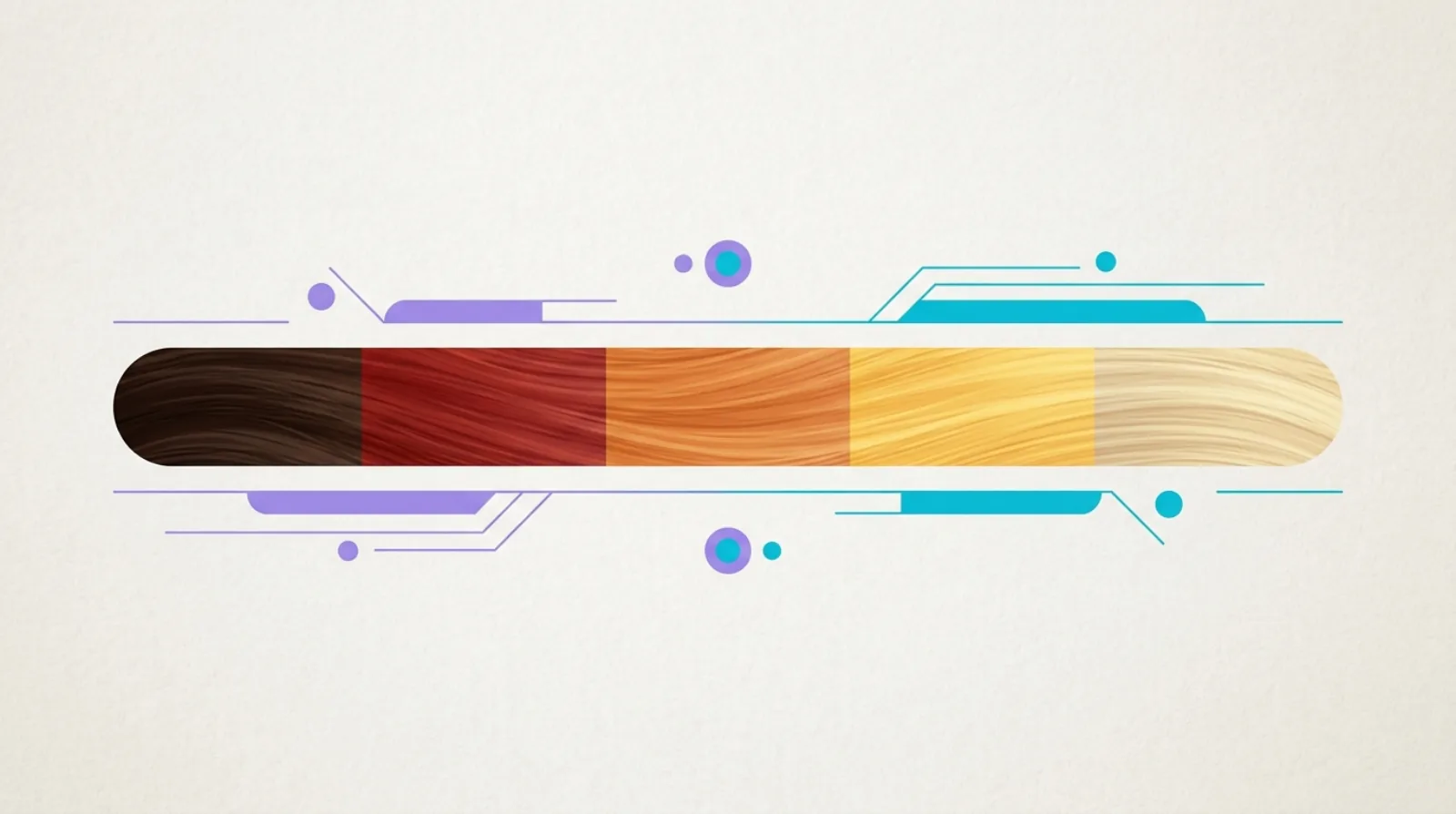
Going from dark hair to blonde is the single most demanding thing you can ask of your hair. It is absolutely possible, and plenty of people do it well, but it is a process rather than an appointment. The people who end up with damaged, snapping hair are almost always the ones who tried to get there in one sitting. This guide explains what actually happens inside the strand, why it takes several sessions, and how to protect your hair along the way.
Find out whether this suits your face. One selfie, and the face-shape read and your top pick are free.
Kurli is an AI hairstyle advisor: upload one selfie and it reads your face shape, recommends the cuts that suit it, and renders any of them onto your own photo before you commit.
What bleach actually does
Your natural hair colour comes from melanin held inside the cortex, the thick middle layer of each strand. Dark hair contains a lot of eumelanin, the brown-black pigment.
Bleach works by swelling the cuticle open and then chemically breaking that melanin apart so it no longer reflects colour. Nothing is added. Pigment is destroyed and washed away.
The important consequence is that bleach cannot be selective. While it is dissolving pigment, it is also breaking some of the protein bonds that give hair its strength. That is why bleached hair feels different: it is more porous, more elastic when wet, and weaker.
Hair is not living tissue and cannot repair itself. Once those bonds are broken, no product regrows them. Conditioners and bond-builders improve how hair behaves and hold it together, but the only true fix is growing it out and cutting the damage off.
The lifting stages, and why orange is normal
Lightening dark hair goes through a fixed sequence, and you cannot skip a stage.
Dark brown becomes red, then red-orange, then orange, then yellow-orange, then yellow, then pale yellow.
This is not the bleach failing. It is your underlying warm pigment being uncovered as the darker pigment is removed. Dark hair contains a great deal of warm pigment, and it is the last thing to go.
Most people want to end at pale yellow, which then gets toned to the blonde they actually asked for. Stopping at orange and putting a blonde toner over it does not produce blonde: it produces a muddy, brassy result, because toner only neutralises, it does not lighten.
Understanding this stops the panic when you see orange mid-process. Orange means the job is halfway done, not ruined.
Why it takes more than one session
Every round of bleach has a safe limit. A colourist judges how far your hair can lift before its structure is compromised, and stops there, even if that is short of the goal.
Going from dark brown to a light blonde is commonly three to five levels of lift or more. Doing that in one sitting means leaving bleach on far too long or using a developer far too strong, and that is exactly how hair ends up gummy when wet and snapping when brushed.
Spacing sessions several weeks apart lets the cuticle settle and lets you use protein and moisture treatments in between. Each session lifts a bit further from a healthier starting point.
A realistic plan from dark brown is two to four appointments spread over three to six months. A colourist who promises platinum from black in one appointment is telling you what you want to hear, not what is safe.
Signs you should stop lifting
You do not need to be a professional to notice hair in trouble. Watch for these.
Gumminess when wet. Healthy wet hair feels slippery. Over-processed hair feels like wet chewing gum and stretches without springing back. This is the clearest warning sign.
Stretching then snapping. Take one wet strand and pull gently. Healthy hair stretches a little and recovers. Damaged hair keeps stretching and breaks.
Short broken pieces around the hairline and crown. These areas are finest and go first.
A rough, cotton-wool texture when dry, especially at the ends.
If you see any of these, stop lightening. Move to protein and moisture treatments, get a trim, and give it months, not weeks. Pushing on from here is how people end up cutting off most of their length.
Bond builders: useful, not magic
Bond builders are products used during and after lightening to help hold the hair's internal structure together while bleach is working. They have genuinely improved what is possible, and any colourist doing a big lightening job should be using one.
What they do is real: hair comes out of the process in better condition than it would without them, and they let a skilled colourist lift a little further safely.
What they do not do is make bleach harmless. They reduce damage, they do not remove it. A bond builder does not turn a four-level lift into a zero-damage service, and treating it as permission to push further in one session defeats the point.
Use them, ask your colourist if they use them, and keep an at-home version in your routine. Just do not let their existence talk you into skipping the multi-session approach.
What to do in the weeks between sessions
The gap between appointments is where you decide how the next one goes.
Alternate protein and moisture. Bleached hair needs both, and too much of either causes problems. Too much protein makes hair stiff and brittle, and too much moisture makes it limp and mushy. Roughly one protein treatment to two moisture treatments is a reasonable starting rhythm.
Cut the heat right down. If you must use heat, use a heat protectant and a lower setting. The AAD lists heat styling and chemical processing together as leading causes of hair damage, and stacking them is the fastest route to breakage.
Wash less often, in cooler water. Hot water opens the cuticle and speeds up fading.
Sleep on a silk or satin pillowcase and use a wide-tooth comb on wet hair, working from the ends upwards.
Get a small trim. Removing split ends stops splits travelling up the strand.
Toning: the step that makes it blonde
Lifting gets you to pale yellow. Toning turns pale yellow into the blonde you wanted.
Toner is usually a demi-permanent product that deposits the opposite colour to cancel unwanted warmth. Purple cancels yellow, blue cancels orange. This is why purple shampoo exists as an at-home maintenance version.
Toner washes out over about four to six weeks, faster on very porous hair, so your blonde will drift warm between appointments. That is normal and expected, not a sign the colour failed.
At home, use a purple shampoo once a week or so rather than every wash. Overusing it on very light hair can leave a dull lilac cast. If your hair is more orange than yellow, a blue-based product is the right choice.
The honest maintenance cost
Blonde on naturally dark hair is the highest-upkeep colour there is. Decide with real numbers.
Root touch-ups every six to eight weeks, because dark regrowth against blonde is high contrast and shows quickly.
Toner every four to six weeks to keep brassiness down.
Treatments ongoing, at home and in salon.
Trims more often than before, because bleached ends wear faster.
That is realistically eight or more salon visits a year, plus a home routine, for as long as you keep it. If that does not fit your life, there are lower-maintenance versions of the same idea: balayage that keeps your roots dark, a bronde a couple of levels lighter, or face-framing pieces only. All three give you brightness without the six-week cycle.
Lower-commitment alternatives worth considering
If the maintenance sounds like too much, these get you most of the effect for a fraction of the cost and damage.
Balayage with a dark root. The roots are meant to be dark, so regrowth is part of the design. Three to four appointments a year instead of eight.
Bronde. Two or three levels lighter rather than five or six. Far less bleach, much softer regrowth, and it suits more skin tones than platinum does.
Face-framing pieces only. The brightest effect per pound, because it sits where people look.
Caramel or honey rather than ash. Warmer blondes need less lift, so they need less bleach. They also suit warm undertones better, as covered in hair colour by skin tone.
Many people who ask for platinum are actually after "brighter and lighter around my face," which any of these deliver without the commitment.
What to ask before you book
Ask these questions at the consultation, before any product is mixed.
"How many sessions will this realistically take?" An answer of one, from dark hair, is a warning.
"Where will we stop today?" Agree an end point for this appointment so you are not disappointed at the sink.
"Do you use a bond builder?" The answer should be yes for any significant lift.
"What is the upkeep, honestly?" Get the number of visits per year and the cost.
"What happens if my hair does not lift evenly?" Previously coloured hair often lifts patchily, and you want to know the plan.
Also disclose everything that has been on your hair, including box dye and henna, even years ago. Henna and some metallic dyes can react with bleach. Withholding that history is how appointments go badly wrong.
Common questions
Can I go from dark brown to blonde in one session?
Almost never safely. Dark brown to light blonde is usually three to five levels of lift or more, and doing that in one sitting means over-processing. A realistic plan is two to four appointments over three to six months. A colourist promising platinum from dark hair in one appointment is not being straight with you.
Why did my hair turn orange instead of blonde?
Because lifting stopped partway through the sequence. Dark hair goes red, then orange, then yellow, then pale yellow as pigment is removed, and orange is a normal middle stage. Blonde toner cannot fix orange, because toner neutralises but does not lighten. The hair needs to lift further before toning.
Does bleach damage hair permanently?
Yes. Bleach breaks protein bonds inside the strand as it destroys pigment, and hair is not living tissue, so it cannot repair itself. Treatments and bond builders improve how the hair behaves and hold it together, but the damaged section stays damaged until it grows out and is cut off.
How do I know if my hair is over-processed?
The clearest sign is gumminess when wet: healthy wet hair feels slippery, while over-processed hair feels like wet chewing gum and stretches without springing back. Also look for short broken pieces at the hairline and crown, and a rough cotton-wool texture. If you see these, stop lightening.
Do bond builders make bleaching safe?
They reduce damage, they do not remove it. Bond builders help hold the hair's internal structure together during lightening, and any colourist doing a big lift should use one. But they do not make a four-level lift damage-free, and they are not a reason to attempt the whole change in one session.
How often do I need to touch up blonde on dark hair?
Roots every six to eight weeks, because dark regrowth against blonde is high contrast and shows fast, plus toner every four to six weeks to control brassiness. That works out to around eight or more salon visits a year. Balayage with a deliberately dark root cuts this to three or four.
What is the least damaging way to go lighter?
Go fewer levels, spread over more sessions, and keep the lightener off your roots. Balayage with a dark root, a bronde two or three levels lighter, or face-framing pieces only all give real brightness with far less bleach. Warm blondes like honey and caramel also need less lift than ash or platinum.
Should I use purple shampoo every wash?
No. Once a week or so is usually enough. Purple shampoo deposits a small amount of violet pigment to cancel yellow, and using it every wash on very light hair can leave a dull lilac cast. If your hair is pulling orange rather than yellow, use a blue-based product instead.
Can I bleach hair that has box dye on it?
Sometimes, but tell your colourist first and expect a strand test. Bleach lifts natural pigment far more predictably than artificial pigment, so box-dyed hair often lifts patchily, especially on ends with several layers of old colour. It usually takes more sessions than virgin hair would.
Why can't I bleach hair with henna on it?
Some hennas, particularly compound hennas containing metallic salts, can react unpredictably with bleach and generate heat or cause severe damage. Always disclose henna use, even from years ago, and expect your colourist to do a strand test before treating the whole head.
How long should I wait between bleaching sessions?
Follow your colourist's timing, which is usually several weeks and longer for big lightening jobs. The gap lets the cuticle settle and gives you time for protein and moisture treatments, so the next session starts from healthier hair. Rushing sessions is one of the most common causes of breakage.
Is blonde a bad idea if my hair is already fine or thinning?
It needs more caution. Fine hair has less structure to lose, so it shows bleach damage sooner, and breakage on already thinning hair is very visible. Many people do it successfully with a gentler approach: fewer levels, balayage rather than root-to-tip bleach, and longer gaps. Talk to your stylist about your hair's condition first.
Sources
Hair biology and hair-care facts on this page are supported by these sources. Styling recommendations are guidance.
- Biochemistry, Melanin, StatPearls, NCBI Bookshelf
- Coloring and perming tips for healthier-looking hair, American Academy of Dermatology
- 10 hair care habits that can damage your hair, American Academy of Dermatology
- How to style hair without damage, American Academy of Dermatology
- Physiology, Hair, StatPearls, NCBI Bookshelf
See it on your own face
Kurli reads your face from a selfie, recommends styles that suit you, and renders each one onto your photo.
The face-shape read and your top pick are free. Your photo is never sold or used to train AI.