Men's hairstyles
French crop
Short, tidy, and finished with a straight fringe. The lowest-effort sharp haircut there is.
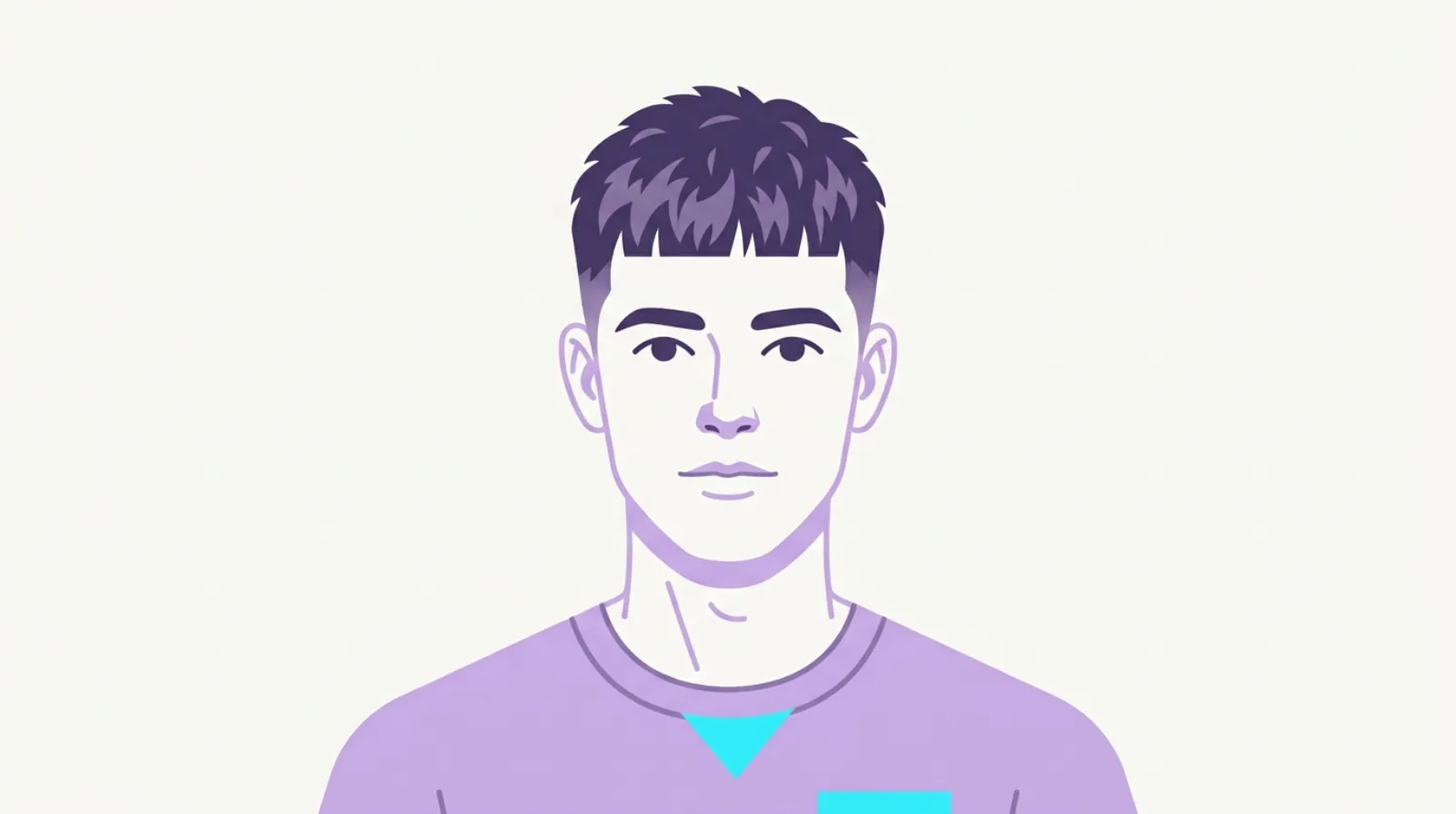
The French crop is a short haircut with one defining feature: the hair on top is combed forward and finished in a straight, blunt fringe across the forehead. The sides are clipped short or faded. It is neat without being stiff, it hides a few common insecurities, and it takes less time to style than almost any other cut with actual shape. If you want to look put together on a 30-second morning routine, this is the cut built for it.
Find out whether this suits your face. One selfie, and the face-shape read and your top pick are free.
Kurli is an AI hairstyle advisor: upload one selfie and it reads your face shape, recommends the cuts that suit it, and renders any of them onto your own photo before you commit.
What a French crop is
A French crop has three parts. The sides and back are cut short, anywhere from a scissor taper to a skin fade. The top is left a few centimetres long and pushed forward toward the forehead rather than up or to the side. The fringe is the signature: the front edge is cut into a clean, fairly straight line that sits above the eyebrows.
The forward direction is what separates the crop family from most other short men's cuts. A crew cut brushes up, a side part sweeps sideways, a pompadour goes up and back. The crop leans everything toward the face and lets a defined front edge do the talking.
Because the shape is built into the cut, not the styling, it holds its look between washes, in wind, in rain, and under a helmet. That is why barbers recommend it so often to men who say they do not want to think about their hair.
French crop vs textured crop vs Caesar
The three names get used loosely, and plenty of barbers treat them as one family, but the differences are real.
The Caesar is the oldest version: the whole top is cut to one short, even length, around 2 to 4 cm, and combed forward with a short, straight fringe. It is uniform and dense, named for the style seen on busts of Julius Caesar.
The French crop keeps the forward direction and the blunt fringe but allows more length on top and more shaping, so the front can sit slightly heavier than the crown.
The textured crop is the modern default: the top is point-cut into choppy, uneven pieces so it looks broken up and matte rather than flat and even. The fringe can be blunt or slightly jagged.
A textured crop with a forward fringe is simply a textured crop where the front edge is left long enough to sit as a clear fringe line above the brows. If you show a barber a photo of what most people call a French crop today, that is usually the cut on the screen. The names matter less than the two decisions underneath them: how much texture on top, and how strong the fringe line.
Who the crop suits, by face shape
The crop's fringe covers part of the forehead, which visually shortens the face. That single fact decides most of the face-shape logic.
Long and oblong faces get the most benefit. The fringe takes a few centimetres off the visible face length and rebalances proportions. If your face is long, the crop should be near the top of your list.
Oval faces can wear any version of it.
Round faces need the right version, not no version. A flat, heavy fringe straight across a round face adds width and makes the roundness louder. The fix is height and angle: keep some lift at the front, ask for a slightly angled or broken fringe line rather than a dead-straight one, and pair it with a high fade to stretch the face vertically. A textured crop on a round face works well under those conditions.
Square faces suit the crop naturally; the straight fringe echoes the jawline and looks deliberate. Heart and diamond faces, which carry width at the forehead or cheekbones, do well with a slightly softer, textured fringe rather than a hard blunt line. Unsure of your shape? The face shape quiz reads it from a photo.
Not sure which face shape is yours? Kurli reads it from one selfie and shows the cuts that suit it.
Hairline, forehead, and thinning advantages
The crop is the most forgiving mainstream haircut for three common worries.
High or big forehead: the fringe simply covers part of it. No other short cut does this as directly.
Receding corners: because all the hair moves forward, the thinning corners of an M-shaped hairline sit underneath the fringe instead of being exposed by an upswept style. Many barbers steer clients with early recession toward a crop for exactly this reason.
Cowlicks and stubborn growth patterns: the forward direction overrides most swirl patterns that make upswept styles collapse by mid-day.
One honest limit: the fringe needs enough density at the front to form a line. If the hairline has thinned right across the front, a very short crop or a buzz cut will look stronger than a sparse fringe. See our thinning hair post for that decision.
Fades, lengths, and how to ask for it
Tell the barber three things.
The fade. A low taper fade keeps the cut conservative and office-safe. A mid fade is the modern default and suits most people. A high or skin fade makes the cut sharper and more fashion-forward but exposes more scalp and needs more frequent maintenance. If you want minimal upkeep, a scissor-cut taper grows out the most gracefully.
The top. Standard is 3 to 6 cm, cut with texture (ask for point cutting) so it sits broken up rather than flat. Thick hair benefits from some weight taken out internally; fine hair should keep the top slightly shorter so it does not separate and show scalp.
The fringe. Say where you want it to land: mid-forehead is the classic, brow-length is bolder, and a short fringe well above mid-forehead (a mini crop) is the sportiest version. Say whether you want the line blunt and straight or slightly broken.
Maintenance is a trim every 3 to 5 weeks depending on how sharp you keep the fade. The fringe line is the first thing to lose its edge, and a five-minute fringe tidy between full cuts keeps the whole haircut looking fresh.
Crop variations, and matching one to your hair
The crop family has spread into named versions, and picking the right one mostly means matching your hair's thickness and behaviour.
The classic French crop keeps a fairly even, smooth top with a clean blunt fringe. It suits fine to medium straight hair that would look gappy if broken into heavy texture.
The textured crop is the pick for thick or coarse hair. Point cutting removes weight and lets dense hair sit down in separated pieces instead of puffing into a helmet.
The crop fade simply names the sides: any crop top over a mid or high skin fade. It is the sharpest, most modern silhouette and the one that needs the most frequent barber visits.
The long crop keeps 6 to 8 cm on top with a heavier, brow-grazing fringe. It gives the most forehead coverage and the most styling range, and it is the natural next step if you are growing a short crop out rather than cutting it back.
The mini crop, with everything cropped tight and the fringe sitting high on the forehead, is the lowest-maintenance version and a favourite for sport, since there is nothing to fall into your eyes.
Wavy and curly hair can wear any of these; the fringe just needs a little extra length to allow for shrinkage, and the barber should finish the front edge dry. If your hair grows in a strong whorl at the crown, tell the barber, because the forward direction has to start from that whorl and a good cut plans around it.
Styling in under a minute
This is the crop's whole sales pitch. On dry or nearly dry hair, rub a small amount of matte clay, paste, or powder between your palms, work it through the top from back to front, push everything forward, and press the fringe line roughly into place with your fingers. Done.
A few upgrades if you have ninety seconds instead of thirty. A quick blast with the hair dryer, nozzle pointed forward from the crown, adds volume and makes the product go further. Sea salt spray on damp hair before drying gives fine hair extra grip and thickness. If your fringe curls or flicks where you do not want it, dry it flat first with light tension from a brush, then apply product.
Avoid shiny gels and heavy pomades. Shine flattens the texture the barber cut into the top, and a glossy fringe pressed to the forehead reads as greasy rather than styled. Matte finish, small amount, pushed forward: that is the entire technique.
On wash days, let the hair dry to damp before styling; product applied to soaking hair dilutes and loses hold. Between washes, a dry crop usually needs nothing more than a re-press of the fringe with slightly damp fingers in the morning. If the top starts separating into greasy-looking strands by afternoon, wash more of the product out at night, since crops carry residue day to day more than upswept styles do. And once a season, ask your barber whether the weight balance still suits the season: slightly heavier fringes sit better in winter, and shorter, airier crops handle summer sweat without collapsing.
Common questions
What is a French crop?
A French crop is a short men's haircut where the sides are faded or tapered, the top is left a few centimetres long, and everything is combed forward into a straight, blunt fringe that sits above the eyebrows. The shape is built into the cut, so it needs almost no styling.
What is a textured crop with a forward fringe?
It is a crop where the top is point-cut into choppy, matte texture and the front edge is left long enough to form a clear fringe line over the forehead. It is the modern version of the French crop, and most photos labelled French crop today show exactly this cut.
Is a French crop good for a round face?
Yes, if you get the right version. Keep some height and lift at the front, ask for a slightly angled or broken fringe line instead of a flat heavy one, and pair it with a mid or high fade. That combination adds vertical length so the fringe does not widen a round face.
What is the difference between a French crop and a Caesar?
A Caesar cuts the whole top to one short, even length with a short straight fringe, all combed forward. A French crop allows more length and shaping on top, and its modern textured version breaks the top into choppy pieces. Both share the forward direction and the defined fringe.
Does a French crop hide a receding hairline?
It hides receding corners well, because the hair moves forward and the fringe covers the temple area where M-shaped recession starts. If thinning runs right across the front hairline, the fringe gets sparse, and a shorter crop or buzz cut usually looks stronger.
Does a French crop suit a big forehead?
Yes. The fringe directly covers part of the forehead, which is why the crop is the standard recommendation for high or large foreheads. Choose a fringe that lands around mid-forehead for balance rather than sitting right on the brows.
How do I ask my barber for a French crop?
Specify the fade (low, mid, high, or scissor taper), the top length (3 to 6 cm, cut with texture), and the fringe (where it lands on the forehead, and blunt or slightly broken). A photo settles the texture question fastest.
How do I style a French crop?
Work a small amount of matte clay or paste through dry hair, push everything forward, and press the fringe into its line with your fingers. It takes under a minute. A quick forward blow-dry first adds volume if you want it.
How often does a French crop need a trim?
Every 3 to 5 weeks. Skin and high fades need the shorter end of that range to stay sharp, while scissor tapers stretch longer. The fringe line dulls first, and a quick fringe tidy between cuts keeps the shape crisp.
Is a French crop professional enough for an office?
Yes. With a low or mid fade and a tidy fringe, the crop reads as neat and deliberate in any workplace. Reserve skin fades and very short mini-fringes for settings where a sharper fashion edge is welcome.
Does a French crop work on curly or wavy hair?
Yes, and often very well. Wave and curl give the top natural texture that straight hair needs product to fake. Keep the fringe slightly longer than you think, since curl shrinks it, and ask the barber to cut the front dry so the line lands where intended.
Sources
Hair biology and hair-care facts on this page are supported by these sources. Styling recommendations are guidance.
- Tips for healthy hair, American Academy of Dermatology
- Everyday hair care, American Academy of Dermatology
- How to style hair without damage, American Academy of Dermatology
- Hair Problems, MedlinePlus, U.S. National Library of Medicine
See it on your own face
Kurli reads your face from a selfie, recommends styles that suit you, and renders each one onto your photo.
The face-shape read and your top pick are free. Your photo is never sold or used to train AI.