Women's hairstyle guide
High ponytail
Pulls the eye up and gives an instant lift. Sleek, glam, or full of volume.
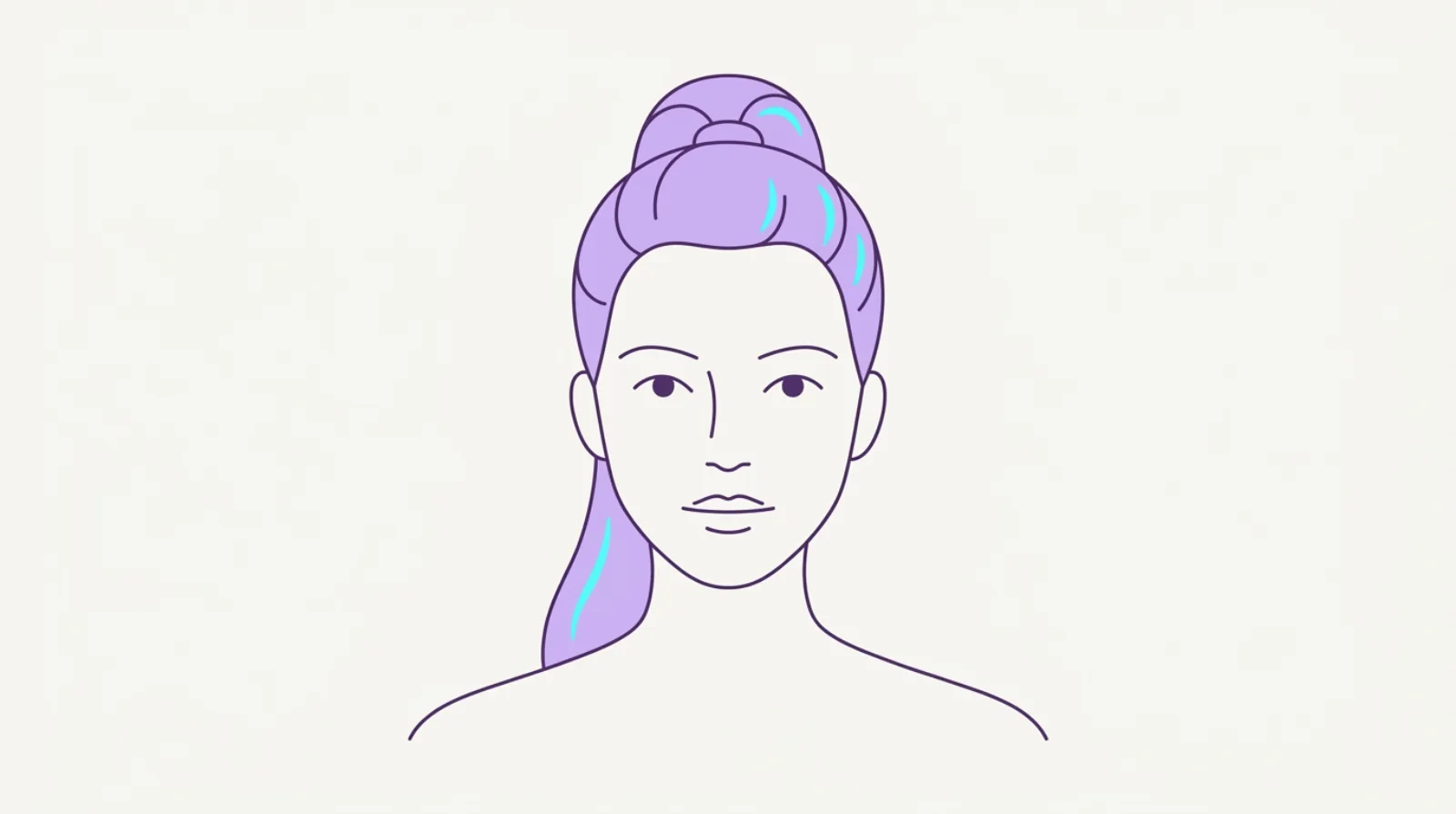
A high ponytail sits up at the crown, well above the ears. It is one of the fastest ways to look pulled together, and it does something clever at the same time. Because it lifts your hair up and back, it tugs gently at the skin around your eyes and cheeks, so your face reads a little tighter and more lifted. People sometimes call it a poor woman's facelift for that reason. This guide covers the versions, who it suits, how to do one that lasts all day, and the one thing most people skip: keeping it loose enough that it does not damage your hair.
Find out whether this suits your face. One selfie, and the face-shape read and your top pick are free.
Kurli is an AI hairstyle advisor: upload one selfie and it reads your face shape, recommends the cuts that suit it, and renders any of them onto your own photo before you commit.
What a high ponytail is and why it looks like a lift
A high ponytail is a ponytail tied at the top of your head, around the crown. A quick test is to draw an imaginary line from the top of one ear to the top of the other. If the base of the pony sits above that line, it is a high pony. Below it, you are into mid or low territory, which is a softer, more relaxed look.
The reason a high pony feels so flattering comes down to direction. When you gather all your hair and pull it up and back, the hair takes the skin along the sides of your face with it, just a little. That small lift smooths the area around your eyes and cheeks, so your face can look slightly tighter and younger. It is the same trick that makes a tight bun read as a mini facelift.
A high pony also adds height. The hair rises above your head, which draws the eye upward and makes your whole look taller and more elongated. That is why it is a go-to on stages, red carpets, and at the gym all at once. It works hard and takes very little time.
The main versions of the high ponytail
There is not one high ponytail. There is a whole family, and the version you pick changes the vibe completely.
The sleek high pony. Every strand is brushed flat and smooth, with no bumps at the crown and no flyaways. It looks sharp, clean, and a bit dressy. This is the one you see on runways and in polished office looks.
The voluminous or nineties pony. This one is big and bouncy, with lots of body in the length and often a slight bump of lift at the front. It has a fun, retro feel. Think of the tall, teased ponies from old music videos.
The pony with a wrapped base. Here you hide the elastic by taking a small piece of your own hair and coiling it around the band. It is a small step that makes the whole look feel finished and expensive.
The middle-part or no-part pony. Slicking the hair straight back with no part gives a clean, modern, editorial look. A centre part before you gather it reads softer and frames the face.
The snatched pony. Snatched means pulled so tight and smooth that the base looks glued down, with a glassy, mirror-like surface. It is bold and high-glam, and it leans on gel and edge control to stay that flat.
The wavy or textured pony. You curl or wave the length before or after tying it, so the tail falls in soft bends instead of a straight drop. It softens the whole style and suits date nights and events. A quick blowout first gives you the smoothest base for any of these.
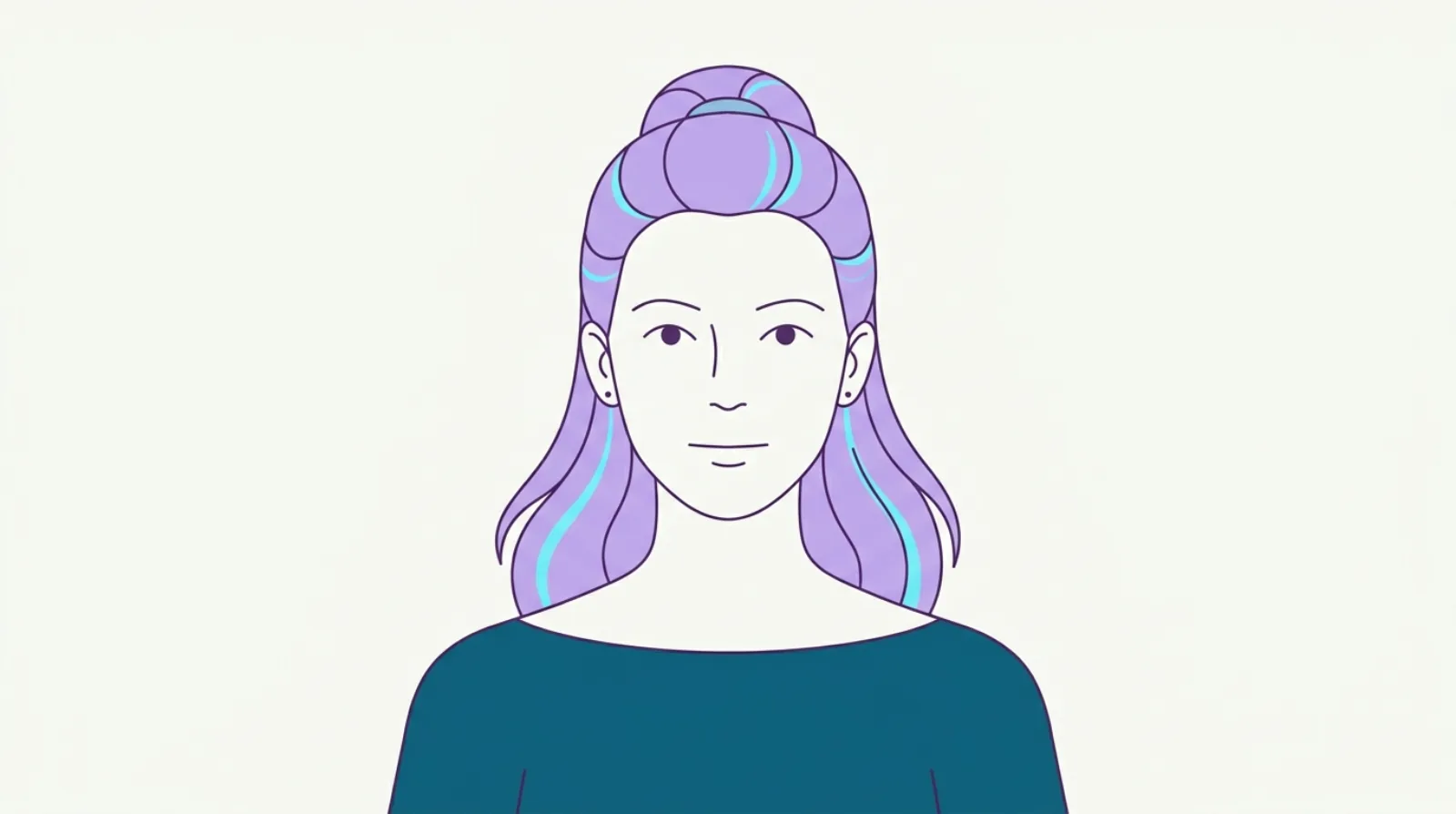 More in women's hairstylesHalf-up half-down
Who it suits, and how it plays with face shapes
A high ponytail lifts and lengthens, so it is a friend to faces that suit a bit more height. Round and square faces often love it, because the upward pull makes the face look longer and less wide, and it draws the eye away from the jaw. Oval faces can wear almost any version, since the balanced proportions carry it easily.
There is one honest catch. A very tight, very sleek high pony pulls everything back and shows your whole face with nothing to soften it. On some people that can look a touch severe or harsh, especially with a strong hairline or a long face, where the added height can stretch the look even longer. The fix is easy. Pull a few face-framing pieces loose at the front, or leave a soft centre part, and the style instantly warms up. A little wave in the tail helps too.
If you are not sure what suits your face, our face shape quiz gives you a quick read, and the hairstyles by face shape hub walks through each shape in detail. You can also try a look on your own photo first with Kurli before you commit.
Not sure which face shape is yours? Kurli reads it from one selfie and shows the cuts that suit it.
Hair lengths and textures, including curly hair
A high pony works on most lengths, but each one needs a slightly different plan.
Short hair and bobs can still go up. You may not get a long tail, and some pieces at the nape will slip out. Lean into that as a soft, undone look, or pin the loose bits with small clips. A stubby high pony can look cute and sporty.
Medium and long hair is the easy case. There is plenty to gather and enough length to wrap around the base.
If you want more drama, you can fake extra length or volume. Clip-in extensions add a long, full tail in seconds. Wrap-around ponytail pieces clip near the base and coil around it, so you get a thick, glossy pony even if your own hair is fine or thin. Match the colour and texture to your own hair so it blends.
Curly and coily hair makes a beautiful high pony, and you do not need to straighten it. Gather your curls up while they are dry and defined, use a hair-friendly elastic or a large claw-free band, and let the tail burst up and out. A little curl cream smooths the front without flattening the pattern. Because curly hair is often drier and more fragile, keep the base gentle and avoid yanking. Our hairstyles by hair type guide has more on working with your natural texture.
How to do a clean, long-lasting high pony step by step
A high pony that droops by lunch is almost always a technique problem, not a hair problem. Here is a method that holds.
1. Start with day-old or prepped hair. Freshly washed hair is slippery and hard to grip. A little dry shampoo or texture spray gives the base something to hold.
2. Flip your head upside down. Bend forward, brush all your hair up toward the crown, and gather it there. This gets every piece pointing the right way and sets a natural lift.
3. Brush it smooth. With your head still down or as you flip back up, run a brush over the surface so there are no bumps. Hold the gathered hair tight in one hand.
4. Use the two-elastic trick. Tie your first elastic as normal. Then take a second elastic and, before the last loop, tuck two small sections of the tail through so the pony sits on top of a hidden support. This stops the classic droop, because the second band holds the weight up.
5. Wrap a strand around the base. Pull a thin piece from underneath the tail, coil it around the elastic to hide it, and pin the end underneath with a bobby pin. This is the step that makes it look done.
6. Tug for volume. Gently pull a few pieces at the crown up and out to add a little height and a soft, lived-in fullness. Finish with a mist of hairspray.
That is the whole thing. Once you have done it a few times it takes about three minutes.
Tools and products that help
You do not need much, but the right few things make a big difference.
A bristle brush or a smoothing brush flattens the surface and clears bumps. Strong, seamless elastics hold the weight without a metal clasp that snags and rips hair. Keep a few on hand, since the first band does most of the work.
Bobby pins anchor the wrapped strand and tuck away any short pieces. A teasing comb adds a little lift at the crown if you want the voluminous look, and the pointed tail is handy for splitting a clean part.
For a sleek or snatched finish, gel or edge control smooths the front and tames baby hairs, and a small amount goes a long way. Hairspray at the end locks everything in. A flexible-hold spray keeps some movement, while a firm hold is better for a glassy, snatched pony.
Go easy on how much you use, and try to keep heavy product off your scalp so it does not build up. Clean, healthy hair holds a ponytail better and looks fuller in the tail.
The important part: scalp and hair health
A high ponytail is one of the most flattering styles you can wear, but it comes with a real warning that most tutorials skip. A very tight pony, pulled up in the same spot every single day, puts steady tension on your roots. Over time that tension can cause problems.
The first sign is often a tension headache. If your scalp feels sore or tight after wearing a tight pony, that is your hair telling you it is pulling too hard. Loosen it right away.
The bigger concern is traction alopecia. This is hair loss caused by repeated pulling on the roots, and it shows up most at the hairline and temples, exactly where a high pony tugs hardest. It starts as thinning and tiny broken hairs, and if the pulling keeps up for years it can become permanent. The American Academy of Dermatology lists tight hairstyles as a known cause of this kind of hair loss.
The good news is that it is easy to prevent. Keep the pony a little looser, so it holds but does not strain. Do not tie it in the exact same place every day. Give your scalp rest days with your hair down or in a loose, low style. Swap to soft, seamless bands instead of tight elastics. If you already notice thinning or a receding hairline near your temples, read our guide on thinning and hair loss and consider talking to a dermatologist. A flattering style is never worth losing your hair over, and you really can have both.
The best high pony for the occasion
One reason this style is so useful is that it changes with the setting.
For the gym, keep it simple and secure. A brushed-back pony with a strong band and a couple of pins holds through a workout and keeps hair off your neck. Do not tie it so tight that it aches, since sweat and tension together are hard on your roots.
For work or everyday, a neat, medium-height pony with a wrapped base looks tidy and professional without much effort. Leave a soft piece at the front so it does not feel stiff.
For glam and events, go all in. A sleek, snatched pony with a glassy base and a long, waved tail is a red-carpet classic. Add clip-in length if you want extra drama. If you would rather wear it down, a half-up half-down style gives you some of the same lift with softer edges, and a sleek low bun is a calmer cousin for formal nights.
Common mistakes to avoid
A few small errors are what separate a droopy pony from a sharp one.
The first is tying it too loose at the base. If the elastic is not snug, the weight of your hair drags the whole thing down within an hour. The two-elastic trick fixes this.
The second is skipping the smooth-out. Bumps and lumps at the crown make even a fresh pony look messy. Brush the surface flat before you tie, and use a little gel on flyaways.
The third is going too tight for too long. This is the health mistake, and it is the one that matters most. A pony that gives you a headache is pulling hard enough to damage your hairline over time.
The fourth is using a snap-on elastic with a metal bit. That little metal clasp catches and tears hair every time you take it out. Seamless bands are gentler.
The last is leaving the base bare. A visible elastic reads as an afterthought. Wrapping a strand around it takes ten seconds and lifts the whole look.
High ponytail pros and cons
The pros. A high pony is fast, and it flatters a lot of faces by lifting and lengthening them. It keeps hair off your face and neck, which is handy for hot days and workouts. It works from sleek and formal to big and playful, so one skill covers many occasions. It also hides second or third-day hair, since a little grease actually helps it hold.
The cons. Worn too tight and too often, it can strain your hairline and lead to breakage or traction alopecia, so it should not be your only style every day. It can look severe on some faces without a few soft pieces left out. Fine or short hair may need extensions to get real length or fullness. And a poorly tied pony droops, so the technique is worth learning.
Weigh those honestly and the high pony earns its spot. For most people it is one of the most useful looks to master, as long as you keep it loose enough to be kind to your hair. Try it on your own photo first with Kurli to see how the height suits your face before you tie it up.
Common questions
Does a high ponytail really work like a facelift?
In a small way, yes. Pulling your hair up and back tugs gently at the skin around your eyes and cheeks, so your face can look a little tighter and more lifted. It is a temporary effect that lasts only while the pony is up, but it is real, which is why people call it a poor woman's facelift.
Can tight ponytails cause hair loss?
Yes. Wearing a tight ponytail in the same spot every day pulls on your roots and can cause traction alopecia, a type of hair loss from repeated tension. It shows up first at the hairline and temples as thinning and tiny broken hairs. Keep the pony loose, move where you tie it, and give your scalp rest days to prevent it.
Why does my high ponytail keep drooping?
Almost always because the base is not secure enough for the weight of your hair. Use the two-elastic trick: tie the first band, then add a second and tuck two small sections of the tail through it so the pony rests on a hidden support. Starting with day-old or lightly textured hair also helps it grip.
What face shapes suit a high ponytail?
Round, square, and oval faces tend to suit it well, because the upward pull lifts and lengthens the face and draws the eye off the jaw. Long faces can wear one too, but a super tight, sleek version can stretch the look, so leave soft pieces out at the front or add a wave to balance it.
How do I get a sleek high ponytail with no bumps?
Flip your head upside down and brush all your hair up to the crown so every piece points the same way. Brush the surface smooth before you tie, use a strong seamless elastic, and smooth flyaways with a little gel or edge control. Finish with hairspray for a clean, flat base.
How do I do a high ponytail on curly hair?
You do not need to straighten it. Gather your dry, defined curls up to the crown, use a gentle seamless band or a large soft tie, and let the tail spring up and out. A little curl cream smooths the front without flattening the pattern. Be gentle at the base, since curly hair is often drier and more fragile.
How can I make my ponytail look longer or thicker?
Clip-in extensions add length and body in seconds, and wrap-around ponytail pieces coil around the base for instant thickness even on fine hair. Match the colour and texture to your own hair so it blends. Teasing the crown lightly and tugging a few pieces out also adds fullness without any extra hair.
What is a snatched ponytail?
A snatched pony is pulled very tight and brushed so smooth that the base looks flat and glassy, like it is glued down. It relies on gel and edge control for that mirror finish. It looks high-glam, but because it is so tight, do not wear it every day, as the tension can strain your hairline over time.
How do I hide the elastic on a ponytail?
Take a thin strand from underneath the tail, coil it around the elastic to cover it, and pin the end under the base with a bobby pin. This one small step makes a plain pony look finished and polished. A little hairspray keeps the wrapped piece in place through the day.
Is it bad to wear a high ponytail every day?
Wearing one every day, especially a tight one, is not great for your hair. The steady pull can lead to breakage and traction hair loss at the hairline. Vary your style, keep it looser some days, and let your hair down to rest. If it gives you a headache, it is too tight and needs loosening straight away.
What should I do if a ponytail gives me a headache?
Loosen it or take it out. A tension headache is a clear sign the pony is pulling too hard on your scalp. Retie it lower or with more give, and switch to a soft, seamless band. If tight styles often hurt, that same tension can damage your hairline over time, so it is worth easing off.
What elastic is best for a high ponytail?
A strong, seamless elastic with no metal clasp is best. Metal clasps catch and tear hair every time you remove the band. Seamless bands grip well without snagging. For a heavy or long pony, keep a couple on hand, since the first band does most of the work of holding the weight up.
Sources
Hair biology and hair-care facts on this page are supported by these sources. Styling recommendations are guidance.
- Hair Loss Resource Center, American Academy of Dermatology
- Tips for healthy hair, American Academy of Dermatology
- How to style hair without damage, American Academy of Dermatology
- Everyday hair care, American Academy of Dermatology
- Hair Problems, MedlinePlus, U.S. National Library of Medicine
See it on your own face
Kurli reads your face from a selfie, recommends styles that suit you, and renders each one onto your photo.
The face-shape read and your top pick are free. Your photo is never sold or used to train AI.