Women's hairstyle guide
Long layers
Long hair cut into layers for movement, shape, and body.
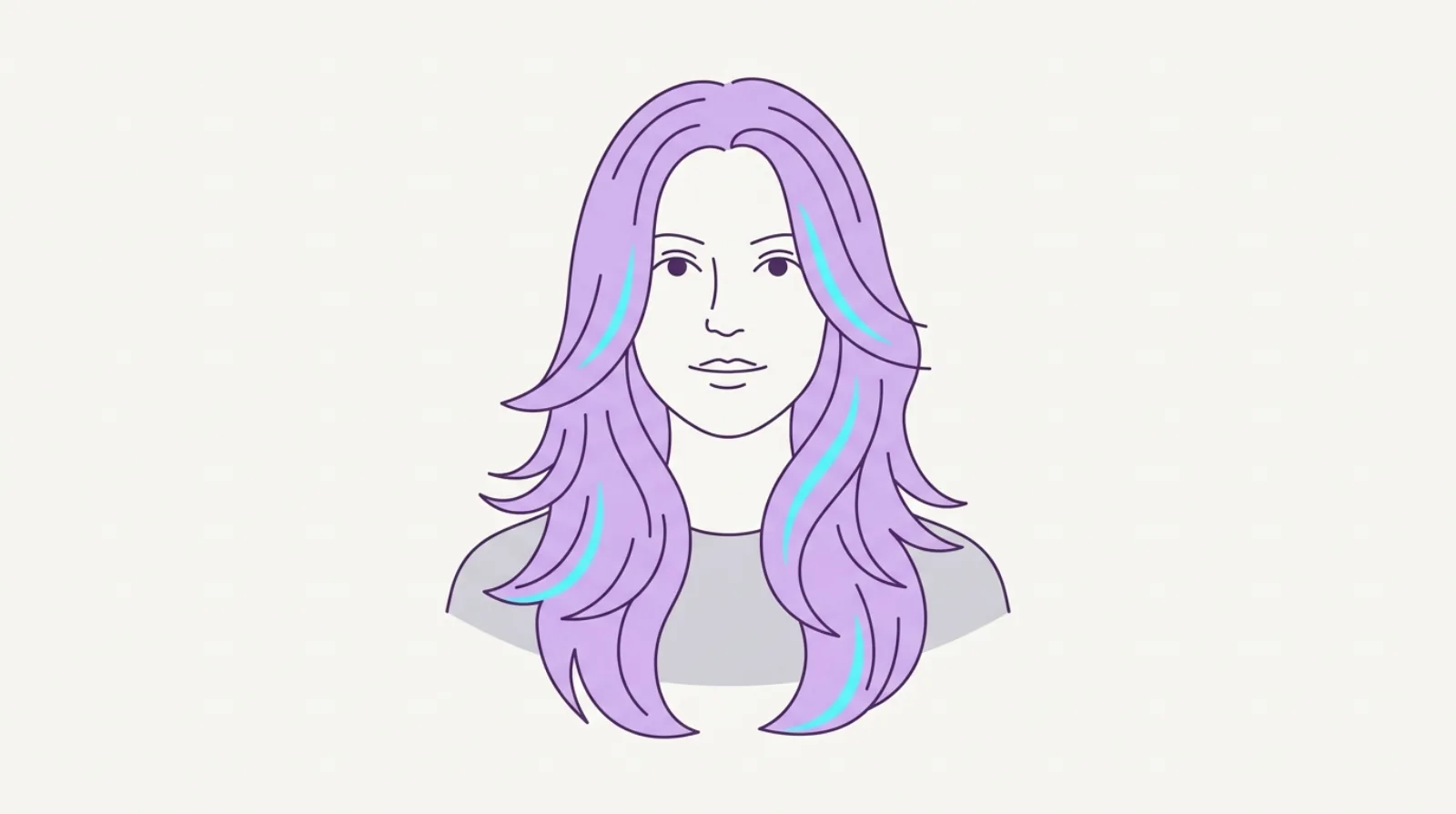
Long layers are one of the most requested haircuts in any salon, and it is easy to see why. Your hair stays long, but the stylist cuts it into different lengths so it moves, bends, and holds a shape instead of hanging flat. The result keeps your length while adding body at the top and a soft, tapered finish at the ends. This guide covers the versions, who they suit, how to style them, and how to keep them looking good.
Find out whether this suits your face. One selfie, and the face-shape read and your top pick are free.
Kurli is an AI hairstyle advisor: upload one selfie and it reads your face shape, recommends the cuts that suit it, and renders any of them onto your own photo before you commit.
What long layers actually are
A layered haircut means the hair is cut to different lengths on purpose. The pieces underneath stay long, and the pieces on top are cut a little shorter. Those shorter top pieces sit above the longer ones, so the hair falls in soft steps rather than one solid block. Long layers simply means this is done on long hair, and the layers are kept gentle and far apart so you keep as much length as possible.
The reason people love the look is movement. When every strand is the same length, long hair can hang heavy and flat, like a curtain. Cutting layers into it removes some of that weight. The top layers lift and bend, the ends taper to a soft point, and the whole shape gets body and swing. Your hair still reaches the same length down your back, but it no longer looks like a solid wall.
Think of it as shaping rather than shortening. A good long-layer cut takes almost nothing off the longest pieces. The stylist works into the middle and top sections to add shape, leaving the bottom nearly untouched. That is the balance long layers strike: you keep your length, and you gain movement. If you want to see how this sits next to other options, browse the women's hairstyles hub or compare cuts in the haircuts by length guide.
The main versions you can ask for
Long layers are a family of looks, not one single cut. Knowing the names helps you ask for the exact one you want.
Long layers vs long layered with face-framing. Plain long layers add shape all through the hair, but they leave the front the same length as the rest. Face-framing layers are shorter pieces cut near the front of your face, starting around the cheekbone or jaw, that frame your features and draw the eye in. Most people ask for both together: long layers through the back and length, plus face-framing at the front. If the framing is the main event, see the dedicated face-framing layers guide.
Long, soft layers. The layers are cut far apart and blended so gently that you barely see the steps. This is the most natural, low-key version and suits almost everyone.
Long V-cut or U-cut. These describe the shape of the ends when you gather the hair at the back. A V-cut comes to a soft point in the centre and looks longer and more dramatic. A U-cut is rounded and even, which reads softer and neater.
Choppier, textured layers. Here the stylist cuts more visible, uneven pieces for an edgier, tousled look. It gives lots of movement and works well on thick hair that needs weight removed.
The long shag and long butterfly. A shag has many shorter, choppy layers through the top and around the face for a rock-and-roll, feathered feel. A butterfly cut blends shorter face-framing layers into much longer lengths so the top looks full and the bottom stays long. Both are layered cuts, just heavier on the layering near the crown and face. For soft texture in the length, pair any of these with beachy waves.
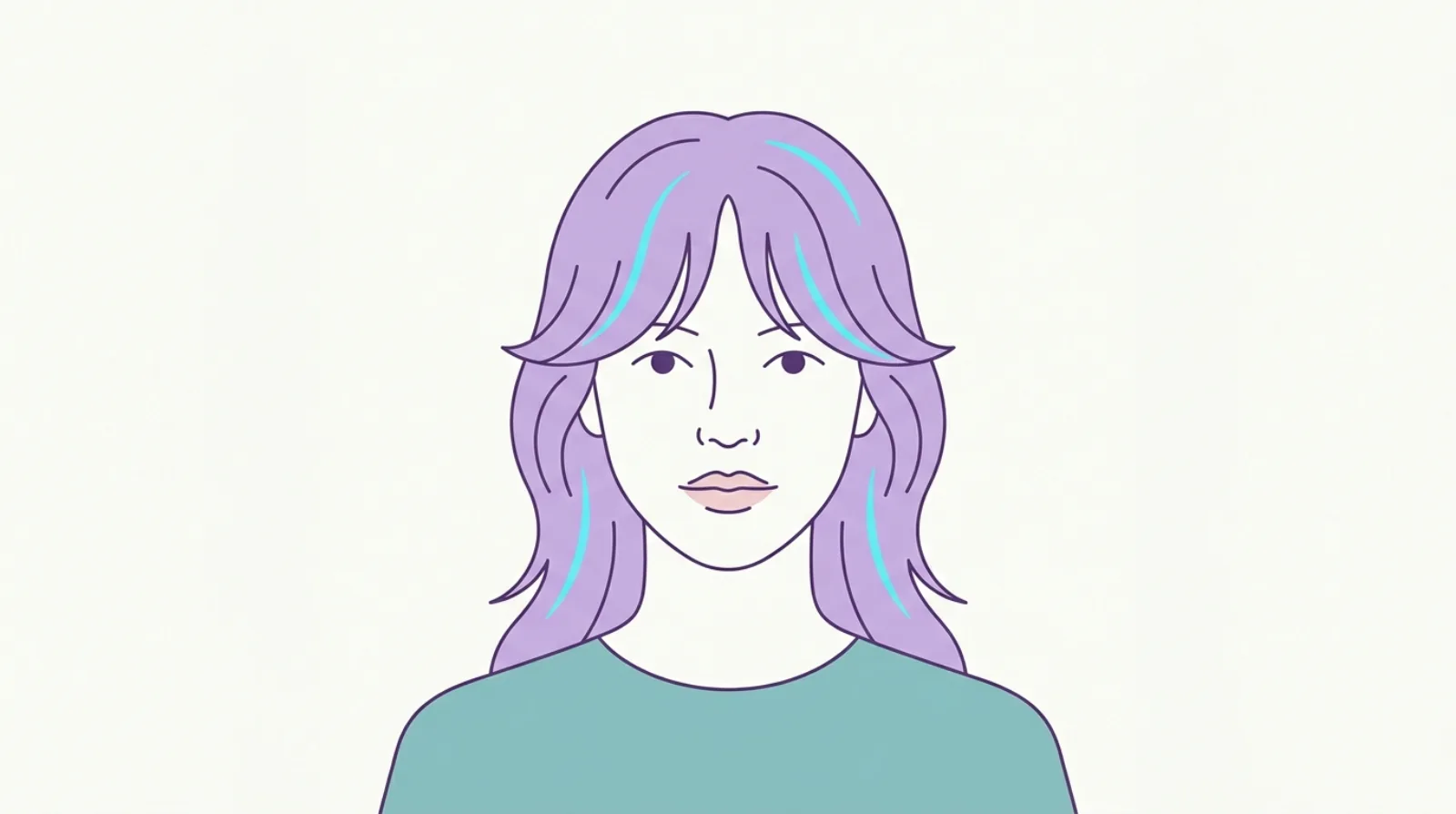 More in women's hairstylesCurtain bangs
Who long layers suit and which face shapes they flatter
One of the best things about long layers is how widely they flatter, because the stylist can place the shortest layers wherever your face needs balance.
Round faces do well with long layers that start below the chin. Keeping the layers long and lower down draws the eye downward, which makes a round face look a little longer and slimmer. Face-framing pieces cut on an angle near the cheeks help slim the sides. Learn more in the hairstyles by face shape guide.
Square faces suit soft, curved layers and face-framing that lands around the jaw. The softness breaks up a strong, angular jawline and rounds off the corners of the face. Avoid blunt, heavy ends, which can echo the square shape.
Heart-shaped faces, which are wider at the forehead and narrower at the chin, look balanced when the layers add fullness lower down, around the jaw and below. This adds width where the face is narrow. Keep the layers near the crown softer so they do not add bulk up top.
Long or oblong faces should keep the longest layers from making the face look even longer. Layers that add width through the middle, plus face-framing and even a soft fringe, bring the proportions in. Avoid very long, straight layers with no width.
Oval faces can wear almost any version, since the proportions are already balanced. Choose the layer placement that matches your hair type and the look you want.
The general rule holds for everyone: place the shortest layers where you want to draw the eye, and add width where the face is narrow. Not sure which shape you have? The face shape quiz gives you a quick read.
Not sure which face shape is yours? Kurli reads it from one selfie and shows the cuts that suit it.
Hair types and textures that work
Long layers work across more hair types than most cuts, but they do a slightly different job depending on your texture.
Thick hair. This is where layers really shine. Thick, heavy hair can hang like a solid block and feel weighty on the neck. Layers remove some of that bulk, so the hair moves, breathes, and looks less like a triangle at the bottom. Ask for layers that thin the interior without taking length off the outside.
Fine or thin hair. Layers can add the look of volume here, but they must be done carefully. A few long, soft layers near the crown lift the roots and stop fine hair from looking flat. Too many layers, or layers cut too short, can make fine hair look wispy and thin at the ends. Keep them long and minimal.
Straight hair. Straight hair shows the shape of a layered cut clearly, so the movement and the tapered ends read beautifully. It also shows any uneven cutting, so a skilled stylist matters.
Wavy hair. Waves and long layers are a natural pair. The layers let the waves spring up and separate, so the hair looks full and textured with very little effort.
Curly and coily hair. Layers give curls room to bounce and stop them from stacking into a heavy, boxy shape. Curly hair is best cut by someone who cuts it dry or understands how curls spring up when they dry, because a curl shortens a lot once it dries. Ask for long layers shaped for your curl pattern, and be gentle, since curly and coily hair is more prone to dryness and breakage. For more on this, see hairstyles by hair type.
How to style long layers with a round brush
A blow-dry with a round brush is the classic way to show off long layers, because it gives the top volume and turns the ends under for a smooth, bouncy finish.
1. Start with damp, not soaking, hair. Towel-dry gently, then rough-dry with the dryer until your hair is about 80 percent dry. Styling hair that is too wet takes forever and does not hold.
2. Add a heat protectant. Mist a heat protectant through the lengths before you bring a hot dryer near your hair. This is the step that guards against heat damage, and dermatologists point to heat as a common cause of dryness and breakage.
3. Work in sections. Clip the top half up and start underneath. Take a section about the width of your round brush, place the brush under the section at the roots, and roll it down to the ends as you follow with the dryer.
4. Lift at the roots for volume. Point the brush up and pull the section straight out from your head at the roots to build height on top. This is where layers earn their body.
5. Turn the ends. At the bottom of each section, roll the brush under and hold the heat on the ends for a second, then hit them with cool air. The cool blast sets the bend so the ends curve under and stay there.
6. Finish the top layers last. Let down the clipped section and repeat. The shorter top layers give the crown its lift, so take your time on these.
7. Set it. A light mist of hairspray or a little shine spray holds the shape without making it stiff. Done well, this gives you full, swishy layers that last.
Other ways to style: curling the ends and using a wand
The round-brush blow-dry is not the only option. Long layers take a curl or a wave beautifully, because the different lengths make the curls stack and separate instead of blurring into one shape.
Curling just the ends. For a soft, modern look, you do not need to curl the whole length. Take a curling iron or wand, wrap only the bottom third of each section around the barrel, and hold for a few seconds. This gives a gentle bend at the ends that makes the layers look polished and lived-in. It is quick and suits work or every day.
Using a curling wand for waves. A wand (a barrel with no clamp) is the easiest tool for loose, beachy waves. Wrap a section around the barrel away from your face, leave the last couple of inches out for a softer end, and hold for five to eight seconds. Alternate the direction on each section so the waves look natural rather than uniform. The layers help the waves fall in a full, textured shape. For the full method, see beachy waves.
Air-drying with product. If you want zero heat, scrunch a mousse or a curl cream through damp hair and let it dry on its own. Layers give air-dried hair a shape it would not have if the hair were all one length, so this low-effort route still looks styled.
Adding a fringe or curtain bangs. Long layers pair naturally with a soft fringe. If you like the idea of pieces that sweep away from the centre, curtain bangs blend into face-framing layers seamlessly.
Whatever tool you reach for, always use a heat protectant first, and keep the iron or wand at a moderate temperature to protect your ends.
Products and tools you will want
You do not need a drawer full of gadgets for long layers, but a few key items make styling easier and protect your hair.
A round brush. This is the main tool for a layered blow-dry. A medium barrel suits most lengths. A ceramic or metal barrel holds heat and turns the ends more firmly, while a boar-bristle brush gives a smoother, shinier finish.
A blow dryer with a nozzle. The nozzle (the flat concentrator that clips on the end) points the air where you want it and stops the whole head from frizzing. A dryer with a cool-shot button is worth it, because the cool blast sets each section.
A curling wand or iron. A wand is best for loose waves, and a clamp iron is easier for curling just the ends. Pick a barrel around 25 to 32 millimetres for soft, long-hair waves.
A heat protectant. Non-negotiable before any hot tool. It coats the hair and reduces heat damage. Reach for it every single time.
A lightweight volume or texture spray. A little texture spray or dry shampoo at the roots adds grip and lift, which helps the top layers stand up. A light mousse works for fine hair that needs body.
A leave-in conditioner or serum. Layered ends are the oldest, most exposed part of your hair, so they dry out first. A leave-in or a few drops of serum on the ends keeps them soft and stops them from looking frizzy or split.
A wide-tooth comb. Gentler than a brush on wet hair, which is when hair is weakest and most likely to snap. Use it to detangle before you style. For more on matching a style to your length, see the haircuts by length guide.
Upkeep, trims, and keeping the shape
Long layers look their best when the shape is fresh, and a little regular care goes a long way.
How often to trim. Most people keep long layers looking sharp with a trim every 8 to 12 weeks. A trim tidies the ends and re-cuts the shape as it grows, so the layers do not blur into one length or turn scraggly at the bottom. If your ends split or feel dry quickly, lean toward the shorter end of that range.
A trim is not the same as losing length. Tell your stylist you want to keep your length and only refresh the layers. A good stylist can dust the very ends and re-shape the layers while taking almost nothing off the longest pieces. Say this clearly, because there is a difference between a trim and a cut.
Care between trims. Layered ends are the part of your hair that has been growing the longest, so they are the most fragile. Use a conditioner every wash, add a leave-in or serum on the ends, and avoid washing with very hot water. Dermatologists recommend being gentle with wet hair and going easy on heat, both of which help keep the ends from breaking.
Protect the ends overnight. Sleeping on a silk or satin pillowcase, or loosely tying long hair up, reduces the friction that roughens up layered ends while you sleep.
Keep those habits up and your layers hold their movement and shine far longer between salon visits. Want to picture the finished shape on you first? Try a look on your own photo with Kurli.
Growing out long layers
Layers grow out more kindly than almost any other cut, which is one more reason they are a safe choice.
Because the layers are already different lengths, there is no single blunt line that has to grow past an awkward stage. As your hair gets longer, the shorter layers simply catch up to the longer ones little by little. The shape softens and the movement fades gradually, so at no point does it look like you are stuck between two haircuts.
If you want to grow your hair all one length, the plan is easy. Stop cutting layers and let the shorter pieces grow down to meet the rest. In the meantime, ask your stylist for dusting trims, where they take off just a sliver of the very ends to keep them healthy without removing real length. This lets you grow out the layers while keeping the ends from splitting.
If instead you want to keep the layered look as your hair gets longer, just book your regular trims and ask the stylist to re-cut the layers at the new length. The shape travels down with your hair.
The main thing to know is that you are not trapped. Whether you want to keep the layers or grow into one length, the transition is smooth. That freedom is part of why so many people start with long layers when they are not sure what they want.
Styling for work, weekends, and events
The same layered cut can carry you from a busy weekday to a wedding, and the difference is just how much you do to it.
For every day, keep it simple. A quick rough-dry with your fingers, a little texture spray at the roots, and a bend at the ends with a wand is enough. Because the layers already give the hair shape, even air-dried hair with a bit of product looks intentional. This is the low-effort route that still reads styled.
For work or a smart-casual day, add polish. A round-brush blow-dry with the ends turned under looks neat and professional. Smooth a drop of serum over the top to tame flyaways and add shine. Layers give this look natural body, so it never falls flat by the afternoon.
For an event, add waves or an updo. Loose waves from a wand make long layers look full and glamorous, and the different lengths make the waves stack beautifully. If you want your hair up, layers are ideal for a soft, romantic style, because the shorter face-framing pieces fall loose to frame your face while the length is pinned back. Try a half-up half-down so the layered length still shows, or pull the whole length into a soft updo with a few face-framing pieces left down.
The point is that one cut gives you many looks. Learn a couple of quick styling moves and long layers cover almost any occasion in your week.
Common mistakes, plus the pros and cons
Long layers are forgiving, but a few errors are what separate a great result from a disappointing one.
Cutting the layers too short. The most common mistake is asking for layers and ending up with pieces that are far shorter than you wanted, which can look thin and choppy on fine hair. Be specific: say you want to keep your length and only add soft, long layers. Bring a photo so you and the stylist see the same thing.
Too many layers on fine hair. Fine hair can look wispy and see-through at the ends if it is over-layered. A few long layers near the crown is plenty. Save the heavy, choppy layering for thick hair that needs weight removed.
Skipping the heat protectant. Styling long layers usually means heat, and the ends are already the most fragile part of your hair. Skipping protectant leads to dry, frizzy, splitting ends. Use it every time.
Letting the trims lapse. Layers that are never trimmed lose their shape and the ends turn scraggly. A trim every 8 to 12 weeks keeps the movement crisp.
The pros. Long layers keep your length while adding body and movement. They flatter nearly every face shape because the stylist places the layers where you need balance. They suit most hair types, from thick to fine to curly. They grow out smoothly with no awkward stage. And one cut gives you many styling options, from air-dried to a full blow-dry to an updo.
The cons. They need regular trims to hold their shape. Fine hair can be over-layered if you are not careful. Styling them well usually takes a little heat and time, and layered ends dry out faster, so they need conditioning care. Weigh those honestly, and for most people the pros win by a wide margin. Ready to see what suits you? Try a look on your own photo with Kurli.
Common questions
What are long layers?
Long layers are a haircut where long hair is cut into different lengths on purpose. The pieces underneath stay long and the pieces on top are cut a little shorter, so the hair falls in soft steps instead of one solid block. This adds body at the crown and a soft, tapered finish at the ends while keeping almost all of your length.
Do long layers make your hair look thicker or thinner?
It depends on your hair. On thick hair, layers remove some bulk so the hair moves instead of hanging like a heavy block. On fine hair, a few long layers near the crown add the look of volume, but too many layers can make fine hair look wispy. The key is keeping the layers long and soft on fine hair.
What is the difference between long layers and face-framing layers?
Long layers add shape all through your hair but leave the front the same length as the rest. Face-framing layers are shorter pieces cut near the front of your face, usually starting around the cheekbone or jaw, that frame your features. Most people ask for both together for shape through the back and framing at the front.
Which face shapes suit long layers?
Nearly all of them, because the stylist can place the shortest layers where your face needs balance. Round faces suit layers starting below the chin. Square faces suit soft, curved layers near the jaw. Heart shapes like fullness lower down, and long faces benefit from layers that add width through the middle. Oval faces can wear almost any version.
How often should I trim long layers?
Most people keep long layers looking sharp with a trim every 8 to 12 weeks. A trim tidies the ends and re-cuts the shape as the hair grows, so the layers do not blur into one length. If your ends split or feel dry quickly, trim on the shorter end of that range.
Will a trim make my long layers shorter?
Not if you are clear with your stylist. Tell them you want to keep your length and only refresh the layers. A good stylist can dust the very ends and re-shape the layers while taking almost nothing off the longest pieces. There is a real difference between a trim that keeps length and a cut that removes it, so say which you want.
How do I style long layers at home?
The classic method is a round-brush blow-dry. Dry your hair to about 80 percent, add heat protectant, then work in sections, lifting at the roots for volume and rolling the ends under with the brush. Finish each section with a shot of cool air to set the bend. A curling wand for loose waves is an easy alternative.
Are long layers good for curly hair?
Yes. Layers give curls room to bounce and stop them from stacking into a heavy, boxy shape. Curly hair is best cut by a stylist who cuts it dry or understands how much a curl shortens as it dries. Ask for long layers shaped for your curl pattern, and be gentle with the hair, since curls are more prone to dryness and breakage.
Do long layers work on fine hair?
They can, if done carefully. A few long, soft layers near the crown lift the roots and add the look of volume. The mistake to avoid is over-layering, which makes fine hair look wispy and see-through at the ends. Keep the layers long and minimal, and skip heavy, choppy layering.
How do I grow out long layers?
Layers grow out kindly because they are already different lengths, so there is no blunt line stuck at an awkward stage. To reach one length, stop cutting layers and let the shorter pieces grow down to meet the rest, with occasional dusting trims to keep the ends healthy. To keep the layered look, just book regular trims re-cut at the new length.
What is a long V-cut or U-cut?
These describe the shape of the ends when you gather your hair at the back. A V-cut comes to a soft point in the centre and looks longer and more dramatic. A U-cut is rounded and even, which reads softer and neater. Both are ways to finish the bottom of a long layered cut.
Do I need a heat protectant for long layers?
Yes, every time you use a hot tool. Layered ends are the oldest and most fragile part of your hair, and heat is a common cause of dryness and breakage. A heat protectant coats the hair and reduces that damage, so mist it through the lengths before you bring a dryer, wand, or iron near your hair.
Sources
Hair biology and hair-care facts on this page are supported by these sources. Styling recommendations are guidance.
- Tips for healthy hair, American Academy of Dermatology
- Everyday hair care, American Academy of Dermatology
- How to style hair without damage, American Academy of Dermatology
- Hair Loss Resource Center, American Academy of Dermatology
- Hair Problems, MedlinePlus, U.S. National Library of Medicine
See it on your own face
Kurli reads your face from a selfie, recommends styles that suit you, and renders each one onto your photo.
The face-shape read and your top pick are free. Your photo is never sold or used to train AI.