Women's hairstyle guide
Sleek low bun
Smooth, polished, and pulled back at the nape. The clean-girl classic.
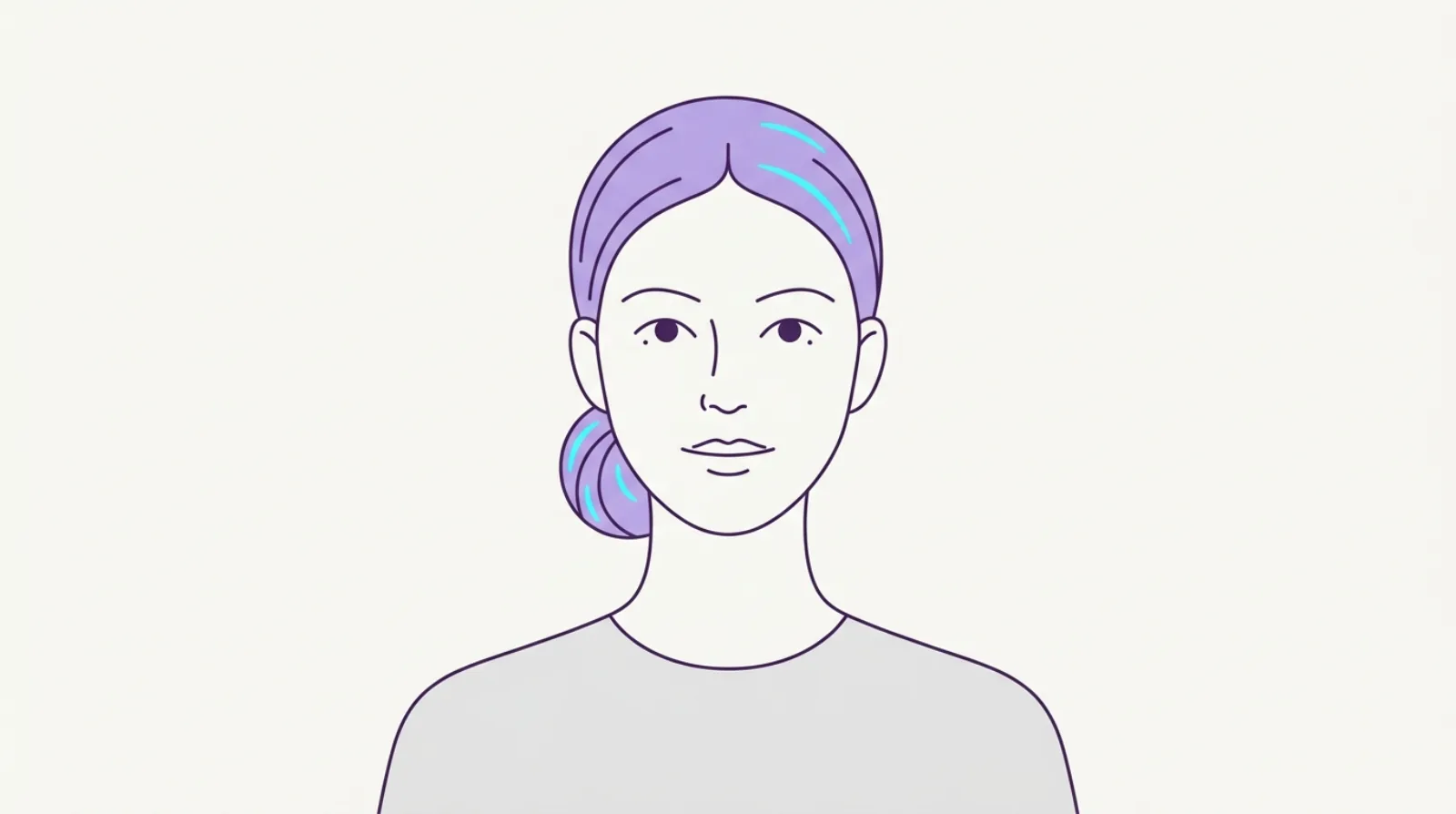
The sleek low bun is one of the most polished styles you can wear. You brush every strand back smooth, gather it into a low ponytail at the nape of your neck, then wrap it into a tidy knot and pin it. That is the whole idea. It looks clean, grown-up, and expensive, and it takes only a few minutes once you know the steps. People also call it the clean-girl bun, and you see it everywhere from offices to weddings to the gym. This guide covers the versions, who it suits, how to do a smooth one at home, and how to keep it gentle on your scalp so it stays a healthy choice.
Find out whether this suits your face. One selfie, and the face-shape read and your top pick are free.
Kurli is an AI hairstyle advisor: upload one selfie and it reads your face shape, recommends the cuts that suit it, and renders any of them onto your own photo before you commit.
What a sleek low bun is, and why it is everywhere
A sleek low bun is a smooth, pulled-back bun that sits low, right at the nape of your neck. The word sleek is the key part. Every strand is brushed flat and shiny against your head, with no bumps, flyaways, or loose bits. The hair is gathered into a low ponytail, then twisted or wrapped into a small knot and pinned in place.
The look reads clean and put-together. Because the hair is smooth and close to the head, it frames your face and shows off your features. It feels dressy without being fussy, which is why it works for so many different days. You can wear it to an office, to a job interview, to a wedding, or to the gym, and it looks right in all of them.
It became hugely popular as part of the clean-girl trend, a simple, low-effort beauty style built around fresh skin, small gold jewellery, and slicked-back hair. The sleek low bun is the hairstyle at the centre of that look. It is quick, it hides a greasy or unwashed hair day, and it photographs beautifully because there is nothing messy to catch the light wrong.
There is one more reason it earns its place. It is a style that looks better the less perfect your hair is underneath. Day-two or day-three hair has more grip and holds a bun far better than freshly washed hair. So it is the style you reach for when you do not want to wash and blow-dry from scratch. If you want to see how it sits next to other options, browse the women's hairstyles hub or compare it with a high ponytail.
The versions you can wear
The sleek low bun is not one single look. It is a small family of them, and knowing the names helps you pick and ask for the one you want.
The classic knot. The everyday version. You make a low ponytail, twist the length into a rope, wrap it around the base, and pin it into a neat coil. It is simple, fast, and works for almost any occasion.
The ballerina bun. A rounder, fuller version that sits like a smooth doughnut at the nape. You often build it over a foam bun ring, called a bun donut, to make it look full and even. It is a favourite for formal events because it looks so polished.
The twisted bun. Instead of wrapping the length in one piece, you split the ponytail into two sections, twist them around each other into a rope, then coil that rope into a bun. The twist adds a soft detail and a bit of texture without losing the sleek finish.
The middle-part sleek bun. A very popular clean-girl version. You part your hair straight down the centre, brush each side flat and smooth, and gather it low. The sharp centre part is a big part of the modern look. A side part gives a softer, more classic feel instead.
With face-framing pieces out. For a softer look, you pull one or two thin pieces of hair loose at the front before you smooth the rest back. These pieces sit down along your face. This version is gentler and more flattering on many faces than a fully slicked style, because it breaks up the hard, pulled-back line. For soft texture at other times, see Hollywood waves.
 More in women's hairstylesLong layers
Who it suits and which face shapes it flatters
A sleek low bun pulls all your hair back and away from your face. That puts your features fully on show, which is lovely, but it also means there is nothing to soften or frame the face. So the version you choose matters more than with a looser style.
Oval faces can wear almost any version, since the proportions are already balanced. A fully slicked centre-part bun looks striking on an oval. Learn more in the hairstyles by face shape guide.
Round faces do best with a little height kept at the crown and a couple of face-framing pieces left out on an angle. A low bun that is smooth and flat all over can make a round face look a touch wider, so add a soft lift on top and let thin pieces fall near the cheeks to break up the roundness.
Square faces look great with the softer versions. Leaving face-framing pieces out and choosing a twisted bun helps balance a strong jaw. A very tight, slicked, sharp-edged bun can echo the angles of a square face and make it look more severe, so soften it.
Heart-shaped faces suit a low bun well, because the bun adds a bit of weight and fullness lower down, near the jaw, which balances a narrower chin. Leaving soft pieces at the front helps here too.
Long or oblong faces should be careful with a very sleek, flat bun, which can stretch a long face and make it look longer. Keep a little softness, leave face-framing pieces out, and avoid too much height on top.
The honest note for everyone is this. A sleek low bun can look severe if it is pulled back hard with nothing left out. Softening it with a few loose pieces makes it far more flattering on most faces. Not sure which shape you have? The face shape quiz gives you a quick read.
Not sure which face shape is yours? Kurli reads it from one selfie and shows the cuts that suit it.
Hair lengths and textures that work
The sleek low bun works across more hair types than you might think, but each one needs a slightly different approach.
Short or fine hair. You can still do a low bun on a shorter length, but it will be a smaller, thinner knot. This is where a bun donut earns its keep, because it adds fake fullness so a small amount of hair looks like a proper bun. Fine hair also tends to be slippery, so extra grip from gel and a few more pins helps it hold. A little backcombing at the crown adds body so the style does not look flat.
Thick hair. Thick hair makes a full, generous bun with no help needed, which looks great. The challenge is control. Thick hair fights being brushed flat, so you will need a strong gel and a boar-bristle brush to smooth it down, and a strong elastic that will not snap under the weight. Split the length in two to wrap it if one coil is too bulky.
Straight hair. Straight hair gives the sleekest, shiniest finish, since it lies flat easily. It can also be slippery when freshly washed, so a texture spray or a bit of day-old grip helps.
Wavy and curly hair. Curly and coily hair can absolutely wear a sleek low bun, and it often looks stunning. You will need more product to smooth the front and lay the length flat, such as a strong gel plus a brush and a little water. Be gentle. Curly and coily hair is more prone to breakage and dryness, so do not force it or pull it bone-tight. Some people prefer to leave the curls in the bun itself for a fuller, textured knot rather than smoothing every strand. For more on this, see hairstyles by hair type.
How to do a sleek low bun, step by step
Here is a simple method for a smooth, tidy low bun. Once you know it, every version is a small change from this base.
1. Start with the right hair. Day-old hair holds best. If your hair is freshly washed and slippery, add a little texture spray or dry shampoo first for grip.
2. Brush it all back smooth. Using a boar-bristle or paddle brush, brush every strand back and down toward the nape of your neck. Brush from the front, the sides, and underneath, so there are no bumps. Decide on your part now, whether centre or side, or keep it slicked straight back with no part.
3. Add gel or edge control. Work a strong-hold gel through the top and sides to lay the hair flat and glue down the surface. A brush dipped in a little water and gel smooths the top layer to a shine. This step is what makes it sleek instead of just tidy.
4. Make a low ponytail. Gather everything at the nape and tie it with a strong elastic. Keep your hold firm but not painfully tight. Smooth over any bumps with your brush before you commit.
5. Wrap it into a bun. Twist the ponytail into a rope, then wind that rope around the base of the elastic into a coil. For a rounder ballerina shape, wrap the length around a bun donut instead.
6. Pin it in place. Tuck the end under and secure the bun with bobby pins pushed in toward the centre. Use as many as you need so nothing slips. Match the pins to your hair colour so they hide.
7. Smooth and set. Go over the whole head one more time with a little gel or a smoothing brush to catch flyaways. Finish with a mist of hairspray, and press a clean toothbrush or edge brush over the top to flatten stray hairs. Your bun is done.
Tools and products you will want
A good sleek bun is mostly about the right products to smooth and hold. Most of it you can find easily.
A fine-tooth comb. For a sharp, clean part down the centre or the side. A clean part is a big part of the modern clean-girl look.
A boar-bristle brush. Boar bristles smooth the surface of the hair and spread shine as you brush the length back. A paddle brush also works for gathering it all flat.
A strong-hold gel. This is the key product. Gel lays the hair flat, glues down the top layer, and gives that wet-look shine. A strong or extra-strong hold keeps the sleek finish all day.
Edge control. A small tub of edge control, applied with a little brush, tames baby hairs and the fine hairs around your hairline. It is what makes the edges look neat and finished.
A strong elastic. Choose a snag-free elastic that can hold a firm ponytail without snapping, especially for thick hair.
Bobby pins. A handful of pins holds the bun in place. Match them to your hair colour and push them in toward the centre for grip.
Hairspray. A flexible or firm-hold spray sets the finished shape and locks down flyaways at the end.
A bun donut (optional). A foam ring you wrap the hair around to build a full, round ballerina bun. It is a big help for fine or short hair that will not fill out a bun on its own. A note on hair health: dermatologists point out that styles pulled too tight, worn the same way every day, can stress the hairline over time, so use these tools to hold the style, not to yank it back hard. See our thinning and hair loss guide for more.
Edges and baby hairs
The edges are what turn a plain bun into a polished one. Baby hairs are the fine, short hairs around your hairline, and how you handle them sets the whole tone of the look.
There are two paths. The first is to smooth everything down completely, so the hairline is clean and flat with no stray hairs at all. For this, brush a little edge control along the hairline with a small brush or an old, clean toothbrush, pressing the fine hairs flat against your skin. A touch of hairspray on the brush helps them stay.
The second path is to lay and shape the baby hairs on purpose, brushing them into small curved swoops along the forehead and temples. This is a styled, deliberate look that many people love with a sleek bun. It takes practice and a fine brush, but it adds a soft, pretty detail.
A gentle reminder here. Edge control and daily brushing of the same delicate hairs can wear them down over time. Baby hairs are fragile. Use a soft touch, do not scrub hard, and give your edges a rest between styled days. There is no need to lay them every single day.
Making it last, and caring for your scalp
A sleek low bun can hold all day and even into the next, but how you build it and how tight you make it both matter.
To make it last, start with the grip that day-old hair or a little texture spray gives you, use enough gel to truly lay the hair flat, and pin the bun well. A firm elastic and enough bobby pins keep it from sagging. A final mist of hairspray sets everything. If flyaways pop up during the day, a tiny bit of gel or a travel edge brush smooths them back down.
Now the most important part of this whole guide. Do not pull the style too tight, and do not wear a tight bun in the exact same spot every single day. A bun that is yanked back hard puts constant tension on the roots and the hairline. Over months and years, that steady pull can lead to a kind of hair loss called traction alopecia, where the hair thins and can even stop growing back at the edges. Dermatologists warn about this with any style that is worn tightly and repeatedly, including tight buns and slicked-back looks.
The good news is that it is easy to avoid. Keep the tension gentle enough that it does not hurt or tug at your scalp. If you get a headache or feel soreness at your hairline, the style is too tight, so loosen it. Move the bun a little higher or lower on different days so the same hairs are not pulled every time. Give your hair loose, down days in between. And if you already see thinning or a receding hairline at your temples, ease off tight styles and read our thinning and hair loss guide. A sleek bun should be a fun, low-effort style, not a daily strain on your scalp.
Occasions, from the gym to a wedding
One of the best things about a sleek low bun is how far one style stretches across your week and your life.
For work and interviews, it is hard to beat. A neat, smooth low bun reads professional, tidy, and confident. It keeps hair out of your face and off your screen, and it looks the same at five in the evening as it did at nine in the morning. A centre or side part with a classic knot is the safe, smart choice.
For the gym, it is practical as well as good-looking. A low bun stays out of your way while you move, it does not bounce like a high ponytail, and the gel that holds it also keeps sweat-damp flyaways in check. Keep the tension gentle so a workout is not adding extra pull on your roots.
For weddings and formal events, the sleek low bun is a genuine showstopper. A full ballerina bun over a donut, or a soft twisted version with face-framing pieces out, looks elegant and expensive. It also holds up for a long day and night of photos, hugs, and dancing. Add a small hair clip, a few pins with tiny pearls, or a delicate accessory to dress it up further.
The point is that you learn one style and it carries you almost anywhere. That is rare, and it is a big reason the sleek low bun is worth having in your kit. When you want the front left down instead, compare it with a half-up half-down.
Common mistakes and how to fix them
A sleek bun is simple, but a few small errors are what separate a lovely one from a messy one. Here is how to avoid them.
Making it too tight. This is the most common and the most important mistake. A bun yanked back hard can give you a headache and, over time, stress your hairline. Keep the tension gentle, and vary where you place the bun day to day.
Not enough grip. If your bun slides down or will not stay smooth, your hair is probably too clean and slippery. Add texture spray or dry shampoo first, and use enough gel. Day-old hair holds far better than freshly washed hair.
A bumpy, uneven surface. Lumps on top usually mean the hair was not brushed fully smooth before you tied it. Brush from every direction, top, sides, and underneath, and smooth with a wet gel brush before you commit to the elastic.
Skimping on pins. A bun that falls apart by lunch was under-pinned. Use more bobby pins than you think you need, pushed in toward the centre, and tuck the ends in fully.
Flyaways everywhere. Stray hairs break the sleek look. Finish with hairspray on a brush or an old toothbrush, pressing the top layer and the edges flat.
Pulling every strand back on a face that needs softening. A fully slicked bun can look severe. Leaving one or two face-framing pieces out at the front makes it much softer and more flattering on most faces.
Pros and cons at a glance
Like any style, the sleek low bun has clear strengths and a couple of trade-offs worth knowing.
The pros. It looks polished and expensive with very little effort. It works on day-old or unwashed hair, so it saves you a wash and blow-dry. It suits work, the gym, and formal events from the same base. It keeps hair fully out of your face. It holds all day and often into the next. And it photographs beautifully because there is nothing messy to catch the light.
The cons. It pulls all your hair back, so there is nothing to soften or frame your face, which can look severe on some people unless you leave pieces out. It can be tricky on very short or very fine hair without a bun donut. And the big one: worn too tight, too often, in the same spot, it can stress your hairline and lead to traction hair loss over time.
Weigh those honestly. For most people the pros win by a wide margin, because the style is quick, tidy, and endlessly useful. The one rule that really matters is to keep it gentle on your scalp. Do that, soften it with a few loose pieces, and it is one of the best styles you can own. Ready to see what suits you? Try a look on your own photo with Kurli.
Common questions
How do I do a sleek low bun?
Start with day-old hair for grip, then brush every strand back smooth toward the nape of your neck. Work a strong-hold gel through the top and sides to lay it flat and shiny. Tie a low ponytail, twist the length into a rope, wrap it around the base into a knot, and pin it. Finish with hairspray and smooth any flyaways with an edge brush.
What is a clean-girl bun?
It is another name for a sleek low bun. The clean-girl look is a simple beauty style built around fresh skin, small gold jewellery, and slicked-back hair, and the sleek low bun is the hairstyle at the centre of it. It usually has a sharp centre part, a smooth glued-down surface, and a neat knot at the nape.
What hair do I need for a sleek low bun, clean or dirty?
Day-old or day-two hair works best because it has more grip and holds the bun far better. Freshly washed hair is often too clean and slippery. If your hair is freshly washed, add a little texture spray or dry shampoo first to give the style something to hold onto.
What face shapes does a sleek low bun suit?
It can suit all of them, but the version matters because it pulls hair off your face. Oval faces can wear any version. Round and long faces do better with a little crown height and face-framing pieces left out. Square faces suit the softer, twisted versions. Heart faces are flattered by the fullness a bun adds lower down. Leaving pieces out softens it on nearly everyone.
Can I do a sleek low bun on short or fine hair?
Yes. It will be a smaller, thinner knot, so a foam bun donut helps by adding fake fullness. Fine hair is slippery, so use extra gel for grip and a few more bobby pins than usual. A little backcombing at the crown adds body so the style does not look flat.
How do I keep my sleek bun from slipping or falling out?
Usually the hair is too clean and slippery. Add texture spray or dry shampoo first, and use plenty of strong-hold gel to lay it flat. Tie it with a firm, snag-free elastic and use more bobby pins than you think you need, pushed in toward the centre. A final mist of hairspray sets it.
How do I get my edges and baby hairs to look neat?
Brush a small amount of edge control along your hairline with a little brush or a clean old toothbrush, pressing the fine hairs flat. You can smooth them down completely, or shape them into soft curved swoops for a styled look. A touch of hairspray on the brush helps them stay. Use a gentle touch, since baby hairs are fragile.
Can a sleek low bun cause hair loss?
Worn too tight, too often, and in the same spot, yes it can over time. Constant pull on the roots and hairline can lead to traction alopecia, a kind of hair loss that dermatologists link to tight, repeated styles. Keep the tension gentle, move the bun to a different spot on different days, and give your hair loose days in between to keep it safe.
How tight should a sleek low bun be?
Firm enough to stay smooth and hold all day, but never so tight that it hurts or tugs at your scalp. If you get a headache or feel soreness at your hairline, the bun is too tight and you should loosen it. A gentle bun looks just as polished and is far kinder to your hair.
What products do I need for a sleek low bun?
A fine-tooth comb for the part, a boar-bristle or paddle brush to smooth the hair, a strong-hold gel to lay it flat and shiny, edge control for the baby hairs, a firm elastic, bobby pins to hold the bun, and hairspray to set it. A foam bun donut is an optional extra for fine or short hair that will not fill out a bun on its own.
Is a sleek low bun okay for weddings and formal events?
Yes, it is one of the best formal styles there is. A full ballerina bun over a donut, or a soft twisted version with face-framing pieces out, looks elegant and holds up for a long day of photos and dancing. Add a small clip, a few pearl pins, or a delicate accessory to dress it up.
How do I make a sleek low bun look softer and less severe?
Leave one or two thin face-framing pieces loose at the front before you smooth the rest back, so they fall along your face. Keep a little height at the crown rather than slicking it dead flat, and choose a twisted bun over a razor-sharp knot. These small changes break up the hard pulled-back line and flatter most faces.
Sources
Hair biology and hair-care facts on this page are supported by these sources. Styling recommendations are guidance.
- Tips for healthy hair, American Academy of Dermatology
- Hair Loss Resource Center, American Academy of Dermatology
- How to style hair without damage, American Academy of Dermatology
- Everyday hair care, American Academy of Dermatology
- Hair Problems, MedlinePlus, U.S. National Library of Medicine
See it on your own face
Kurli reads your face from a selfie, recommends styles that suit you, and renders each one onto your photo.
The face-shape read and your top pick are free. Your photo is never sold or used to train AI.